 Politics & Law

Ao Vua embraces digital tools to improve tourism services
1.
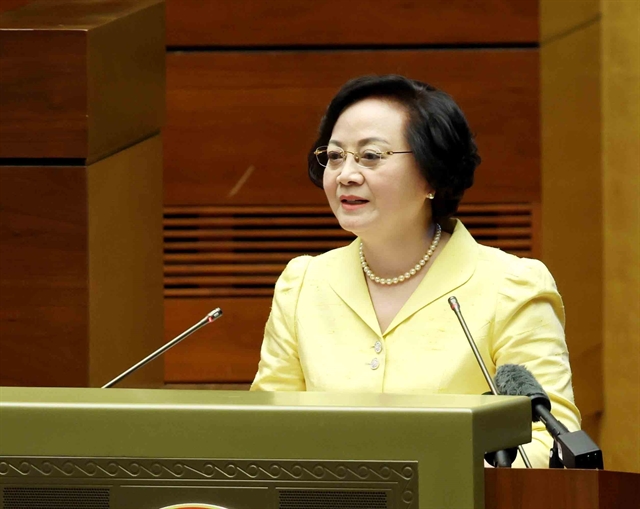 |
| Deputy Prime Minister Phạm Thị Thanh Trà. — VNA/VNS Photo |
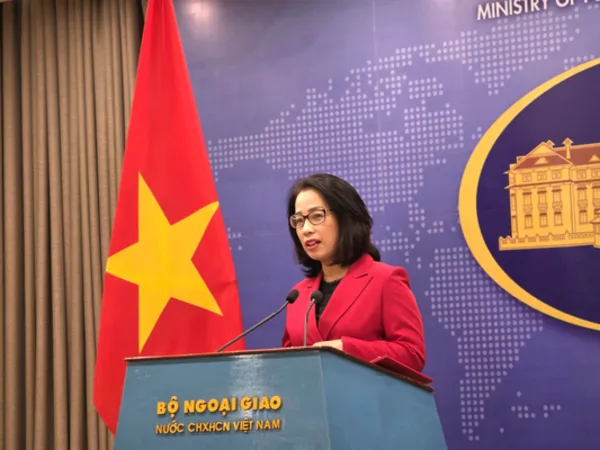
HÀ NỘI — All development aspirations must be realised through people, requiring a pool of talented individuals capable of formulating policies, mastering technology and implementing the country's key projects, Deputy Prime Minister Phạm Thị Thanh Trà has stressed.
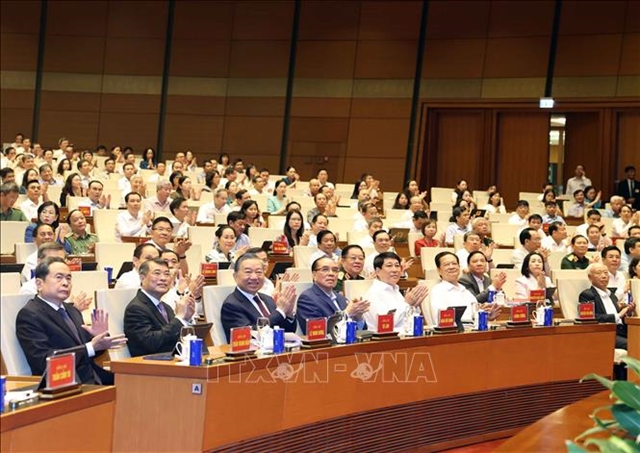
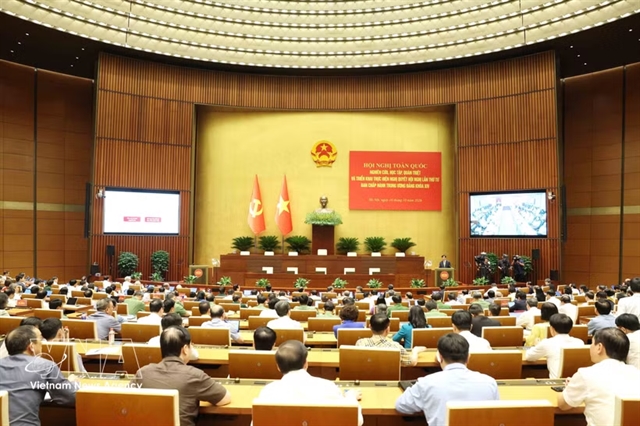
Trà made the remarks while presenting a report regarding Politburo Conclusion No 105-KL/TW on attracting and utilising talent in key sectors to support rapid and sustainable national development at a nationwide conference in Hà Nội on Friday to study, disseminate and implement the resolutions of the 14th Communist Party of Việt Nam (CPV) Central Committee’s fourth plenum, on October 16 morning.
Building on the tradition of respecting talented people, the Party and State have consistently focused on identifying, attracting, utilising and promoting talent, Trà said, highlighting progress in improving institutions and policies for high-quality human resources, citing relevant laws and Government decrees on selecting and employing chief engineers and architects in science, technology, innovation and national digital transformation, as well as attracting experts in these fields.
Several localities, including HCM City, Hà Nội and Đà Nẵng, have gained experience in attracting and utilising talent. State-owned and private enterprises such as Viettel, VNPT, Vingroup, Phenikaa and FPT have also implemented relevant policies. Since 2017, the public sector has attracted around 1,500 outstanding graduates, scientists and talented individuals.
However, Conclusion No. 105 identifies persistent shortcomings, including inconsistent perceptions of talent, fragmented policies, inadequate links between the public and private sectors and between domestic and overseas talent, insufficient attention to talent identification and development, and the failure to make appropriate use of talented individuals.
According to the 2025 Global Talent Competitiveness Index, Việt Nam ranked 76th among 135 economies and fifth in ASEAN, behind Singapore, Brunei, Malaysia and the Philippines. Trà said the result highlighted the substantial gap between Việt Nam and developed countries and the need for stronger efforts to improve talent attraction, utilisation and development.
She attributed these shortcomings mainly to subjective factors, including limited awareness, insufficient accountability among leaders, outdated management approaches and reluctance to entrust talented people with responsibilities and authority.
In the context of intensifying global strategic competition, talent has become a decisive factor in national competitiveness, autonomy and standing, Trà stressed.
The conclusion sets out five guiding principles, with talent regarded as a special strategic national resource driving science, technology and innovation and strengthening national competitiveness and strategic autonomy. Talent policies must focus on strategic priorities and key national projects; shift from personnel management to talent development measured by products, results, and contributions; ensure unified Party leadership; and establish an open, modern national talent ecosystem that connects the public and private sectors and domestic and international resources.
Trà outlined six groups of tasks, including strengthening Party leadership; improving institutions and policies; reforming talent selection, utilisation and assessment based on assigned tasks and results; developing a national talent pool; fostering a culture that values talent; and expanding international cooperation, particularly in key sectors.
She emphasised that the approach requires a fundamental shift in talent management, with strategic tasks setting priorities and individuals’ qualities, capabilities, outputs, results and contributions serving as benchmarks. Effective utilisation is pivotal, while talent development is a fundamental, long-term task. Autonomy, resources and working conditions must go hand in hand with accountability and the value delivered by talented individuals.
The Deputy PM stressed that Conclusion No. 105 assigns specific responsibilities to Party organisations and relevant agencies, urging them to promptly study and fully understand the conclusion and develop implementation plans suited to their respective sectors and localities.
The Politburo’s action programme identifies 30 key tasks, programmes and projects assigned to 14 agencies, most of which are scheduled for completion in the second and third quarters of 2027. The Government is finalising its own action programme.
Quoting President Hồ Chí Minh’s reminder that national construction requires talented people, Trà called on leaders, agencies, organisations and businesses to identify talent, entrust capable individuals with important responsibilities and provide conditions for them to excel.
She also called on talented people at home and abroad to contribute their knowledge, abilities and creativity to building a prosperous, civilised and happy Việt Nam. — VNA/VNS
Politics & Law
 Politics & Law
 Politics & Law
 Politics & Law
 Politics & Law
 Politics & Law
 Politics & Law
 Politics & Law
 Politics & Law
 Politics & Law
 Politics & Law
 Politics & Law
 Politics & Law
 Politics & Law
 Politics & Law