 Politics & Law

Hà Nội Medical University Hospital inaugurates first 5TMRI system in Southeast Asia
1.
|
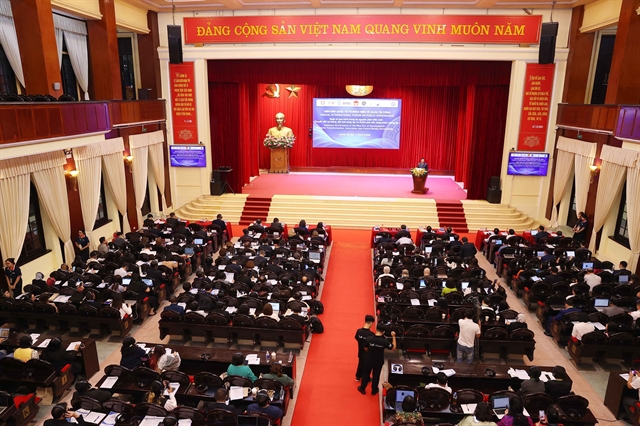
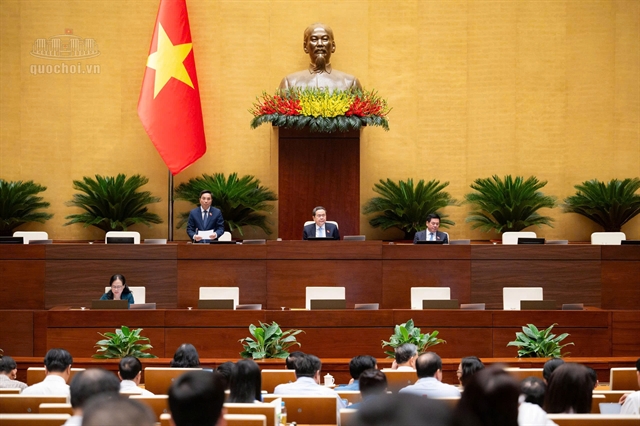
| The 2026 Annual International Forum on Public Governance in Hà Nội on Monday. — VNA/VNS Photo |
HÀ NỘI — Institutions must be turned into a competitive advantage and sharpen the state's ability to steer development toward its 2045 goals, a senior Communist Party theorist told an international public governance forum in Hà Nội on Monday.
Nguyễn Xuân Thắng, chairman of the party's Central Theoretical Council, said that in an increasingly complex and interconnected economy, the state needed to get better at setting priorities, coordinating across sectors, tackling emerging problems and adjusting policy based on what works in practice.
Governance reform, he said, must turn strategic choices into real development results and build the capabilities Việt Nam needs to become a developed, high-income nation by 2045.
He outlined four strategic priorities: strengthening the state's ability in organising and enabling development, building high-quality institutions that give the country an edge, boosting strategic capacity and self-reliance, and developing people and society as the long-term foundation of national strength.
"Forty years of Đổi Mới (Renewal) have taught Việt Nam an important lesson: renewing our thinking and our institutions can unlock enormous resources for development," Thắng said, referring to the market-oriented reforms launched in 1986.
The three-day forum comes as Việt Nam pushes through a sweeping overhaul of its government, including a leaner state apparatus, a new two-tier local government system that eliminated the district level, greater decentralisation and a broad digital transformation drive.
Nguyễn Mạnh Hùng, deputy director of the Hồ Chí Minh National Academy of Politics, said the changes went well beyond administrative reshuffling.
They amount to a systemic transformation that demands new approaches at every stage, from identifying problems and designing policy to carrying it out, as well as closer cooperation among the state, the market and society, he said.
"A government's capability is measured not only by how well it solves today's problems, but by its ability to spot change early, prepare for challenges and seize the opportunities of tomorrow," Hùng said.
He called for forward-looking governance that picks up on 'weak signals' – faint early signs of major shifts – regularly questions long-held assumptions and stress-tests policies against a range of scenarios.
Reform must not come at the expense of inclusion, Hùng said. Citizens should be more than consumers of public services and should help shape, implement and monitor policy.
A future-ready government, he added, must also help its people prepare for the future through education, retraining and social protection that adapts to change.
Nguyễn Bá Chiến, director of the Academy of Public Administration and Governance, said changes to structures, mandates, procedures and technology mattered only if they made government better at getting things done.
As the new system beds in, authority must come with the means to exercise it, responsibilities must be clear and agencies must coordinate smoothly so that problems are resolved quickly and services for citizens and businesses improve, he said.
Public problems are growing more complex, cutting across sectors and levels of government and shifting constantly under pressure from technology, climate change, new economic models and emerging risks, Chiến said.
Following the rules is not enough, he said; governance should be judged by results – problems solved, better services, lower social costs and wider opportunities.
Pauline Tamesis, the United Nations resident coordinator in Việt Nam, said the future of public governance would be shaped as much by the human values guiding technology as by the technology itself.
Institutional change grounded in fairness, transparency and respect for human rights could produce governments that keep pace with change and help build a fairer, more resilient future, she said.
The annual forum, held under the theme of inclusive governance and future-ready government, runs through Wednesday. It has drawn more than 500 participants, nearly 300 of them from abroad, including ambassadors, international organisations and researchers from more than 20 countries and territories.
Across 20 sessions, speakers are presenting more than 100 papers on how to build forecasting into routine government work, how to foster innovation without sacrificing discipline and accountability, and how stronger national resilience can bolster the world's collective response to shocks. — VNS
Politics & Law
 Politics & Law
 Politics & Law
 Politics & Law
 Politics & Law
 Politics & Law
 Politics & Law
 Politics & Law
 Politics & Law
 Politics & Law
 Politics & Law
 Politics & Law
 Politics & Law
 Politics & Law
 Politics & Law
.jpg)



