 Politics & Law
42 people hospitalised over suspected gas leak in Hà Nội
1.
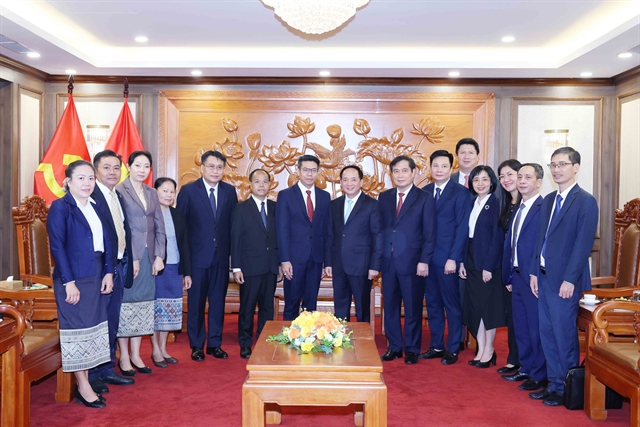 |
| Phan Xuân Thuỷ, Deputy Head of the Communist Party of Việt Nam (CPV) Central Committee’s Commission for Publicity, held talks with Sakhone Phommalath, Deputy Head of the Lao People’s Revolutionary Party (LPRP) Central Committee’s Commission for Propaganda and Training on September 29 in Hà Nội. — VNA/VNS Photo |
HÀ NỘI — Việt Nam and Laos will continue cooperation to enhance the quality of professional training courses for Lao propaganda and training officials, while expanding exchanges of young officials and relevant professional personnel in line with the conditions of both sides.
Phan Xuân Thuỷ, Deputy Head of the Communist Party of Việt Nam (CPV) Central Committee’s Commission for Publicity, held talks with Sakhone Phommalath, Deputy Head of the Lao People’s Revolutionary Party (LPRP) Central Committee’s Commission for Propaganda and Training, in Hà Nội on Tuesday, as the Lao delegation is on a working visit to Việt Nam.
Reviewing cooperation between the two commissions during 2022–26, Sakhone Phommalath highlighted the outcomes in promoting information on achievements of the two Parties and States and the tradition of solidarity between the two countries, and conducting professional exchanges and training for their officials.
He stressed that regular dissemination of information about Việt Nam–Laos cooperation have helped raise public awareness in both countries of the great friendship, special solidarity and comprehensive cooperation between Việt Nam and Laos, which continue to deepen.
Thuỷ said that in line with the Politburo’s policy, on August 1, the Commission for Information, Education and Mass Mobilisation was renamed the Commission for Publicity, while its function of giving advice regarding mass mobilisation was transferred to the Party Committee of the Việt Nam Fatherland Front and central socio-political organisations.
The commission now focuses on two strategic advisory functions for the Party in information and education, with emphasis on political, ideological and ethical affairs; communications; external information; guidance and orientation for the press and publishing sector; theoretical research and practical reviews; monitoring and orienting public opinion; protecting the Party’s ideological foundation; culture and arts; and Party building in terms of ideology.
According to Thuỷ, the two commissions have maintained delegation exchanges, talks and experience sharing across various areas of information and education. Cooperation at the local level has also continued to expand, particularly among localities sharing the border. All nine Vietnamese localities sharing the border with Laos have signed cooperation agreements covering communications and ideological work.
Regarding training and capacity building for Lao propaganda and training officials, the Hồ Chí Minh National Academy of Politics organises an annual professional training course on information and training work for LPRP officials.
From 2023 to 2026, 70 Lao officials took part in these courses, including 36 central-level and 34 local-level officials. The programme is updated annually, focusing on political and theoretical knowledge, information and training work, and related professional skills.
For future cooperation, Thuỷ proposed that the two commissions promptly finalise a draft cooperation agreement for 2027–31, submit it to the competent authorities and make necessary preparations for its signing in 2027 on the occasion of important anniversaries in bilateral relations.
The two sides should also strengthen experience sharing in political, ideological and ethical affairs, theoretical research, practical reviews, public opinion orientation and protection of the Party’s ideological foundation, while paying greater attention to emerging issues related to digital transformation and the application of science and technology in communications and ideological work, he said.
They should also step up cooperation in press and publishing, external information and communications on new media platforms, and coordinate in identifying, combating and refuting false and distorted information about bilateral relations, Thuỷ suggested. — VNA/VNS
Politics & Law
 Politics & Law
 Politics & Law
 Politics & Law
 Politics & Law
 Politics & Law
 Politics & Law
 Politics & Law
 Politics & Law
 Politics & Law
 Politics & Law
 Politics & Law
 Politics & Law
 Politics & Law
 Politics & Law




