 Politics & Law
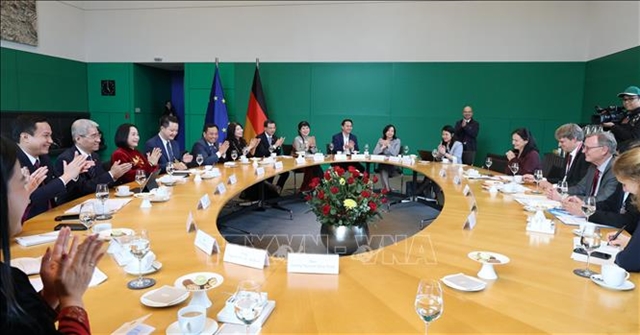
Việt Nam, Liechtenstein agree to soon ratify free trade deal
1.
|
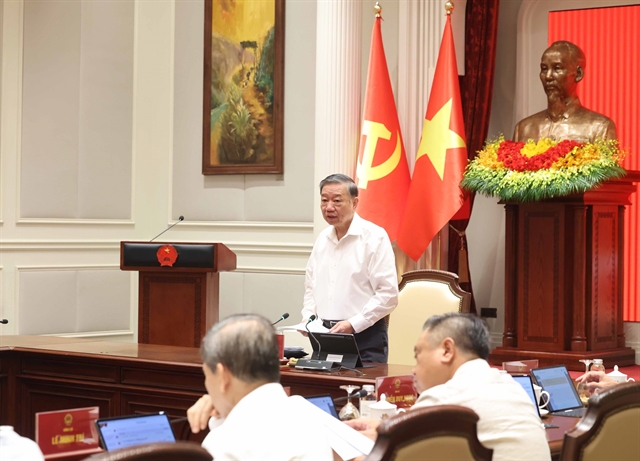
| Party General Secretary and President Tô Lâm chaired a meeting of the Central Steering Committee for Institutional Improvement and Law Enforcement. — VNA/VNS Photo |
HÀ NỘI — Party General Secretary and President Tô Lâm on Monday emphasised the need to ensure stability and flexibility of laws while chairing a meeting on institutional improvement and law enforcement in Hà Nội.
Lâm, who is chairman of the Central Steering Committee for Institutional Improvement and Law Enforcement, said laws must be stable enough for people and businesses to invest with confidence and anticipate their rights and obligations.
At the same time, laws must be flexible enough to meet the demands of development and international integration, adapt to scientific and technological advances and new business models, respond to climate change and address emerging issues in practice.
He stressed that lawmaking and law enforcement must form a unified whole, adding that its effectiveness must be measured by whether bottlenecks are removed, compliance costs reduced, resources unlocked, discipline and order strengthened and the lawful rights and interests of people and businesses protected.
Lawmaking and enforcement are also measured by whether socio-economic development and people's material and spiritual well-being improve, national defence and security are ensured and public trust and national competitiveness are enhanced, he said.
Lâm called for thorough review of legal documents and continued improvements in quality, progress and accountability, with a focus on addressing provisions that hinder investment, production and business activities or increase compliance costs.
He urged relevant authorities to address issues hindering investment and business, the operation of the newly reorganised State apparatus and the exercise of citizens' rights.
The top leader also called for clearly defined, measurable targets for 2030 as part of a strategy to complete Việt Nam’s legal system in the new era.
By 2030, there must be a clear improvement in law enforcement, with the weakness in implementation fundamentally addressed and the persistent delays and backlog of detailed regulations decisively resolved, he said.
He added that by 2045, Việt Nam should aim for a modern legal system operating on the basis of digital data and artificial intelligence, together with a democratic, incorruptible and professional judicial system.
Regarding law enforcement organisation and a culture of legal compliance, Lâm stated that enforcement must become a continuous responsibility from policy formulation to evaluation of results. Sectoral and local management agencies and their leaders should bear primary responsibility, while legal and judicial bodies should provide guidance, monitoring and advice.
He called for an end to delays and outstanding detailed regulations, stressing that each policy must identify those responsible for implementation, available resources, necessary conditions and expected results. Administrative documents must not be used to impose additional conditions or obligations beyond the law.
A culture of compliance begins with the exemplary conduct of State agencies, officials and Party members, he said, adding that harassment, arbitrariness and avoidance of responsibility must be addressed, while those who act correctly should be protected and violations handled fairly. Greater support should also be provided to vulnerable groups and small and medium-sized enterprises.
Regarding the handling of administrative violations, he called for a shift from detecting violations for punishment to risk management, prevention, guidance and improved compliance, supported by digital transformation and data-based governance. He also requested measures to reduce costs and shorten the settlement of civil and commercial disputes, and ensure fairness, objectivity and efficiency in line with judicial reform and international practice. — VNS
Politics & Law
 Politics & Law
 Politics & Law
 Politics & Law
 Politics & Law
 Politics & Law
 Politics & Law
 Politics & Law
 Politics & Law
 Politics & Law
 Politics & Law
 Politics & Law
 Politics & Law
 Politics & Law
 Politics & Law