 Politics & Law
Việt Nam, EU and Belgium seek deeper, practical cooperation
1.
|
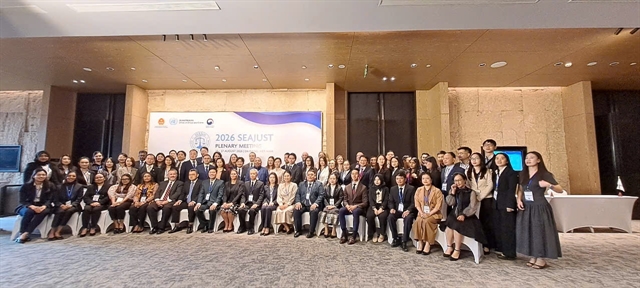
| Participants from 22 countries in the Southeast Asia, EU, the US, South Korea, China share a photo session at the 2026 Plenary Meeting of the South East Asia Justice Network (SEAJust) in Đà Nãng City. VNS Photo Công Thành |
ĐÀ NẴNG – Participants from 22 countries in the Southeast Asia, EU, the US, the Republic of Korea, China gathered in the 2026 Plenary Meeting of the South East Asia Justice Network (SEAJust) in Đà Nẵng, bringing together justice authorities and international partners to strengthen cooperation in responding to increasingly interconnected forms of transnational organised crime.
The meeting, which was organised by the United Nations Office on Drugs and Crime (UNODC) and the Supreme People’s Procuracy of Việt Nam, with financial support from the Government of the Republic of Korea, aims to exchange experiences and strengthen practical cooperation in international criminal matters, including mutual legal assistance (MLA), extradition and cooperation involving electronic evidence among SEAJust members, partner judicial networks and international organisations.
Nguyễn Quang Dũng, Deputy Prosecutor General, Supreme People’s Procuracy of Việt Nam, said transnational crime has continued to evolve in increasingly complex ways, with increasingly sophisticated methods and a constantly expanding scope of operations.
“Advances in science and technology and the process of digital transformation have created tremendous opportunities for socio-economic development, but it has also been exploited by criminals to commit cross-border offences, particularly organised crime, high-tech crime, drug-related offenses, money laundering, human trafficking, transnational fraud, and crimes involving digital assets and technological means,” Dũng said in his opening remarks.
He said that no country can effectively address these cross-border challenges on its own, and combating transnational crime increasingly requires countries to strengthen cooperation, share information and coordinate investigations, prosecutions and trials as well as enhance the effectiveness of mutual legal assistance in criminal matters.
|
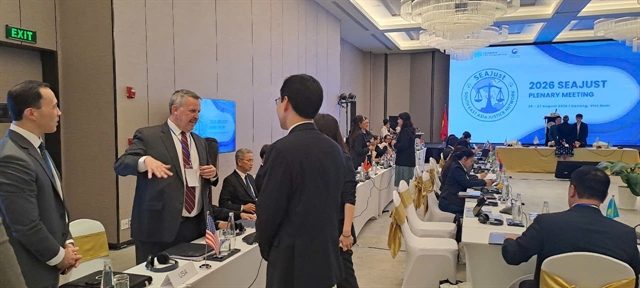
| Deputies exchange talks at the 2026 Plenary Meeting of the South East Asia Justice Network (SEAJust) in Đà Nẵng City. VNS Photo Công Thành |
Delphine Schantz, Regional Representative of UNODC ROSEAP, highlighted the rapidly changing nature of organised crime in Southeast Asia and the urgent need for stronger cross-border co-operation.
“These developments remind us of a simple but fundamental reality: no jurisdiction can respond to transnational organised crime alone,” Schantz said.
“When criminal networks are interconnected, our responses must be interconnected as well.”
She emphasised that effective criminal justice co-operation – including the ability to obtain evidence across borders, trace and recover criminal proceeds, locate and apprehend suspects, and support criminal proceedings – is essential to ensuring that transnational offenders can be brought to justice.
|
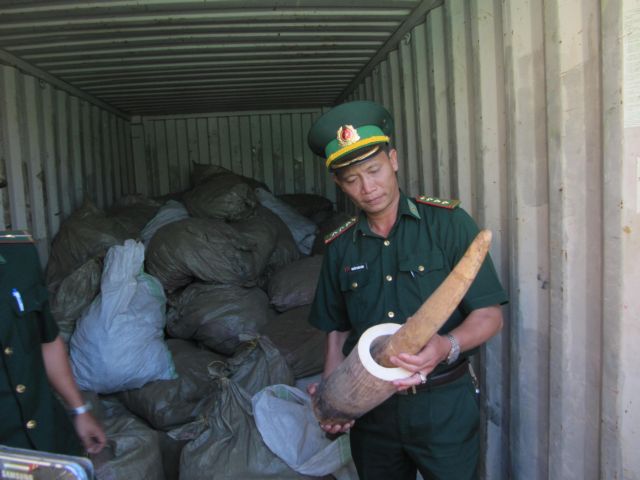
| A border guard officer inspects a smuggling case with ivories at Đà Nẵng City's Tiên Sa Port. Regional member countries joined the 2026 Plenary Meeting of the South East Asia Justice Network to respond to increasingly interconnected forms of transnational organised crime. VNS Photo Công Thành |
According to UNODC’s latest Transnational Organized Crime Threat Assessment for South-East Asia, criminal groups are increasingly connecting across illicit markets and jurisdictions, with cyber-enabled fraud, trafficking in persons, money laundering, underground banking and online gambling becoming interconnected through shared technology, infrastructure and financial channels.
The assessment estimates that scam offences alone resulted in combined losses of between US$88.3 billion and $114.1 billion across East Asia, Southeast Asia, Australia and New Zealand in 2025.
It also documents the increasingly global reach of trafficking for forced criminality, with people from at least 80 countries and territories identified in scam compounds across the region.
SEAJust plays a practical role in making such cooperation possible. Since its establishment, the Network has facilitated cooperation in more than 300 cases involving mutual legal assistance and extradition, including more than 125 cases in 2025 alone.
Jiyeon Lee, Director of International Criminal Affairs Division, Ministry of Justice, Republic of Korea, said: “Transnational crimes – including drug trafficking, online fraud such as voice phishing, illegal gambling, money laundering, and cybercrime – are no longer confined within the borders of a single country. They are planned and carried out across multiple jurisdictions, while their damages spread around the world.”
“Recently, the Republic of Korea has also faced serious social concerns arising from drug-related crimes involving young people and cases in which young Koreans have become involved in scam centres operating from bases in Southeast Asia.

|
| A border region in central Việt Nam. The host and participants from 22 countries in Southeast Asia, the EU, the US, South Korea, China discussed in cross-border co-operation in fighting against increasingly interconnected forms of transnational organised crime. VNS Photo Công Thành |
“As criminal activities continue to extend across borders, the prompt exchange of information, close communication, and practical cooperation among criminal justice agencies have become more important than ever.”
Established in 2020 with eight founding members, SEAJust has now grown to 24 members spanning more than four continents. The participation of Canada and Kazakhstan as new members at this year’s Plenary further demonstrates the Network’s expanding reach and the value placed on its practical approach to international cooperation. VNS
Politics & Law
 Politics & Law
 Politics & Law
 Politics & Law
 Politics & Law
 Politics & Law
 Politics & Law
 Politics & Law
 Politics & Law
 Politics & Law
 Politics & Law
 Politics & Law
 Politics & Law
 Politics & Law
 Politics & Law