 Politics & Law
SBV to curb property price inflation, enforce lending rate rules
1.
|
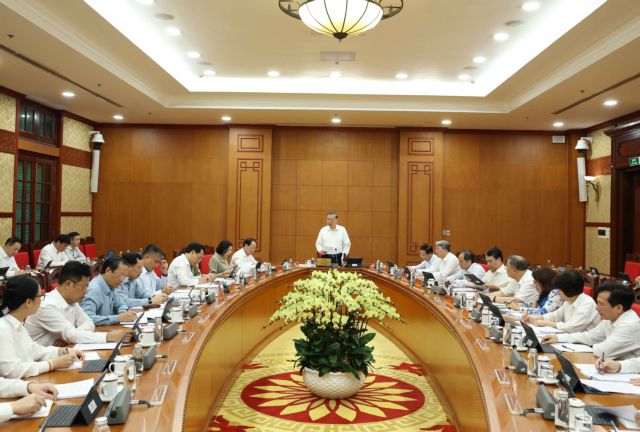
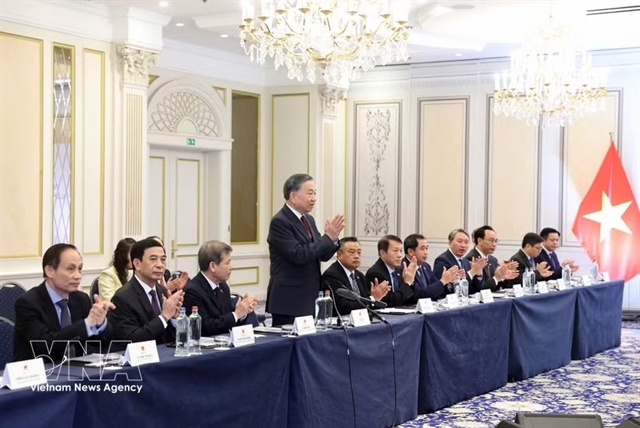
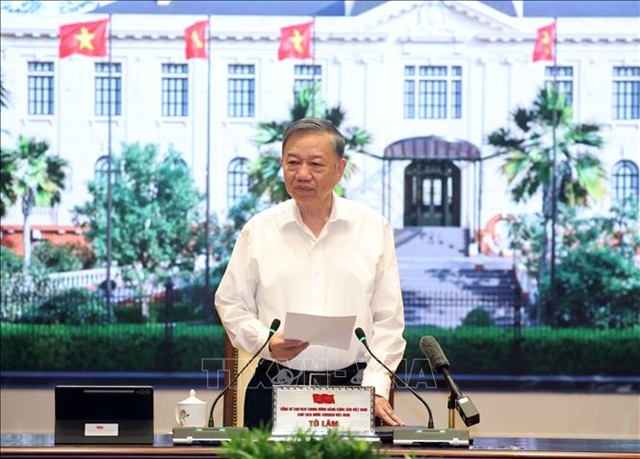
| General Secretary and President Tô Lâm speaks at the meeting to review — VNA/VNS Photo |
HÀ NỘI — The role of teachers in classrooms will not shrink as artificial intelligence (AI) moves into schools but it will change, General Secretary and President Tô Lâm said on Tuesday, calling on educators to focus less on delivering facts and more on shaping how students think.
Speaking at a meeting to review of Resolution 71, a Politburo directive issued a year ago calling for a 'breakthrough' in education and training, the top leader said schools should embrace digital tools and AI, but only in service of teaching, not as a substitute for it.
As machines take over more of the work of transmitting information, he said, teachers need to shift toward guiding students' reasoning, inspiring them, spotting their talents and helping them use knowledge responsibly.
Classrooms should not let AI do students' thinking for them, he said. The technology should push them to think more deeply, reason better and be more creative.
The remarks came as the General Secretary and President pressed officials to move faster on the broader education overhaul, a year after the resolution was adopted.
He credited the government, authorities, schools and teachers nationwide for their efforts so far, but said the results amounted mainly to groundwork rather than substantive change.
Gains in teaching quality and student outcomes remain unclear, he said, and many long-standing problems – some of which have frustrated the public for years – still have not been fixed.
The resolution, he added, calls for more than the incremental reform pursued in the past; it demands real execution and measurable results, not more policy documents.
A different kind of classroom
The party chief and head of state called for a deep internal transformation of how schools operate, covering school management, teacher training, curriculum and how students are tested and graded.
He said classrooms should move away from rote memorisation and exam-oriented instruction – the one-way transmission of knowledge that still dominates many schools – toward self-directed learning, hands-on experience, independent thinking and problem-solving.
He also called for cutting the administrative load on teachers, including excessive meetings and paperwork, so they can spend more time on their subjects and their students – freeing them up for exactly the kind of mentoring role AI cannot replace.
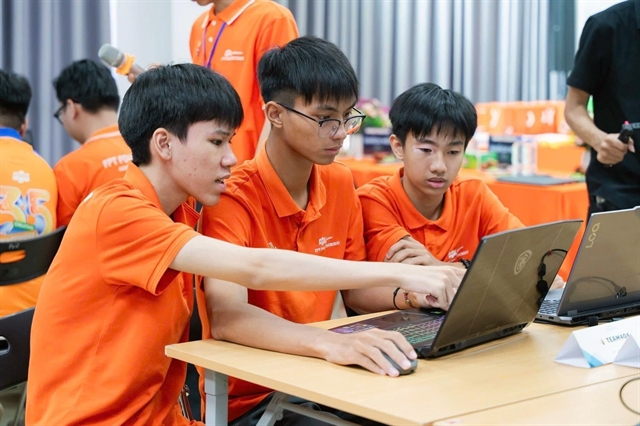
|
| High school students in the northern province of Hà Nam learn to use AI chatbots on a laptop. — VNA/VNS Photo |
Grades, diplomas and school rankings are not the point of education, the top leader said; what matters is the kind of people it produces.
He called for renewed attention to ethics, character, physical and mental health, alongside digital literacy, foreign languages, STEM and scientific thinking, and asked the education ministry to conduct a candid review of the national curriculum introduced in 2018 and fix the parts that are not working.
He also demanded a crackdown on misconduct in schools, including academic dishonesty, exam fraud and the abuse of paid supplementary tutoring.
Closing the gaps
The top leader said no student's education should be limited by a shortage of schools, classrooms or teachers, and that a child's prospects should not depend on where they happen to be born and raised.
He described equal access to quality education as one of the central measures of whether the resolution is succeeding, and called on the governmen and local authorities to set firm timelines with clear accountability for closing remaining gaps in school infrastructure and staffing.
The party chief and head of state told officials to stop launching new programmes and initiatives unless truly necessary, and to concentrate instead on a small number of priorities capable of driving major change. The focus from now on, he said, needs to shift from drafting policy to putting it into practice.
Looking beyond the classroom, the top leader said education needs to stay ahead of the country's economic needs, building the skilled workforce and talent pool Việt Nam will require to stay competitive.
He noted that the share of Vietnamese workers with formal qualifications remains low and called for training elite talent in technology fields critical to the country's future, along with a tighter pipeline linking workforce forecasting, school admissions, training, research and employment.
He also called for treating education data as strategic infrastructure, urging the swift completion of a unified national database of student records and diplomas that is accurate, complete and shared across agencies, eventually forming a lifelong digital learning profile for every citizen.
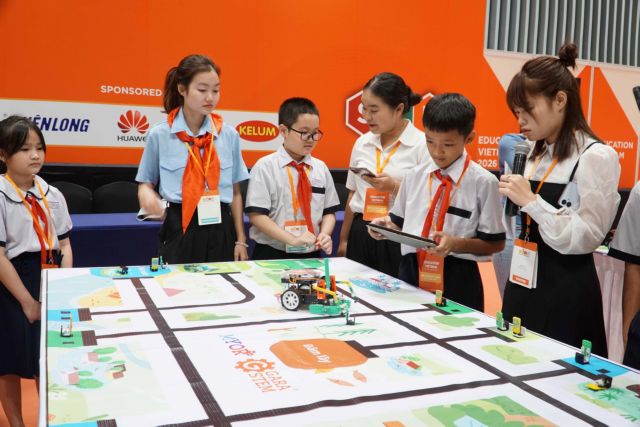
|
| Middle school students in HCM City learn about robots and try their hand at controlling one at a tech exhibition. — VNA/VNS Photo |
Diplomas and certificates should be fully digitised, he said, both to speed up administrative processes and to help stamp out fake credentials. Once information is on file and verified digitally, he said, citizens should not have to resubmit it or get documents notarised again.
That data, the top leader added, should let the state track education quality and workforce trends directly, rather than relying mainly on official reports.
Accountability beyond the ministry
The General Secretary and President called for a change in how officials lead and manage the resolution's rollout, with clearer accountability for those in charge.
Education administrators, he said, should spend more time in schools listening to teachers, students, parents and businesses, so that policy stays grounded in – and gets tested against – real-world conditions.
He stressed that responsibility for education does not rest with the education ministry alone. Other government agencies and local authorities, he said, must own their part of the work rather than leaving it all to the education sector.
The new academic year begins on September 5, the first since the Communist Party's 14th National Congress. The top leader said the education sector should treat the milestone as more than the start of a new school year; it marks a turning point in the resolution's implementation, from laying the groundwork for reform to delivering reform that is real.
Việt Nam will keep investing heavily in education, he said, but it is now up to the sector itself to respond with sharper accountability and tangible results that make a genuine difference as the country enters a new stage of development. — VNS
Politics & Law
 Politics & Law
 Politics & Law
 Politics & Law
 Politics & Law
 Politics & Law
 Politics & Law
 Politics & Law
 Politics & Law
 Politics & Law
 Politics & Law
 Politics & Law
 Politics & Law
 Politics & Law
 Politics & Law