 Politics & Law

World Health Summit 2026: Berlin Becomes Global Meeting Point for the Future of Health
1.
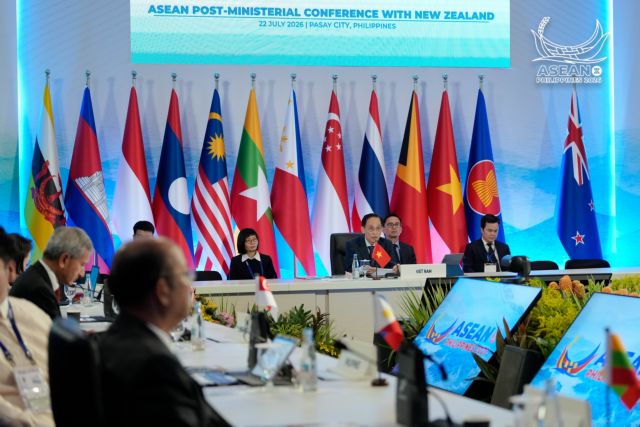 |
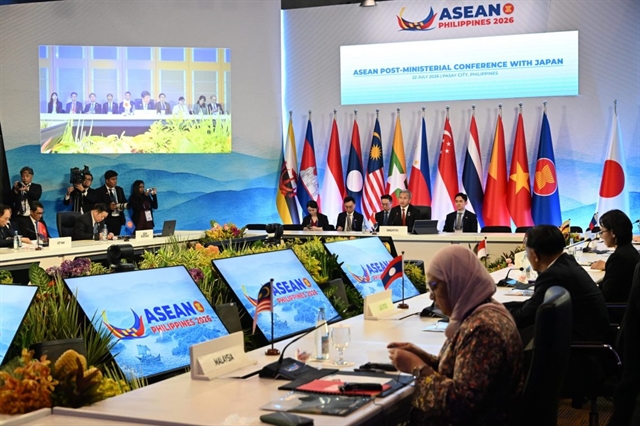
| ASEAN Post-Ministerial Conference with New Zealand on July 22 in Manila. — VNA/VNS Photo |
MANILA — Vietnamese Minister of Foreign Affairs Lê Hoài Trung and his New Zealand counterpart Winston Peters co-chaired the ASEAN Post-Ministerial Conference with New Zealand as part of the 59th ASEAN Foreign Ministers' Meeting (AMM-59) and Related Meetings in Manila, the Philippines, on Wednesday, with both sides reaffirming their commitments to deepening the ASEAN–New Zealand Comprehensive Strategic Partnership through practical cooperation.
Opening the meeting in Việt Nam's capacity as the country coordinator for ASEAN–New Zealand relations, Trung welcomed the positive progress in the bilateral ties and stressed the need to translate the strong political foundation between the two sides into concrete and practical outcomes by fully leveraging their respective strengths and addressing remaining obstacles.
He called on the Association of Southeast Asian Nations (ASEAN) and New Zealand to prioritise cooperation in ensuring people's essential needs, and building secure and resilient food and energy supply chains. He also underscored the importance of strengthening collaboration in maritime security, safety and connectivity, while promoting the sustainable development of the blue economy in accordance with international law, particularly the 1982 United Nations Convention on the Law of the Sea (UNCLOS).
Reaffirming Việt Nam's role as the coordinator for ASEAN–New Zealand relations, Trung said Việt Nam will continue working closely with New Zealand and other ASEAN member states to further deepen the Comprehensive Strategic Partnership between the two sides, contributing to regional and global peace, stability and development.
For his part, Peters reaffirmed New Zealand's long-standing commitment to peace, stability and prosperity in the region. He highlighted the 50-year partnership between ASEAN and New Zealand and stressed that ASEAN's centrality remains essential to promoting regional cooperation and addressing common regional and global challenges.
The ministers reviewed progress in bilateral cooperation and agreed on major directions to strengthen the Comprehensive Strategic Partnership across its four pillars of Peace, Prosperity, People and Planet.
Both sides reaffirmed their commitments to ASEAN's principles and way of cooperation, supporting an open, transparent, inclusive and rules-based regional architecture with ASEAN at its centre. They also agreed to enhance cooperation in maritime security, combating transnational crime, cybersecurity and artificial intelligence (AI) governance.
In the economic sphere, ASEAN and New Zealand pledged to strengthen economic integration by making full use of the upgraded ASEAN–Australia–New Zealand Free Trade Area (AANZFTA), accelerating the signing of the ASEAN–New Zealand Air Services Agreement (ANZ–ASA), and supporting ASEAN in implementing the Digital Economy Framework Agreement (DEFA).
The two sides also agreed to expand cooperation in education, human resource development, healthcare, disaster management and climate change response, while New Zealand reaffirmed its support for narrowing development gaps and enhancing regional connectivity within ASEAN.
In response to the impact of the situation in the Middle East on supply chains, energy security and food security, the ministers adopted the ASEAN–New Zealand joint statement on promoting regional resilience, reaffirming both sides' commitment to international law, including the UNCLOS, and outlined new initiatives to strengthen cooperation in energy, food security and maritime affairs, helping improve the region's resilience against emerging challenges. — VNA/VNS
Politics & Law
 Politics & Law
 Politics & Law
 Politics & Law
 Politics & Law
 Politics & Law
 Politics & Law
 Politics & Law
 Politics & Law
 Politics & Law
 Politics & Law
 Politics & Law
 Politics & Law
 Politics & Law
 Politics & Law
 Rikkeisoft ký kết MOU với LAC.Co, LTD - thúc đẩy hợp tác kinh doanh toàn diện trong lĩnh vực an ninh mạng.jpg)