 Politics & Law
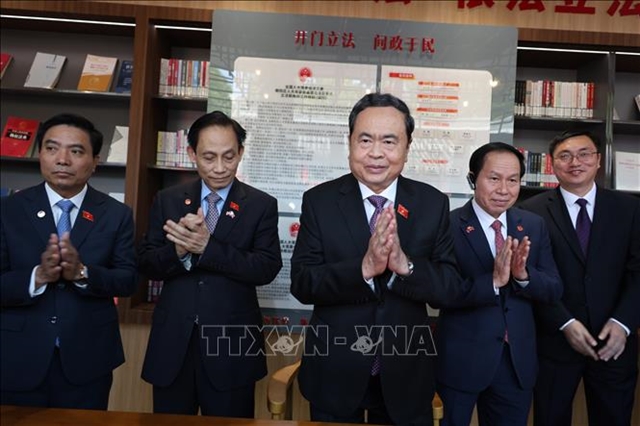
NA President visits Beijing legislative liaison station
1.
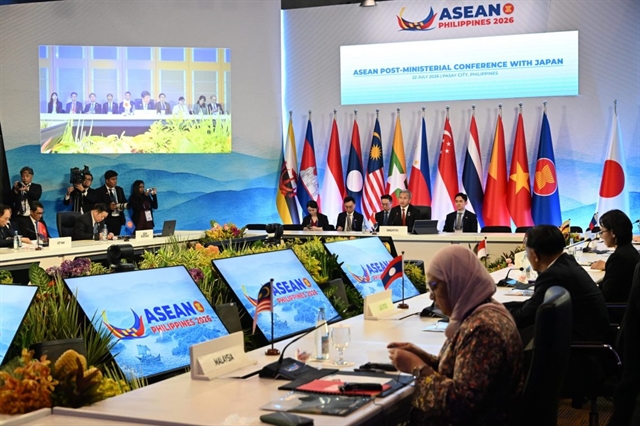 |
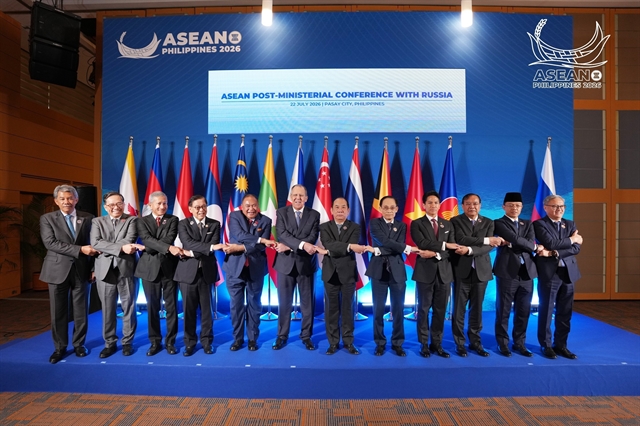
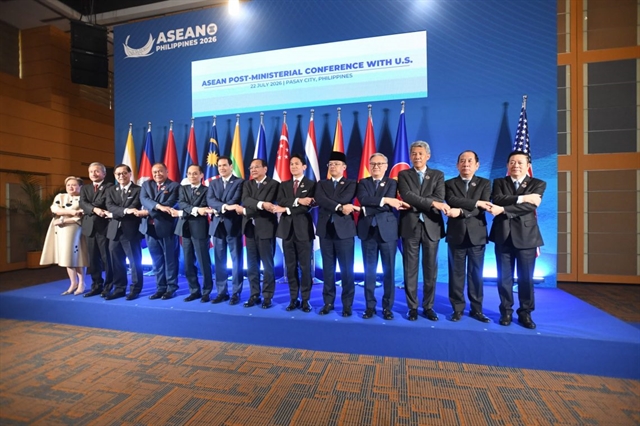
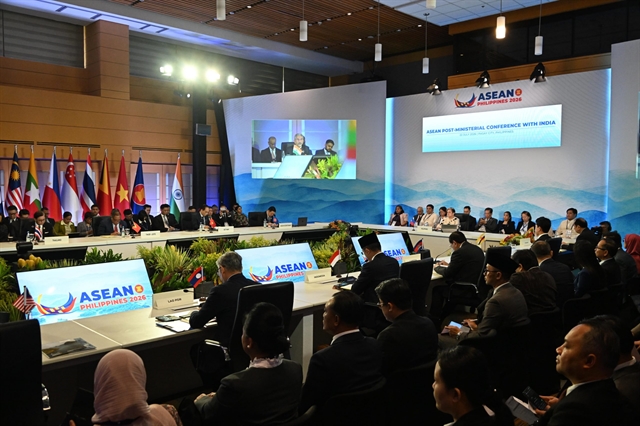
| A view of the SEAN Post-Ministerial Conference with Japan in Manila on July 22. — Photo courtesy of the ASEAN Secretariat |
MANILA — Vietnamese Minister of Foreign Affairs Lê Hoài Trung has proposed three strategic priorities to make ASEAN–Japan cooperation more substantive and future-oriented at the ASEAN Post-Ministerial Conference with Japan in Manila, the Philippines, on Wednesday, focusing on security and economic resilience, a safe digital economy, and green and sustainable development.
As part of the 59th ASEAN Foreign Ministers’ Meeting (AMM-59) and related meetings, the event was co-chaired by the Foreign Ministers of Singapore – the country coordinating ASEAN–Japan relations, and Japan.
Speaking at the meeting, Minister Trung stressed that amid profound changes in the global geopolitical and geoeconomic landscape, ASEAN–Japan relations not only serve the interests of both sides but also make an important contribution to strengthening an open, transparent and inclusive regional architecture based on rules.
He called for stronger cooperation to consolidate security and enhance economic resilience, with a focus on strategic areas such as supply chains, essential minerals, digital infrastructure, semiconductors and energy security.
Trung proposed promoting the co-creation of a secure digital economy by leveraging Japan’s strengths in technology and innovation to effectively implement the ASEAN–Japan Artificial Intelligence (AI) Innovation and Co-Creation Roadmap, the FOIP Digital Corridor and the Hanoi Convention against Cybercrime.
He also suggested stronger cooperation toward a green and sustainable future through expanded collaboration in renewable energy, smart grids and sustainable infrastructure, while making effective use of initiatives such as AZEC 2.0 and POWERR Asia to ensure energy security and promote a green and low-emission transition.
Regarding regional and international issues, FM Trung welcomed Japan’s support for efforts to strengthen ASEAN maritime cooperation and capacity, affirming that ASEAN and Japan share common interests in maintaining peace, stability, security, safety and freedom of navigation and overflight in the East Sea (internationally known as the South China Sea) and other seas. He also underscored the need to uphold international law, particularly the 1982 United Nations Convention on the Law of the Sea (UNCLOS 1982).
Delegates affirmed that ASEAN–Japan relations continue to develop on the basis of a long-standing, equal, substantive, trusted and mutually respectful partnership, while sharing the goal of building an open, transparent and inclusive regional architecture based on international law and ASEAN’s centrality.
ASEAN countries described Japan as one of their leading trusted partners that makes practical contributions to the development of ASEAN member states and the region as a whole.
Japanese Foreign Minister Motegi Toshimitsu reaffirmed Japan’s long-term commitment to ASEAN in the spirit of a “heart-to-heart” partnership and pledged to continue supporting the intra-bloc unity and ASEAN’s central role, the implementation of the ASEAN Community Vision 2045, and deepening of the ASEAN-Japan Comprehensive Strategic Partnership.
The Japanese side also pledged to continue supporting ASEAN's efforts to strengthen capacity in maritime security, energy security, food security, combating transnational crime, AI, digital transformation, people-to-people exchanges and high-quality human resources development.
The ministers agreed to strengthen cooperation in maritime security, cybersecurity and addressing non-traditional security challenges through ASEAN-led mechanisms. For economic cooperation, the two sides committed to promoting regional integration through the effective implementation and eventual upgrading of trade agreements, including the ASEAN-Japan Comprehensive Economic Partnership (AJCEP) and the Regional Comprehensive Economic Partnership (RCEP).
ASEAN appreciated Japan’s support for digital transformation, energy security and climate change response through initiatives such as the Asia Zero Emissions Community (AZEC), the ASEAN-Japan AI Innovation and Co-Creation Roadmap, and the Japan-ASEAN Integration Fund (JAIF) 3.0. — VNA/VNS
Politics & Law
 Politics & Law
 Politics & Law
 Politics & Law
 Politics & Law
 Politics & Law
 Politics & Law
 Politics & Law
 Politics & Law
 Politics & Law
 Politics & Law
 Politics & Law
 Politics & Law
 Politics & Law
 Politics & Law

 Rikkeisoft ký kết MOU với LAC.Co, LTD - thúc đẩy hợp tác kinh doanh toàn diện trong lĩnh vực an ninh mạng.jpg)