 Politics & Law
Thái Nguyên holds international festival to honour tea products, brands
1.
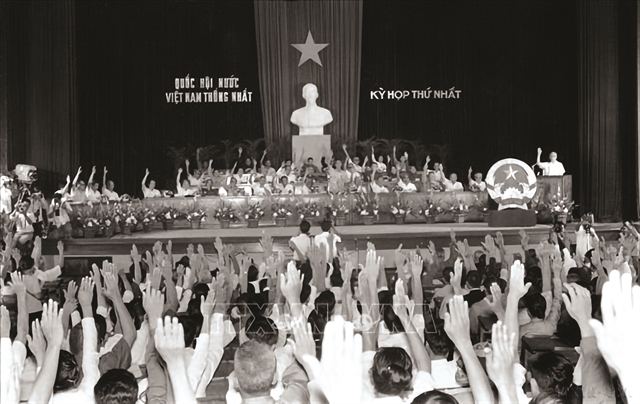 |
| The first session of the sixth National Assembly officially renamed Sài Gòn-Gia Định as HCM City on June 24, 1976. — VNA/VNS Photo |
Fifty years after being renamed Hồ Chí Minh City, Việt Nam’s southern metropolis has journeyed from post-war hardship and economic uncertainty to become the nation’s powerhouse of growth, innovation and ambition — a city whose rise has been shaped as much by resilience, reinvention and human spirit as by skyscrapers and statistics. Bồ Xuân Hiệp reports.
Eighty-two-year-old veteran Nguyễn Văn Đảm sat quietly beside the window as HCM City’s first metro train glided above streets he had watched transform over half a century.
Outside, the city rushed past in flashes of glass towers, tangled alleys, elevated highways and endless streams of motorbikes. Construction cranes stretched across the skyline of a metropolis seemingly in permanent motion.
For Đảm, who has lived in the city since the end of the war in 1975, the opening of the Bến Thành-Suối Tiên metro line in late 2024 carried a meaning far deeper than transportation.
“I’ve waited nearly 20 years for this metro line to come to life,” he recalled during the line’s inaugural week. “At my age, I never thought I would witness such modern infrastructure in my lifetime.”
Then, looking across the changing cityscape, he smiled softly.
“It feels like a dream come true.”
That image – an elderly veteran riding a sleek metro train once thought impossible in a city paralysed by war and hardship – captures the extraordinary story of HCM City over the past 50 years.
Half a century ago, during the first session of the National Assembly of reunified Việt Nam in 1976, lawmakers officially renamed Sài Gòn-Gia Định as HCM City in honour of the late President Hồ Chí Minh.
At the time, few could have imagined how dramatically the city would evolve.
Today, HCM City contributes nearly one-quarter of Việt Nam’s GDP and roughly one-third of state budget revenues. It has become the nation’s financial and commercial centre, a magnet for investment and innovation, and one of Southeast Asia’s fastest-changing megacities.
Yet its rise was never inevitable.
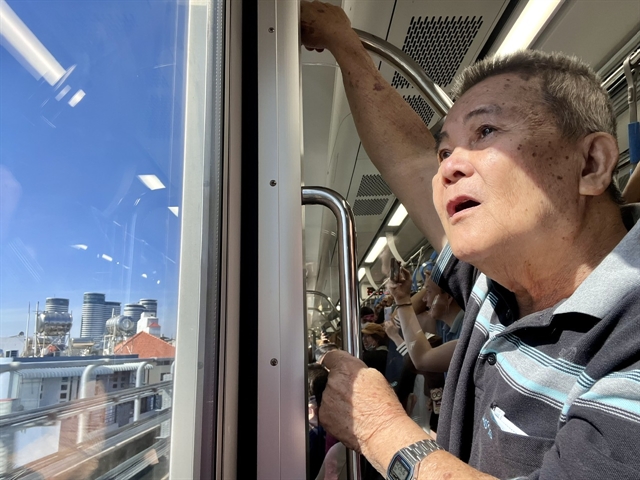 |
| Eighty-two-year-old veteran Nguyễn Văn Đảm looks out across HCM City from the city’s first metro line. — VNS Photo Bồ Xuân Hiệp |
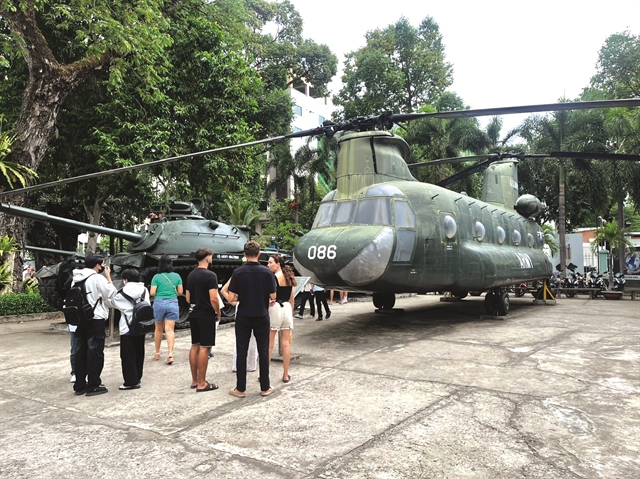 |
| Visitors gather around wartime aircraft and military vehicles at the War Remnants Museum in HCM City, a city shaped by history and transformed over the past 50 years. — VNS Photo Bồ Xuân Hiệp |
From hardship
When the war ended in April 1975, the city inherited immense social and economic challenges.
Factories stood idle. Inflation soared. Distribution systems broke down. Millions struggled with shortages of food and essential goods.
For many residents of the once-prosperous Sài Gòn, the years immediately following reunification were among the hardest in memory. Cassava, sweet potatoes and rationed rice became staples for families accustomed to a more abundant urban economy.
Phan Xuân Biên, an associate professor of Vietnamese history, once noted that for the first time in the city’s history, residents were forced to survive on substitute foods, with some meals containing up to 90 per cent cassava or sorghum.
Yet adversity also became a catalyst for reinvention.
While trying to feed a rapidly growing population, local leaders quietly experimented with pragmatic economic solutions that deviated from rigid central planning. Factories were allowed greater flexibility in sourcing materials and selling products. Enterprises linked directly with provinces to exchange goods outside formal quotas. Small-scale household production gradually revived.
These experiments became known locally as xé rào, or “fence-breaking” reforms. At a time when Việt Nam still operated under a tightly controlled planned economy, HCM City emerged as a laboratory of experimentation.
The city’s Communist Party Committee, in 1979 and 1980, encouraged greater initiatives at the grassroots level and laid the intellectual foundations for broader economic reform.
Enterprises such as Saigon Beer, Thành Công Textile and Phong Phú Textile became symbols of industrial revival, while thousands of workers and managers were recognised for innovation and productivity.
The city’s reforms did not simply solve immediate shortages. They helped reshape economic thinking nationwide.
When Việt Nam officially launched the Đổi Mới (Renewal) in 1986, many of the principles underpinning market-oriented reforms had already been tested in HCM City.
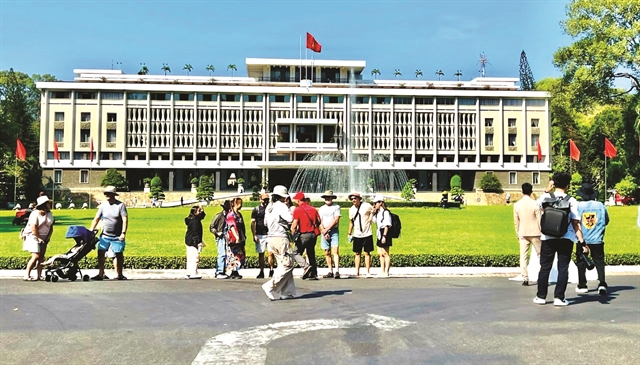 |
| Local and foreign tourists take photos outside the Reunification Palace in downtown HCM City. Fifty years after reunification, the city has transformed into Việt Nam’s economic and cultural powerhouse. — VNS Photo Bồ Xuân Hiệp |
Economic engine
As Việt Nam opened its economy, HCM City rapidly became the country’s most dynamic growth centre.
Industrial zones and export-processing areas such as Tân Thuận, Linh Trung and Hiệp Phước attracted waves of foreign investment. Manufacturing boomed. Private enterprise flourished. The financial and banking sectors re-emerged after years of stagnation.
The city evolved into the nation’s primary gateway for trade, services and international business.
During the 1990s and 2000s, HCM City consistently posted double-digit growth rates, far exceeding national averages. New office towers, hotels and shopping centres transformed the skyline, while rising incomes fuelled the growth of an urban middle class.
In 2002, the establishment of the Saigon Hi-Tech Park marked another turning point, signalling the city’s ambition to move beyond labour-intensive manufacturing toward technology and innovation.
Global corporations established operations in the city, integrating HCM City into regional and international supply chains.
By the mid-2000s, the southern metropolis had firmly established itself as Việt Nam’s economic locomotive.
Yet rapid growth also brought mounting pressures.
Traffic congestion worsened. Housing demand surged. Infrastructure struggled to keep pace with explosive urbanisation. Migrants from across the country continued pouring into the city in search of opportunity.
The population expanded from around 5.3 million in 2000 to more than 9 million two decades later, turning HCM City into one of Southeast Asia’s largest urban centres.
The opening of Metro Line 1 therefore represented far more than a transportation project delayed by bureaucracy and financial hurdles.
It symbolised the city’s determination to modernise and reinvent itself once again.
Tested again
Few episodes tested the city’s resilience more severely than the COVID-19 pandemic.
In 2021, HCM City became the epicentre of Việt Nam’s outbreak. Hospitals overflowed. Entire wards and communes were locked down. Supply chains froze as factories suspended operations.
For months, the city’s streets, usually synonymous with relentless energy, fell eerily silent.
The crisis exposed vulnerabilities in urban infrastructure, healthcare systems and labour networks. Hundreds of thousands of migrant workers returned to their hometowns as businesses shut down.
Yet even during the darkest months, acts of solidarity emerged everywhere.
Volunteer groups delivered food to struggling families. Community kitchens appeared across neighbourhoods. Businesses donated supplies and medical equipment.
That spirit of collective compassion has long been central to the identity of HCM City.
The city pioneered many of Việt Nam’s major social welfare programmes, including hunger eradication campaigns, poverty reduction initiatives and charitable housing schemes.
In the early 1990s, around 17 per cent of households in the city were classified as poor. More than three decades later, HCM City has become a national leader in sustainable poverty reduction, with a poverty threshold significantly higher than the national benchmark.
Programmes supporting workers, veterans, vulnerable households and low-income residents remain deeply embedded in local governance.
Beginning in 2026, the city expanded healthcare support for disadvantaged groups, covering 100 per cent of health insurance contributions for poor and near-poor households, elderly residents living alone and people suffering from severe illnesses.
Authorities also launched plans for free annual health screenings for all residents — an ambitious step for a rapidly developing megacity.
The city’s recovery after the pandemic was swift.
In 2022, HCM City rebounded with economic growth exceeding 9 per cent, its strongest performance in a decade. Officials described the economy as “a compressed spring suddenly released.”
The rebound reaffirmed the city’s role as Việt Nam’s principal growth engine.
Building tomorrow
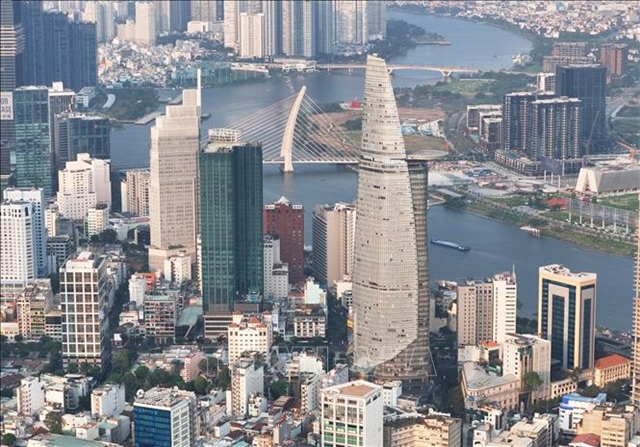
The transformation of HCM City is perhaps most visible in its urban landscape.
What was once a low-rise city dominated by bicycles and narrow roads has evolved into a sprawling metropolis connected by expressways, tunnels, bridges and modern urban zones.
Major infrastructure projects such as the East-West Boulevard, Thủ Thiêm Tunnel and the Phú Mỹ Bridge dramatically improved connectivity across the city.
New urban developments including Phú Mỹ Hưng and Thủ Thiêm reshaped both the skyline and the city’s economic geography.
The opening of Metro Line 1 added a new chapter to that transformation.
Within days of its launch, the metro attracted enormous crowds, far exceeding expectations. For many residents, riding the train became both a practical experience and an emotional milestone.
The metro line reflected something larger than infrastructure.
It represented the aspirations of a city seeking solutions to worsening congestion, pollution and urban pressure while embracing a more sustainable future.
And the transformation is accelerating.
On April 29, 2026, city authorities simultaneously launched four major projects, including a new central square and administrative centre, Metro Line 2 connecting Bến Thành and Thủ Thiêm, an international university urban area and the redevelopment of the Nhà Rồng Wharf –Khánh Hội riverfront.
Together, the projects signal HCM City’s ambition to evolve into a modern global metropolis.
That ambition expanded significantly after the administrative merger with Bình Dương and Bà Rịa-Vũng Tàu provinces last year.
The merger created a vastly larger economic corridor integrating industrial production, deep-water ports, logistics, finance and high technology across southern Việt Nam.
City authorities now envision a mega-region capable of competing with leading urban centres in Asia.
One of the city's most ambitious projects is the planned International Financial Centre in the Thủ Thiêm New Urban Area, spanning nearly 900 hectares and designed to attract global financial institutions and investment firms.
Digital transformation, financial technology, logistics and innovation are increasingly central to the city’s development strategy.
Officials aim for HCM City to join the world’s top 100 most liveable cities by 2045.
HCM City Party Secretary Trần Lưu Quang recently described the city’s development vision as both an aspiration and a political commitment.
“Intelligence, solidarity and innovation are not merely slogans, but political commitments and standards of action,” he said. “Every official, Party member and resident must work together to transform aspirations into action and goals into tangible results.”
Party General Secretary and State President Tô Lâm has similarly emphasised the city’s national importance, describing HCM City as a place entrusted with the country’s “largest and most difficult tasks”.
He urged local leaders to remove institutional bottlenecks, accelerate public investment and ensure growth remains sustainable and inclusive rather than purely numerical.
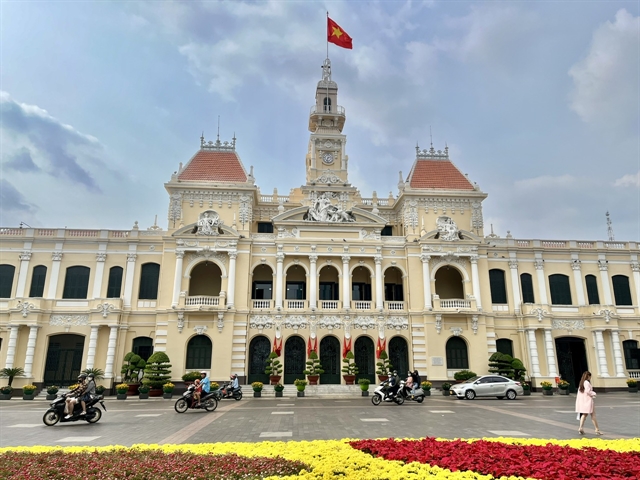 |
| HCM City Hall, one of the city's most recognisable landmarks, stands in the heart of downtown HCM City. — VNS Photo Bồ Xuân Hiệp |
Beyond numbers
Yet for many residents, the soul of Việt Nam's largest city cannot be measured solely through GDP growth, skyscrapers or investment figures.
It lies in its restless energy, adaptability and openness to change.
It lies in generations of migrants arriving from every corner of Việt Nam seeking opportunity.
It lies in the street vendors serving breakfast before dawn, the workers crowding factory gates at sunrise and the entrepreneurs constantly testing new ideas.
And it also lies in the memories carried by all local residents like veteran Đảm.
As the metro train rolled into Bến Thành Station beneath the heart of the city once known simply as Sài Gòn, Đảm looked around at the crowds taking photographs, children waving excitedly and commuters smiling as they boarded the train.
For younger passengers, the metro represented the future. For Đảm, it represented the extraordinary distance HCM City had travelled — from a city struggling to rebuild after war to one ambitious enough to imagine itself among Asia's leading urban centres.
From the hardship of the post-war years to the ambition of becoming a global financial and innovation hub, the city’s story has been one of resilience, reinvention and relentless motion.
Fifty years after Sài Gòn-Gia Định officially became HCM City, the name has become more than a historical symbol.
It has become the identity of a city that continues to redefine itself, a metropolis forever balancing memory and modernity, hardship and ambition, humanity and growth.
And as the metro doors closed and the train accelerated once again above the streets below, the city kept moving forward, just as it has for the past 50 years. — VNS
Politics & Law
 Politics & Law
 Politics & Law
 Politics & Law
 Politics & Law
 Politics & Law
 Politics & Law
 Politics & Law
 Politics & Law
 Politics & Law
 Politics & Law
 Politics & Law
 Politics & Law
 Politics & Law
 Politics & Law