 Politics & Law
Thái Nguyên holds international festival to honour tea products, brands
1.
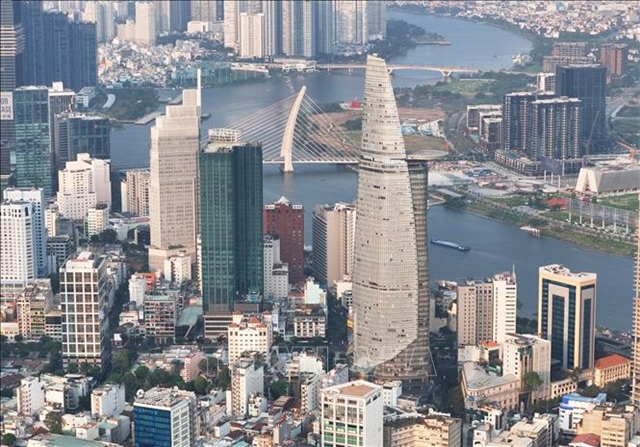 |
| Bitexco Financial Tower, a 262-metre icon of HCM City inaugurated in 2010. It was the city’s tallest skyscraper until Landmark 81 surpassed it in 2018. — VNA/VNS Photo Hồng Đạt |
For half a century, HCM City has been at the forefront of many of Việt Nam’s most significant economic and institutional reforms. Now, as it marks 50 years since being officially named after President Hồ Chí Minh, the country’s largest metropolis is preparing what could become its most ambitious experiment yet: a Special Urban Law designed to unlock a new phase of growth and governance.
The proposed legislation, currently being finalised for National Assembly (NA) review in 2026, would establish a highly stable yet flexible institutional framework tailored to the scale, complexity and ambitions of a city that now serves as one of the country’s principal engines of growth.
This builds upon the success of Resolution 98 issued by the NA in 2023, which has granted the city unprecedented mechanisms to unleash its resources.
Breaking ground
Following the historic milestone on July 2, 1976, when the NA officially renamed the Sài Gòn-Gia Định area, the city entered a period of severe economic stagnation under the centralised subsidy mechanism.
Facing hyperinflation and critical shortages of raw materials, local leaders took audacious steps to stimulate trade and production rather than waiting for central directives.
“The city boldly 'broke the fence' to pilot new economic management approaches, providing the central government with practical lessons to initiate that helped pave the way for the nationwide Đổi Mới (Renewal) reforms in 1986,” said Phạm Chánh Trực, former deputy secretary of the city's Communist Party Committee.
This sentiment is shared by Huỳnh Đảm, former chairman of the Việt Nam Fatherland Front Central Committee, who said the city's status as a "special urban area" stemmed from its unique history and its role as the nation’s cradle of innovation.
Trần Quang Thắng, PhD, director of the city's Institute of Economics and Management, said these early breakthroughs sowed the seeds for the socialist-oriented market economy, ultimately reshaping the country’s economic mindset.
Over the past five decades, the city has frequently served as a testing ground for policies on finance, budget allocation, land management and urban governance.
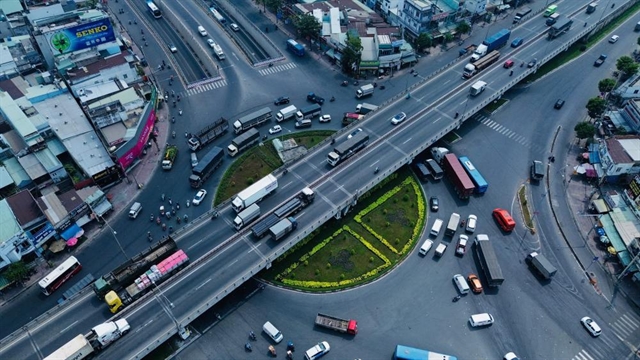 |
| The three-level An Sương Interchange helps ease traffic congestion at HCM City’s northwestern gateway. — VNA/VNS Photo |
Public policy expert Nguyễn Tuấn Anh said the city took on these high-pressure trials not for exclusive privileges, but to pave the way for national reform.
"When a mechanism works efficiently here, it becomes a valuable blueprint for nationwide implementation," he said.
"HCM City is the engine of the nation, not just economically, but institutionally."
The city has also been a symbol of global integration, launching pioneering foreign trade initiatives with markets like Hong Kong (China), Chinese Taipei, Singapore, Japan, France and Germany even before the official renewal era.
It later pioneered landmark projects such as the Tân Thuận Export Processing Zone and the Phú Mỹ Hưng Urban Area, whilst spearheading flexible foreign direct investment (FDI) policies and multi-sectoral international cooperation.
Future vision
Now evolving into a megacity of over 14 million people, the city requires stronger institutional autonomy to sustain its leadership role.
Phan Trung Hoài, PhD, vice president of the Vietnam Bar Federation, said the city's governance standards and contributions to citizen welfare had been well-proven over the last half-century.
Looking towards a 100-year vision of becoming a global metropolis, experts argue that the city must be granted greater decentralised powers.
This will allow the city to pilot cutting-edge policies in science, technology and digital transformation, boosting its regional competitiveness and securing its position as a leading financial and innovation hub.
Fifty years after becoming HCM City, the metropolis once again finds itself at the forefront of a new reform agenda. If adopted, the Special Urban Law could become the next major institutional experiment in a city whose history has long been defined by innovation, helping shape not only its own future but also new pathways for Việt Nam’s development. —— VNS
Politics & Law
 Politics & Law
 Politics & Law
 Politics & Law
 Politics & Law
 Politics & Law
 Politics & Law
 Politics & Law
 Politics & Law
 Politics & Law
 Politics & Law
 Politics & Law
 Politics & Law
 Politics & Law
 Politics & Law