 Politics & Law
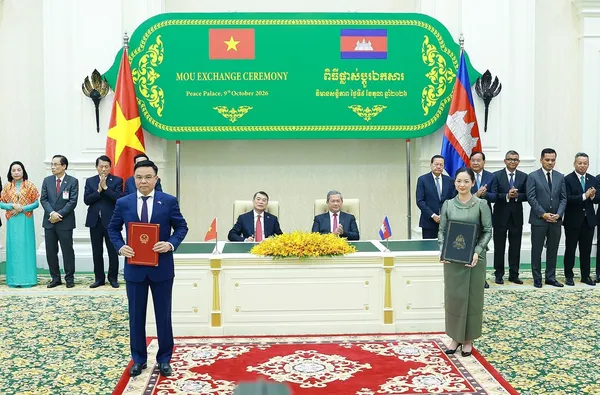
Vietnamese Prime Minister meets Cambodian National Assembly President
1.
|
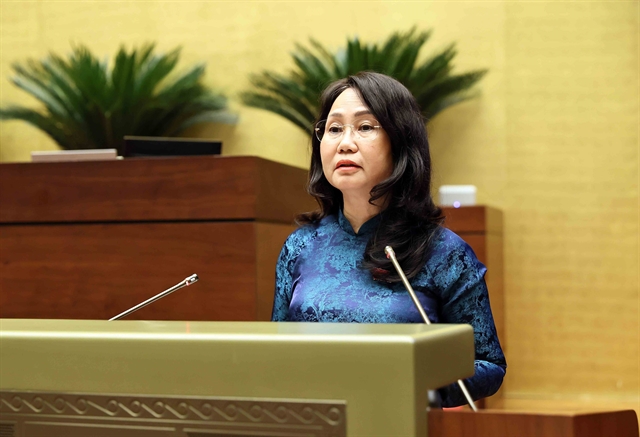
| Minister of Culture, Sports and Tourism Lâm Thị Phương Thanh delivers her speech at the first session of the 16th National Assembly in Hà Nội on Wednesday morning.— VNA/VNS Photo An Đăng |
HÀ NỘI — The proposed pilot establishment of a culture and arts fund under a public-private partnership model, envisioned as a venture capital fund operating on market principles and accepting a degree of risk, marks a major step forward.
"It marks a shift away from the perception of culture as a purely cost-incurring sector to recognising it as a genuine economic industry that warrants investment," said National Assembly deputy Đỗ Đức Hồng Hà of the Hà Nội delegation.
He made the remarks on Wednesday morning during the first session of the 16th National Assembly in Hà Nội while delivering an in-depth analysis of the draft National Assembly Resolution on a number of breakthrough mechanisms and policies for the development of Vietnamese culture.
He said that such a model would be able to take calculated risks to invest in breakthrough creative projects that are difficult for the State budget to support.
However, to ensure feasibility and robustness, he stressed the need to design clear risk assessment criteria to protect fund appraisal councils from administrative constraints related to capital preservation.
“Art is a sector with unique characteristics in which not all projects achieve immediate commercial success,” he said.
As such, a secure legal framework is required to account for anticipated risks, he added.
Expanding on the draft resolution, Hà underscored its innovative thinking in financial mechanisms and investment sources for culture, including a commitment to allocate 2 per cent of the State budget and the introduction of a venture capital fund model.
He said the proposed financial foundation is particularly strong, with the State required to guarantee annual cultural expenditure of no less than 2 per cent of total public spending, with gradual increases in line with economic development needs.
Prioritising professional achievement
Also addressing talent attraction policies, NA deputy Cà Thị Thắm of the Lai Châu Province delegation said Việt Nam should prioritise professional achievement and expertise as the primary criteria for recruiting artistic talent.
She proposed allowing special recruitment for all individuals meeting high standards, regardless of their source of training funding.
Thắm said that under the draft resolution, preferential recruitment without competitive examination is currently limited to those trained with State funding.
She argued that this provision fails to reflect reality and lacks fairness, pointing out the growing trend of self-funded or privately sponsored study at prestigious international institutions, which in some cases surpass State-sponsored numbers.
“The professional value of an internationally awarded talent does not depend on the source of their training funds. Maintaining cumbersome administrative procedures risks wasting intellectual capital and pushing talent into the private sector or overseas,” she said.
Highlighting the demanding nature and relatively short career span of artistic professions, Hà expressed support for the draft’s provisions in Article 7, describing them as deeply humane.
These include special recruitment mechanisms allowing public service units to hire talented artists and students with international awards without examinations; higher occupational allowances ranging from 40 to 60 per cent of salary for performers in traditional, classical and circus arts as well as those working in remote areas; and career transition support, with the State-funded retraining for artists in specialised fields once they reach the end of their professional careers.
However, he recommended broadening the criteria for recognising talent rather than limiting it to international medals or awards.
Folk artisans who make significant contributions to preserving and transmitting cultural heritage, despite not participating in competitions, should also be eligible for such preferential mechanisms.
Sharing views on talent incentives, NA deputy Trần Thị Diệu Thúy of the Hồ Chí Minh City delegation supported preferential recruitment for artists and athletes with international accolades.
Nevertheless, she pointed to a major obstacle that many theatres now operate under financial autonomy but lack the resources to provide additional remuneration for such talent under current regulations.
She therefore proposed introducing targeted budget allocations for autonomous units that recruit exceptional talent.
These funds, she suggested, should not count towards regular expenditure ceilings nor require matching revenue, thereby creating practical conditions to retain talent in the cultural sector.
Minister responds
Addressing deputies’ comments during the discussion, Minister of Culture, Sports and Tourism Lâm Thị Phương Thanh said that the issuance of the resolution is an essential step to promptly institutionalise the Party’s policies, particularly Politburo Resolution No. 80.
She reiterated the overarching view that culture and people form the foundation, an intrinsic driver, and a pillar of sustainable national development.
The draft resolution focuses on two key objectives of removing longstanding bottlenecks in cultural development as well as mobilising and effectively utilising all available resources.
On resource-related breakthroughs, including the 2 per cent budget commitment and the venture capital fund, the minister said the draft resolution clearly stipulates that annual funding for culture must account for at least 2 per cent of total State budget expenditure.
The ministry is currently working with the Ministry of Finance to determine the appropriate spending structure to ensure targeted and effective allocation.
She highlighted the pilot proposal to establish a culture and arts fund under a public-private partnership model as a significant innovation.
The fund would operate as a venture capital vehicle, adhering to market principles and accepting risk, an approach suited to the nature of artistic creativity.
In the framework, State funding would serve as seed capital to attract contributions from the private sector and international organisations.
The Government will develop specific risk assessment criteria to ensure the fund operates efficiently.
Regarding policies for artists, the draft outlines tailored incentives aimed at attracting and retaining genuinely talented individuals, particularly in traditional and folk arts.
The minister also acknowledged NA deputies’ suggestions on training and nurturing students in the arts to build a high-quality pipeline of future talent.
Thanh concluded that without distinctive and breakthrough policy mechanisms, the ambitious cultural development goals would be difficult to achieve.
Close coordination with the National Assembly and broad societal engagement will be key to ensuring that culture develops in line with the nation’s full potential, she said. — VNS
Politics & Law
 Politics & Law
 Politics & Law
 Politics & Law
 Politics & Law
 Politics & Law
 Politics & Law
 Politics & Law
 Politics & Law
 Politics & Law
 Politics & Law
 Politics & Law
 Politics & Law
 Politics & Law
 Politics & Law