 Politics & Law
Viên dives again to popularise swimming passion
1.
|
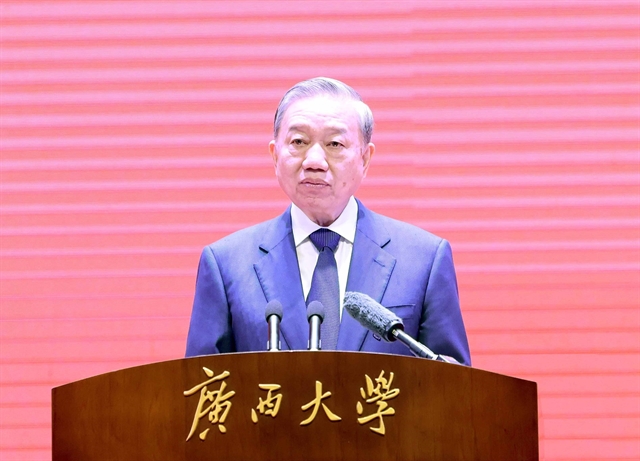
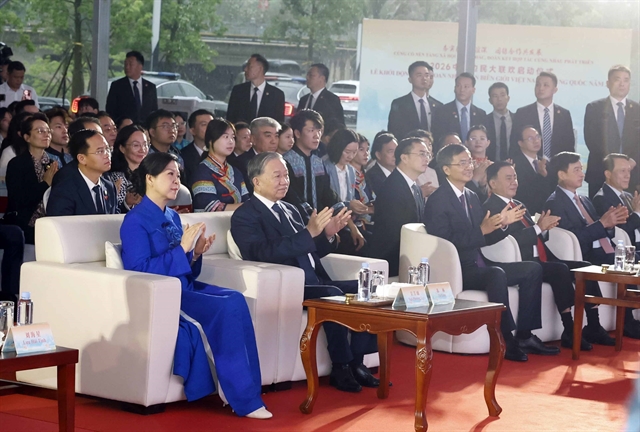
| Party General Secretary and State President Tô Lâm spoke at the relic site of Nanning Yucai School in Guangxi, China, on April 17. VNA/VNS Photo |
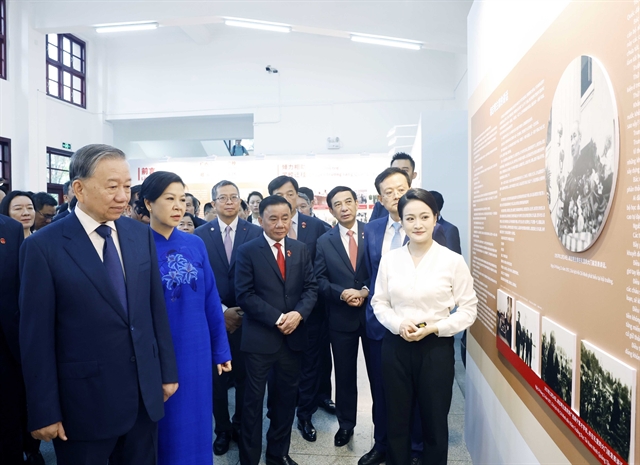
HÀ NỘI — General Secretary of the Communist Party of Việt Nam (CPV) Central Committee and State President Tô Lâm and his spouse, along with a high-level Vietnamese delegation, on Friday visited the relic site of Nanning Yucai School in Guangxi, which trained Vietnamese students and cadres from 1951-1954, as part of his state visit to China.
He and his entourage were welcomed and accompanied by leaders of Guangxi University, who then guided them through an exhibition showcasing the school’s history.
Speaking at the site, the Vietnamese leader described the historic location as a powerful symbol of the “comrades and brothers” friendship between Việt Nam and China. He noted that standing there evoked memories of the 1950s, when Việt Nam was waging its protracted struggle for national liberation and received valuable support from China, including the training of Vietnamese students.
|
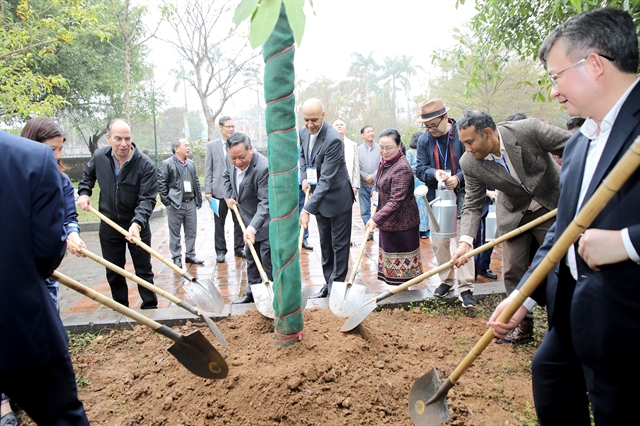
| General Secretary and State President Tô Lâm, his spouse and the high-ranking Vietnamese delegation tour the relic site of Nanning Yucai School in Guangxi, China. VNA/VNS Photo |
Despite its own difficulties at the time, China prioritised resources to build facilities, ensure security, and care for thousands of Vietnamese students, with many moving teacher-student stories becoming enduring legacies of bilateral friendship.
General Secretary and President Lâm affirmed that the Party, State and people of Việt Nam always treasure and remember the valuable support and assistance provided by the Party, State and people of China in the past struggle as well as in the country’s current development. He also thanked the authorities and people of Guangxi for preserving the Yucai School relic and other historical sites associated with President Hồ Chí Minh, turning them into “red addresses” symbolising the enduring ties between the two nations.
Recalling President Hồ Chí Minh’s visit to the school in 1957, he highlighted the late Vietnamese leader to younger generations to remain grateful for international support, strive in study and self-improvement, and uphold humility, diligence and responsibility to the nation. The motto “Solidarity – Study – Progress – Service,” set by President Hồ Chí Minh, continues to serve as a lasting core value.
He expressed his hope that Guangxi University and other educational institutions in the region would continue acting as bridges of knowledge and culture, expanding cooperation with Vietnamese universities and training more talent for both countries, thereby contributing to sustained and fruitful Việt Nam–China relations for the benefit of their peoples and for regional and global peace, stability and development.
The school was established in 1951 following a proposal by President Hồ Chí Minh to Chairman Mao Zedong to set up a training institution for Vietnamese revolutionary cadres in Nanning. For security reasons, it was named Yucai School. The school was managed by Việt Nam, with China providing advisory and logistical support.
Its first intake included 257 students, among them 101 revolutionary cadres. By 1954, the school moved to a new campus (now the west campus of Guangxi University), and in September 1957 it was fully relocated back to Việt Nam. During its operation, the school trained around 7,000 cadres, teachers and students, many of whom later became key leaders, diplomats, economists, scientists, musicians, poets and writers.
In November 1963, in recognition of the dedicated support of the school’s Chinese staff and teachers, the Vietnamese Government awarded honours to outstanding contributors. — VNA/VNS
Politics & Law
 Politics & Law
 Politics & Law
 Politics & Law
 Politics & Law
 Politics & Law
 Politics & Law
 Politics & Law
 Politics & Law
 Politics & Law
 Politics & Law
 Politics & Law
 Politics & Law
 Politics & Law
 Politics & Law