 Politics & Law
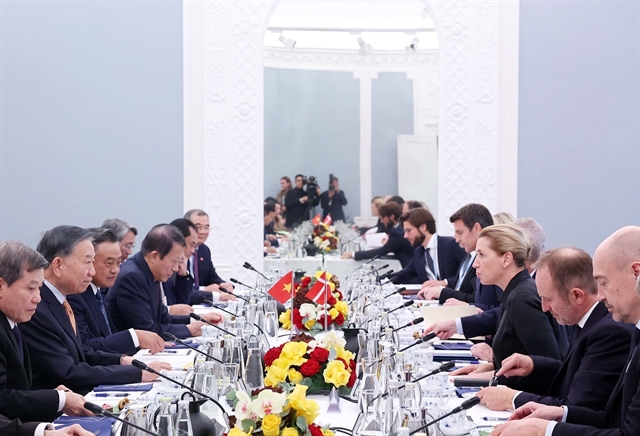
Việt Nam, Denmark issue joint statement on establishment of Comprehensive Strategic Partnership
1.
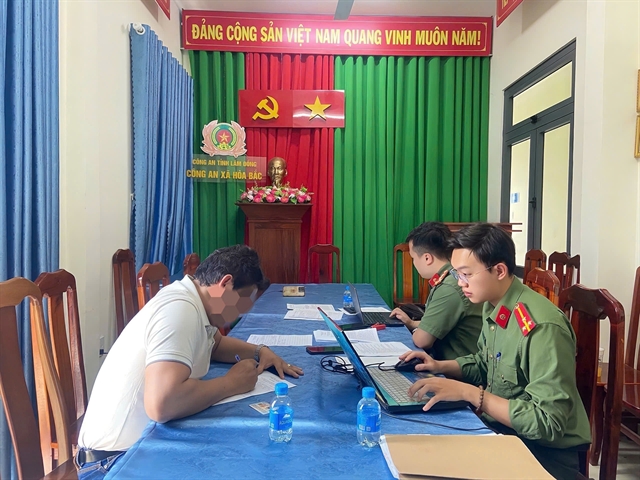 |
| N.L. is questioned at the police station over posting false election-related information online. |
LÂM ĐỒNG – Two people have admitted to police they posted false content on social media related to the election of deputies to the 16th National Assembly and People’s Councils at all levels for the 2026–2031 term.
Through online monitoring, Lâm Đồng provincial police identified Facebook users N.Đ.T, 57, residing in Ward 3, Bảo Lộc City, and N.L, 42, living in Hòa Bắc Commune, as spreading untrue information about the elections.
Investigators said N.Đ.T admitted to using his Facebook account “N.Đ.T” to join the group “Từ chối ***” and publish several false posts related to the election.
N.L confessed to using the account “N.L” to post content insulting a candidate for the 16th National Assembly, and to frequently sharing misinformation about personnel work.
After being summoned to the provincial police headquarters and informed of relevant legal provisions, both individuals acknowledged their violations. They attributed their actions to limited legal awareness, a failure to verify sources, and reliance on rumours and unverified online content, leading to impulsive behaviour on social media.
Police are continuing to complete the case files to strictly handle the violations in line with the law. They are also identifying additional accounts inside and outside the province that have posted, commented on, or shared related content.
Under Article 101 of Government Decree No. 15/2020/NĐ-CP dated February 3, 2020, administrators of social network pages, forums, or groups who neglect moderation and allow the posting of false information or content that harms the reputation of agencies, organisations, or the honor and dignity of individuals may face administrative fines of VNĐ10-20 million (more than US$380-$760). In serious cases, criminal prosecution may be pursued.
Police urge citizens to exercise caution when accessing information on social media, refrain from sharing or commenting on unverified election-related content on platforms such as Facebook, Zalo, and TikTok, and seek official information from the provincial web portal and mainstream media outlets. — VNS
Politics & Law
 Politics & Law
 Politics & Law
 Politics & Law
 Politics & Law
 Politics & Law
 Politics & Law
 Politics & Law
 Politics & Law
 Politics & Law
 Politics & Law
 Politics & Law
 Politics & Law
 Politics & Law
 Politics & Law