 Politics & Law
Shrimp sector under pressure over sustainability, deeper processing
1.
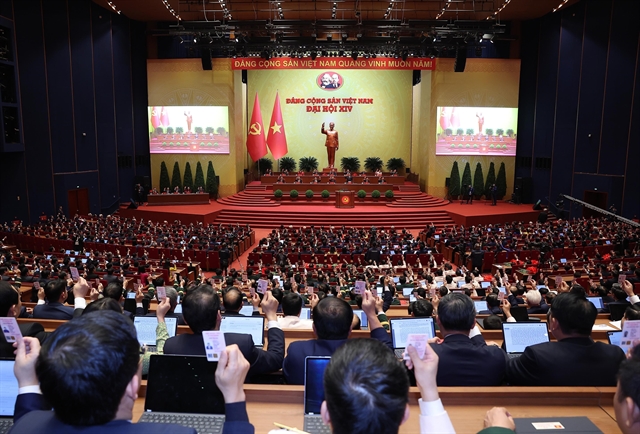 |
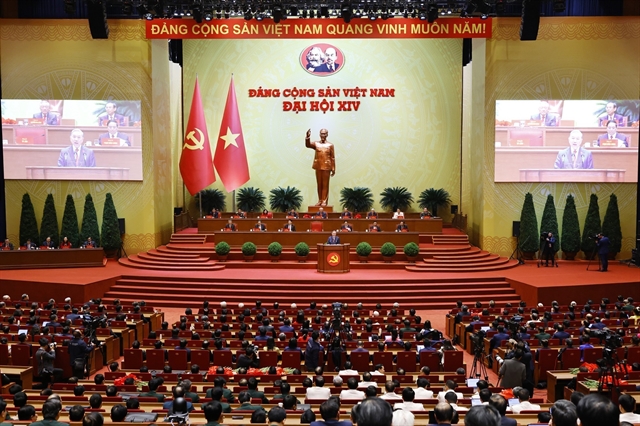
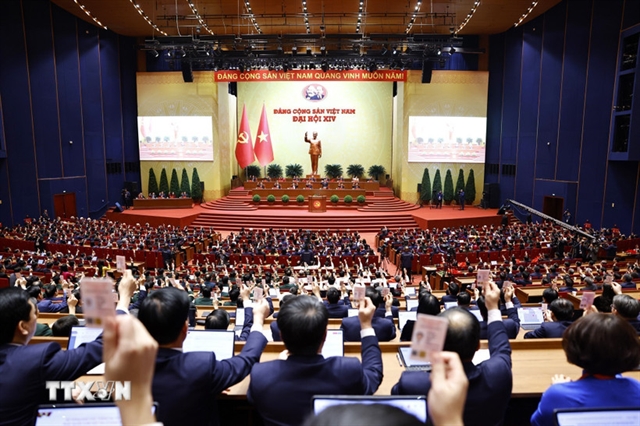
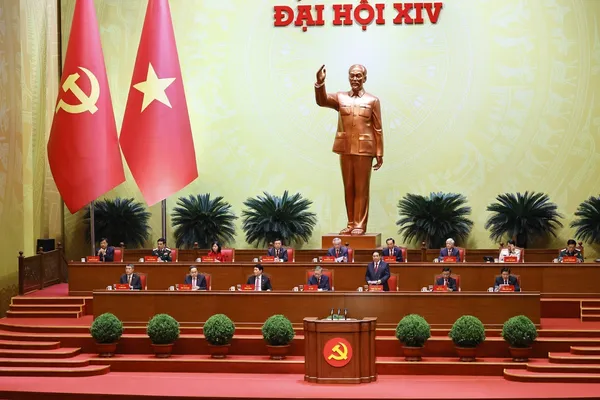
| Delegates vote to adopt the resolution of the Party’s 14th National Congress on January 23. — VNA/VNS Photo |
HÀ NỘI — With an eye on rapid growth and long-term stability, the Communist Party of Việt Nam has adopted a sweeping resolution setting development priorities for the next five years, laying out ambitious economic targets while reaffirming commitments to political stability, institutional reform and modernisation.
The resolution was approved unanimously at the Party’s 14th National Congress after being presented by a senior official on behalf of the congress presidium.
It reviews the implementation of policies adopted at the previous Party Congress, assesses four decades of economic renovation under the country’s socialist-oriented market model and sets out strategic goals through 2030, with a longer-term vision to 2045.
Party leaders acknowledged that the 2021–2025 period unfolded amid significant disruption, including the COVID-19 pandemic, supply-chain shocks linked to geopolitical tensions, rising trade protectionism and increasingly complex climate and security challenges.
Despite these pressures, the resolution states that the government and Party leadership have delivered what it described as broad-based progress across economic, social and institutional areas.
At the core of the new policy framework is a push for faster and more sustainable growth.
The Party set a target of average annual GDP growth of at least 10 per cent between 2026 and 2030, with per capita income projected to reach around US$8,500 by the end of the decade.
Manufacturing is expected to account for roughly 28 per cent of GDP, while the digital economy is targeted to contribute about 30 per cent.
Productivity gains are a central theme.
The resolution calls for total factor productivity to account for more than half of economic growth and for labour productivity to rise by around 8.5 per cent annually.
Investment levels are expected to remain high, with total social investment averaging about 40 per cent of GDP over the five years.
Beyond headline growth figures, the Party also outlined social and environmental benchmarks.
Human development indicators are projected to reach 0.8, with life expectancy rising to about 75.5 years and healthy life expectancy reaching at least 68 years.
The multidimensional poverty rate is expected to continue falling by around 1 to 1.5 percentage points annually. The country aims to rank among the world’s 40 highest-performing nations on international happiness indices.
Forest coverage is to be maintained at above 42 per cent, wastewater treatment is to be expanded significantly in major river basins and greenhouse gas emissions are to be reduced by up to 9 per cent.
The resolution frames science, technology and innovation as the primary drivers of the next phase of development.
Digital transformation, green growth and energy transition are identified as core priorities, alongside the expansion of data-driven industries and circular economic models. Strategic sectors such as semiconductors and artificial intelligence are singled out for targeted investment and workforce development.
Institutional reform features prominently.
Party leaders emphasised the need to streamline laws, regulations and administrative procedures to reduce compliance costs for businesses and citizens, while accelerating decentralisation and granting local authorities greater autonomy and accountability.
The resolution also calls for stronger coordination between economic, social, environmental and security policies.
Human capital development is another focal point. The Party committed to improving education and healthcare systems, expanding vocational and higher education and attracting high-skilled workers.
It also reiterated plans to reform personnel management within the political system, including stricter performance evaluation, greater transparency and mechanisms allowing promotion and removal based on merit.
The resolution reaffirms the Party’s leadership role and its ongoing campaign to strengthen internal discipline, prevent corruption and improve governance capacity.
It also restates long-standing priorities in national defence, public security and foreign policy, emphasising stability, sovereignty and international engagement.
Looking beyond the current decade, the Party reiterated its strategic objective of transforming Việt Nam into a high-income, developed economy by 2045, the centenary of the country’s founding.
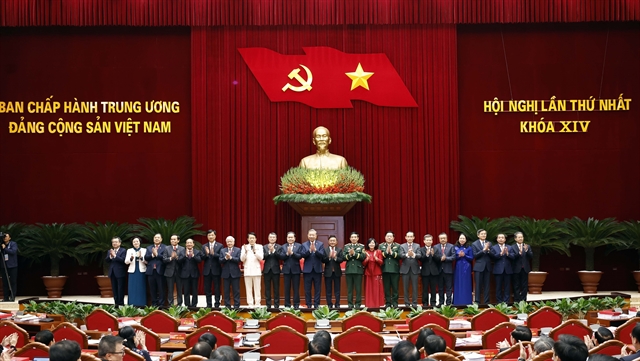
The congress also approved a range of institutional reports, confirmed the election of the Party’s Central Committee and tasked the new leadership with translating the resolution’s broad goals into detailed policy measures in the coming years. — VNS
Politics & Law
 Politics & Law
 Politics & Law
 Politics & Law
 Politics & Law
 Politics & Law
 Politics & Law
 Politics & Law
 Politics & Law
 Politics & Law
 Politics & Law
 Politics & Law
 Politics & Law
 Politics & Law
 Politics & Law