 |
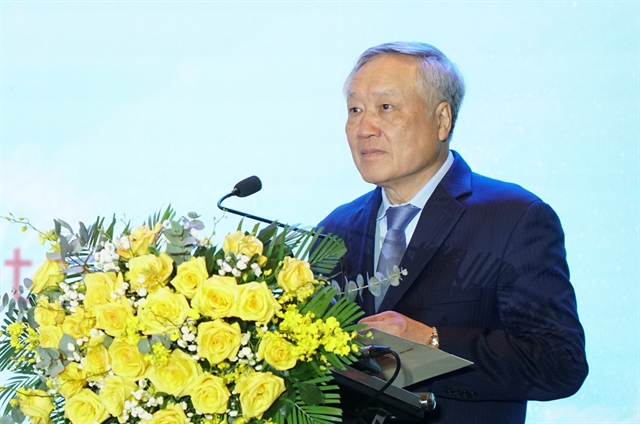
| Nguyễn Hòa Bình, Politburo member and permanent deputy prime minister. VNA/VNS Photo |
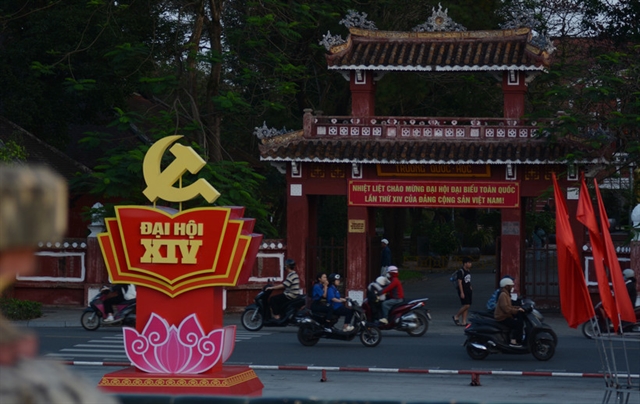
As the nation prepares for the upcoming 14th National Congress of the Communist Party of Việt Nam (slated for January 19-25), the leadership is seeking to translate the hard-won gains of a turbulent five-year term into sustained growth and a new phase of development, a senior official said.
The 2021–2026 term of the 13th National Party Congress unfolded amid extraordinary disruption: the COVID-19 pandemic, global supply chain shocks, surging inflation and intensifying geopolitical tensions. Yet the government argues that Việt Nam not only weathered the storms but emerged with stronger macroeconomic fundamentals, deeper institutional reform and a clearer strategic trajectory.
In an interview with Vietnam News Agency, Politburo member and Permanent Deputy Prime Minister Nguyễn Hòa Bình said the period had tested “the mettle and intellect” of the Party, the State and the people, but ultimately reinforced national resilience and eventually scored hard-earned achievements.
Việt Nam's economy rebounded strongly after the pandemic-induced downturn. Gross domestic product grew by 8.02 per cent in 2025, lifting average growth for the entire term to about 6.3 per cent, among the highest rates in Southeast Asia. The scale of the economy expanded to more than US$514 billion, placing Việt Nam among the world’s 35 largest economies, while per capita income surpassed $5,000.
Inflation remained contained at around 3.3 per cent, public debt declined to roughly 34 per cent of GDP, and state budget revenues reached record levels.
The figures underscore Việt Nam's growing macroeconomic resilience at a time when many emerging markets remain vulnerable to external shocks, according to Bình.
Foreign direct investment has also remained robust. Registered FDI over the five-year term exceeded $184 billion, with global technology firms expanding or establishing operations in Việt Nam, particularly in electronics, semiconductors and artificial intelligence.
That inflow has helped position the country as a critical manufacturing and technology hub as multinational companies diversify supply chains away from overreliance on single markets.
Extensive reform
Beyond headline growth figures, the government has highlighted institutional reform as one of the most consequential legacies of the 13th Congress term.
Việt Nam also recently undertook an extensive reorganisation of the state apparatus, eliminating entire layers of intermediate administration and sharply reducing payrolls. Authorities scrapped all general departments, merged or dissolved more than 1,000 departments and divisions, and cut roughly 145,000 public-sector positions.
The streamlining saves about VNĐ39 trillion (roughly $1.6 billion) annually in recurrent spending, freeing resources for development investment and social programmes.
The reform also restructured local governance into a two-tier system intended to bring decision-making closer to citizens while reducing administrative duplication.
Legal and regulatory reform was another cornerstone of the past term. The government submitted a record number of laws and resolutions to the National Assembly, including revised land, housing and real estate business laws that aim to address long-standing bottlenecks in property development and infrastructure investment.
At the same time, nearly 3,000 business conditions were simplified or removed, part of a broader effort to shift from a control-oriented approach to what officials describe as a “development-facilitating” state.
Decentralisation has been pushed further, with local authorities granted more autonomy, while central agencies focus on oversight and policy design.
Việt Nam's infrastructure build-out accelerated during the term, with more than 3,300 kilometres of expressways completed and a continuous North–South transport backbone taking shape. Coastal roads, ports and digital infrastructure were also expanded.
The leadership has framed social welfare as both a moral imperative and an economic foundation. Việt Nam completed the elimination of temporary and dilapidated housing nationwide five years ahead of schedule, cut multidimensional poverty to about 1.3 per cent, and spends massive amounts annually on social security.
Universal health insurance coverage now exceeds 95 per cent, and average life expectancy has risen to nearly 75 years. During the pandemic, Việt Nam provided free vaccinations nationwide despite lacking domestic vaccine production.
Education reform has also been prioritised. The government invested in boarding schools for students in border and remote areas and rolled out tuition exemptions and reductions for preschool and general education students.
Việt Nam's foreign policy during the term emphasised balance and flexibility amid great complexities in the international situation. The country now has diplomatic relations with 194 nations and territories, and has established comprehensive strategic or strategic partnerships with most major powers. Việt Nam's profile has been increasingly elevated, and affirmed its intention to be an active and responsible member of the international community.
At the same time, defence and internal security forces have been reorganised to be leaner and more modern, with a focus on both traditional and non-traditional threats.
Maintaining political stability and social order remains a top priority as the country integrates more deeply into global markets.
According to the senior official, there are three key factors underpinning these impressive achievements. First and most decisive is the wise, steadfast leadership and strategic vision of the Party, particularly the resolute and close direction of the Politburo and the Secretariat, headed by the General Secretary.
Second is the Government’s decisive, dynamic and creative governance, marked by the courage to think, to act and to take responsibility, remaining firmly grounded in reality and responding flexibly, promptly and effectively to all developments and circumstances.
Third, and most importantly, is the unity, concerted efforts and wholehearted support of the people, with the strength of the great national solidarity bloc brought into full play at the most challenging moments.
The road ahead
According to Deputy Prime Minister Bình, looking towards the 14th Party Congress and the vision to 2030 and beyond, the Government has identified 10 key task groups.
First, accelerate sustainable economic development to lay a firm foundation for the new era. Mobilise all resources and remove all barriers to strive for double-digit annual growth. Renew traditional growth drivers and fully harness new ones with science, technology, innovation and digital transformation as the primary engines. Build the state economy to truly play a leading role.
Second, continue to innovate thinking in institutional building and improvement. Strongly reform law-making to facilitate development and unleash productive forces. Further promote decentralisation and delegation of authority, and immediately abolish overlapping regulations and unnecessary licences.
Third, vigorously renew the growth model based on science, technology, innovation and digital transformation. Build a comprehensive, paperless digital government. Develop the green and circular economy, and implement the carbon credit market. Increase investment in new growth drivers such as AI, chips, semiconductors, renewable energy and nuclear energy. Modernise smart power grids, boost renewable energy, gas-fired power and offshore wind power, and ensure absolute national energy security.
Fourth, focus on investing in and operationalising regional and inter-regional connectivity infrastructure projects. Concentrate resources to commence construction of the North–South high-speed railway. Complete and put into operation Long Thành International Airport at the earliest opportunity. Study and restart the nuclear power programme to secure a clean and stable energy foundation for industrialisation and modernisation.
Fifth, regard science, technology and innovation as a top national policy. Promote research and development models. Build data centres and national innovation centres of regional stature. Study mechanisms to attract and retain leading global technology corporations in Việt Nam. Promote innovation-driven start-ups across society and encourage enterprises to invest in and apply science and technology.
Sixth, make advances in high-quality human resources. Fundamentally and comprehensively reform higher education and vocational education. Prepare human resources capable of mastering technologies in nuclear energy, high-speed railways, the digital economy, international financial centres, semiconductors and AI in the shortest possible time. At the same time, implement substantive talent attraction policies with outstanding incentives to draw and retain leading scientists and overseas Vietnamese talents.
Seventh, continue streamlining the apparatus and reforming administrative procedures. Further review and reduce internal focal points within ministries, sectors and localities. Digitise all administrative dossiers and processing outcomes. Remove officials who harass, shirk or fear responsibility, replacing them with those who dare to think and act.
Eighth, place cultural development on a par with economic development. Effectively implement the National Target Programme on cultural revitalisation. Build an advanced Vietnamese culture imbued with strong national identity, coherently grounded in national value systems, family values and standards of the Vietnamese people in the new era. Develop cultural industries, transforming culture into an endogenous strength and an important economic resource.
Ninth, promote sustainable social development, ensure social security, manage and use resources efficiently, protect the environment and adapt to climate change. Implement a roadmap to exempt tuition fees for general education students and strive to provide basic free healthcare for all citizens in stages. Complete the programme to build one million social housing units. Proactively prepare for and respond to various types of natural disasters, and fundamentally address environmental pollution, flooding and landslides.
Tenth, elevate foreign affairs and strengthen national defence and security. Pursue deep, substantive international integration, transforming international commitments into concrete economic benefits. Build a lean, compact and strong military and public security force, advancing straight towards modernity, self-reliance and dual-use capability. Maintain a peaceful environment and political stability for economic development, while safeguarding independence, sovereignty and territorial integrity. VNS
 Politics & Law