 Politics & Law
Lawmakers stress importance of removing bottlenecks to develop digital economy
1.
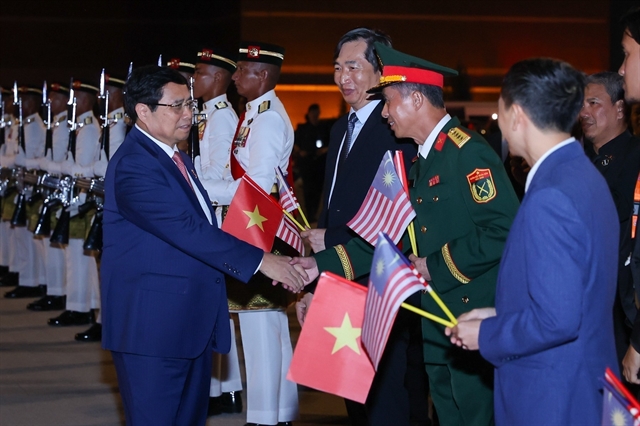 |
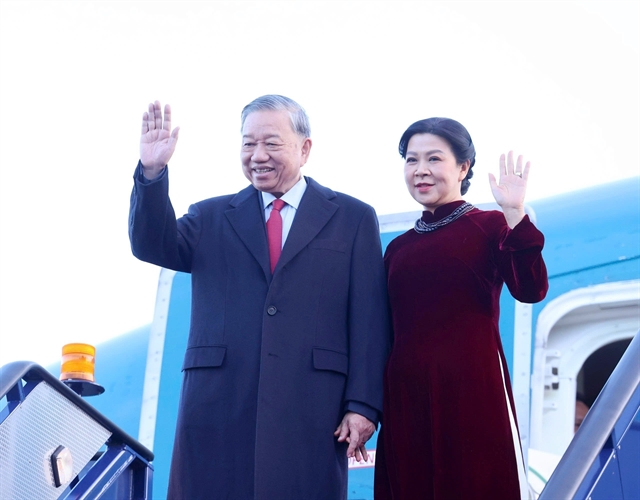
| Prime Minister Phạm Minh Chính concludes his visit to Malaysia for the 47th ASEAN Summit and Related Summits on Tuesday evening. — VNA/VNS Photo Dương Giang |
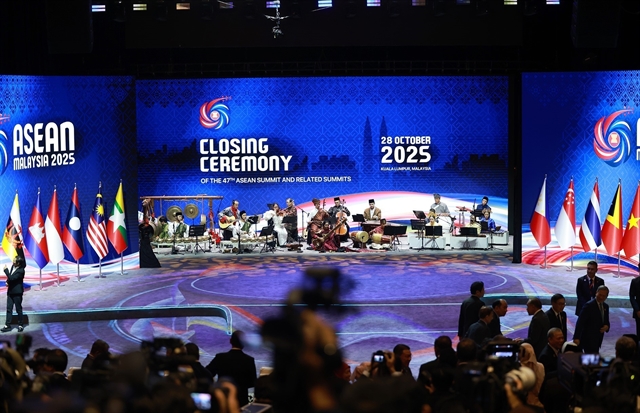
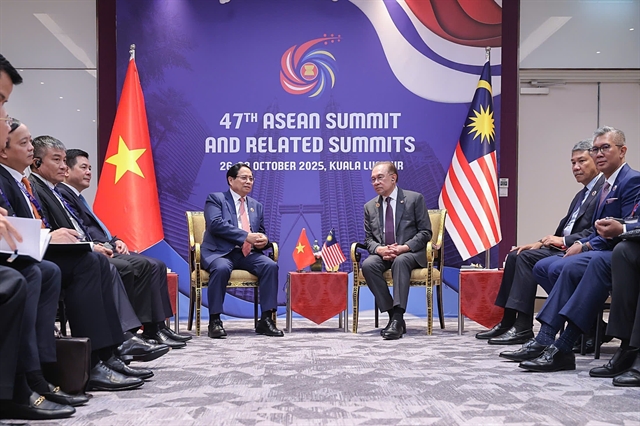
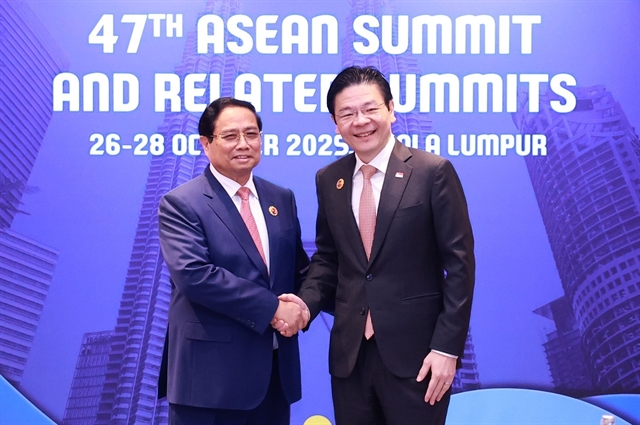
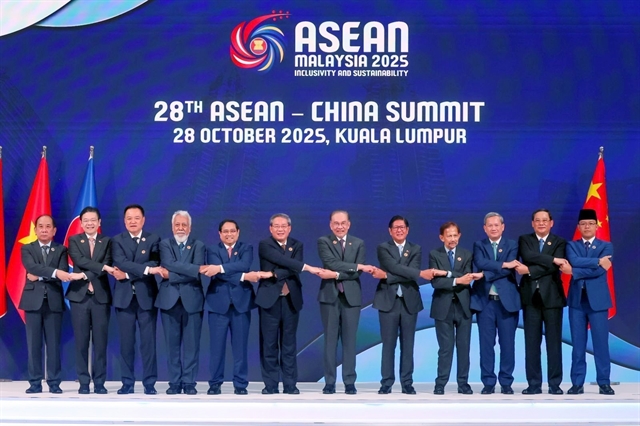
HÀ NỘI — The working visit by Prime Minister Phạm Minh Chính and a high-level Vietnamese delegation to attend the 47th ASEAN Summit and Related Summits in Kuala Lumpur, Malaysia, from October 26-28 produced numerous specific and practical outcomes, according to Deputy Minister of Foreign Affairs Đặng Hoàng Giang.
This time, Việt Nam continued to demonstrate its role as an active and responsible member of the Association of Southeast Asian Nations (ASEAN), and made two important contributions.
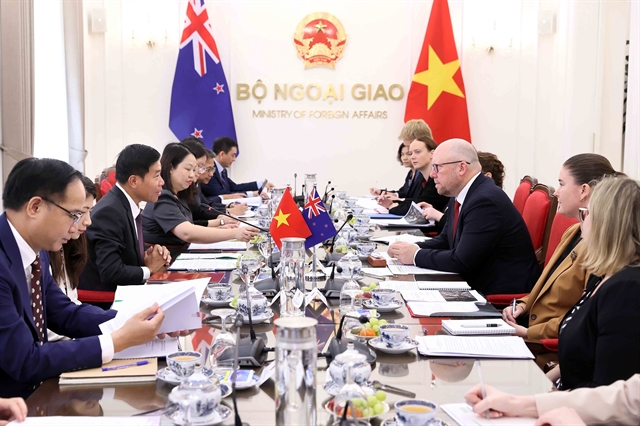
First, under Việt Nam’s coordination, ASEAN and New Zealand issued a Joint Statement on upgrading their relations to a Comprehensive Strategic Partnership and adopted the 2026–2030 Action Plan to implement the newly established framework.
Second, as Chair of the Initiative for ASEAN Integration (IAI) Task Force, Việt Nam led the development of the IAI Work Plan 2026–2030, which was approved at the summit. This document aims to narrow the development gap, strengthen solidarity, and prioritise support for Timor-Leste to catch up with ASEAN’s overall integration process. Việt Nam’s role and efforts were sincerely appreciated and highly valued by other member countries, Giang stated.
In these shared successes, PM Chính’s insightful, sincere, and straightforward remarks at the summits emphasised the importance of peace and stability as a prerequisite for development, highlighted the significance of ASEAN unity, and reaffirmed Việt Nam’s commitment to contributing to the bloc for the practical benefit of its people and businesses.
The PM's views, especially his proposal that ASEAN fully harness three strategic resources of the strength of solidarity, the vitality of dynamism, and the momentum of innovation were well received and praised by member states and partners for the sense of responsibility, soundness of content, and practical, effective approach to implementation.
The Deputy Foreign Minister went on to say that in just three days in Kuala Lumpur, PM Chính held bilateral meetings and exchanges with leaders from more than twenty partners, including all ASEAN member states, major partners, and regional and international organisations. Though brief, these meetings produced many concrete and substantive outcomes.
First, political trust between Việt Nam and these countries was further strengthened. All partners expressed their desire to enhance relations with Việt Nam. The fact that US President Donald Trump, Chinese Premier Li Qiang, newly elected Japanese PM Sanae Takaichi, Brazilian President Lula da Silva, Canadian PM Mark Carney, and many other leaders agreed with Việt Nam’s proposal to increase high-level exchanges in the coming time demonstrates that these countries highly value Việt Nam’s role in the region, and also support a stable, developing Việt Nam which is playing an increasingly important role in ASEAN and on the international stage.
Second, Việt Nam and its key strategic partners reached broad consensus on many important issues, reflecting their shared interests. Chinese Premier Li Qiang agreed to actively promote the ground-breaking of the Hà Nội–Hải Phòng–Lào Cai high-speed railway project. The Canadian PM announced that his country will soon launch a US$20 million coastal smart city project designed to enhance resilience to natural disasters and climate change. World Bank Vice President Carlos Felipe Jaramillo affirmed the bank’s readiness to respond to Việt Nam’s requests for faster and more effective resource mobilisation to support its socio-economic development goals.
Notably, a major highlight of this occasion was the announcement of the Joint Statement on a US–Việt Nam Framework for an Agreement on Reciprocal, Fair, and Balanced Trade on October 26.
These developments mark significant progress, helping to lay a stable and sustainable foundation for Việt Nam’s relations with its key partners and mobilise additional external resources to realise the country’s strategic goals, particularly the target of achieving double-digit growth after the 14th National Party Congress.
Third, through the discussions, it became evident that partners truly support and expect Việt Nam to play a greater role in ASEAN, in the Asia–Pacific region, and on the global stage.
Leaders of many countries and international organisations expressed strong impressions of Việt Nam’s remarkable development over the past decades. They also affirmed their appreciation of Việt Nam’s role and position, while expressing their wish for Việt Nam to help promote cooperation between their countries and ASEAN.
These demonstrate that Việt Nam is viewed as one of ASEAN’s key and capable member states, with the potential to assume a leading role within the bloc.
In the context of Việt Nam’s strong implementation of the Politburo’s Resolution No 59 on international integration in the new situation and efforts to elevate multilateral diplomacy, the trust and support from international friends constitute a precious source of "political capital", enabling it to make even greater contributions to global politics, the world economy, and human civilisation, Giang said.
Regarding specific orientations for implementing the outcomes of Việt Nam’s participation in this ASEAN Summit, the official stressed that Việt Nam needs to make active contributions to strengthening ASEAN's solidarity, particularly in efforts to address the Myanmar issue, implement the peace deal between Cambodia and Thailand, and help maintain a peaceful, stable and favourable environment for ASEAN.
At the same time, Việt Nam should continue pursuing the long-term goals set out in the ASEAN Community Vision 2045 (ACV 2045), and focus on supporting Timor-Leste in enhancing its capacity and effectively integrating into ASEAN across all three pillars.
It is also essential to promptly implement the agreements and commitments reached between Việt Nam and its partners during bilateral meetings on the sidelines of the summit, including exchanges of delegations, promotion of economic and trade cooperation, food and energy security, and especially the prompt settlement of outstanding issues to have the EU’s 'yellow card' warning on Vietnamese seafood lifted, Giang said, urging ministries, sectors, localities, and enterprises to work closely, proactively, and swiftly to ensure the comprehensive and effective implementation of the outcomes achieved with partners. — VNA/VNS
Politics & Law
 Politics & Law
 Politics & Law
 Politics & Law
 Politics & Law
 Politics & Law
 Politics & Law
 Politics & Law
 Politics & Law
 Politics & Law
 Politics & Law
 Politics & Law
 Politics & Law
 Politics & Law
 Politics & Law