 Expat Corner
Lacquer painting exhibition brings 62 works to HCM City
1.
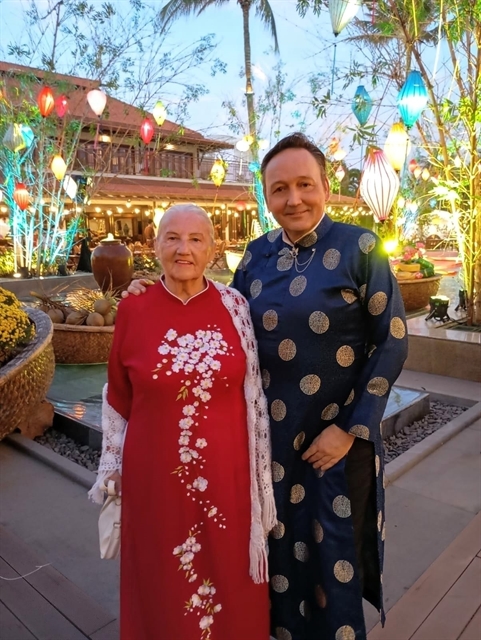 |
| Andre Pierre Gentzsch (right), a Swiss hotelier and General Manager of Ariyana Tourism Complex in Đà Nẵng City, shares a photo of Tết (Lunar New Year) festival time in Đà Nẵng City. Photo courtesy of Andre Pierre Gentzsch |
ĐÀ NẴNG – Vietnamese people will be celebrating their traditional Tết (Lunar New Year) festival, which falls from February 14–21. Đà Nẵng City has been putting up decorations on streets and at public destinations, including check-in sites along the Hàn River banks. Some expats living in Đà Nẵng and Hội An share their memories of the Tết Festival.
Andre Pierre Gentzsch, a Swiss hotelier and general manager of the Ariyana Tourism Complex in Đà Nẵng City, shares his memories.
My experiences with Tết as an expat: I remember my first Tết was in Hà Nội 10 years ago. I arrived at the airport and the air turned crisp. On the way to the hotel, I noticed motorbikes precariously stacked with kumquat trees, and once I arrived, the scent of peach blossoms in the lobby. My first Tết felt like being in a city holding its breath. Later on Phú Quốc Island, employees asked me to help wrap bánh chưng (square sticky rice cakes). My clumsy fingers struggled with the dong (Phrynium) leaves and they certainly had fun watching me. In the end, it was all about spending time together. I learned that Tết is not just a holiday, its significance goes way beyond being a family gathering or simply the Lunar New Year. It is a source of spiritual refreshment and ideally a motivator and energiser for the year ahead. I certainly enjoy watching the glowing faces of adults and children during this precious time of the year.
Piotr Frieske, Honorary Consul of the Republic of Poland in Đà Nẵng, shares his experience of hosting Vietnamese traditional Lunar New Year time in the beach city.
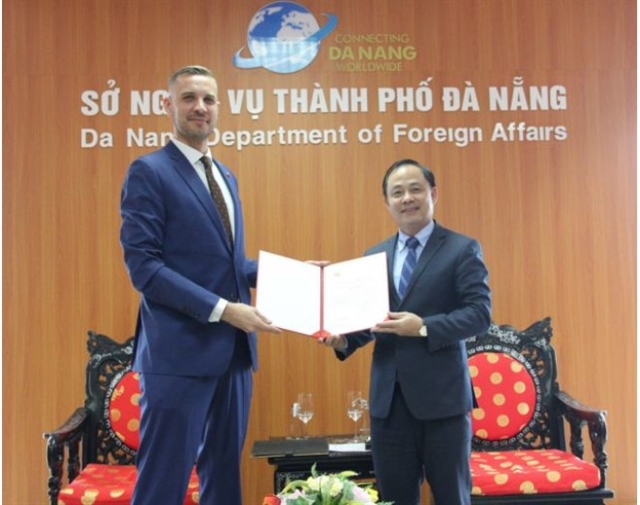 |
| Piotr Frieske, Honorary Consul of the Republic of Poland in Đà Nẵng, joins a meeting event with Đà Nẵng City's Foreign Affairs Department. He shares his experience of hosting Vietnamese traditional Lunar New Year time in the beach city. Photo courtesy of Piotr Frieske |
Living in Đà Nẵng City, Tết is the one time of year when the city truly slows down. As a frequent traveller, I find the greatest luxury is not a trip away but the peaceful stillness that settles over the streets and the empty stretch of beach. With the city’s busyness dialled down, the days become entirely about the people who matter most, sharing meals and traditions without the usual distractions.
I enjoy the tradition of visiting friends’ homes, moving from one warm welcome to the next to share tea, snacks and well-wishes. Seeing the local flowers brighten the coastal streets, it feels as though the whole city has taken a deep, calm breath. Spending Tết in Đà Nẵng is a great experience that brings positive energy for the year ahead.
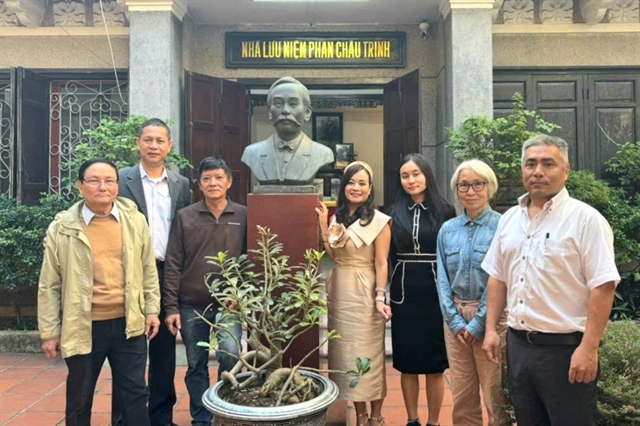 |
| Reiko Usuda, an expat from Japan living in Hội An, takes a visit to the memorial house of former Vietnamese scholar, Phan Chu Trinh in Đà Nẵng City. She expresses her time during Tết in Hội An. Photo courtesy of Reiko Usuda |
Reiko Usuda, an expat from Japan living in Hội An, is a retired dental technician who opened Ừ café on the Thu Bồn River bank in the ancient town as a way to boost friendship between Japan and Hội An. She expresses her time during Tết in Hội An.
Every year, I enjoy spending Tết in the Hội An ancient town. I find the differences between how people celebrate New Year in Japan and here in Hội An fascinating. Firstly, I notice how locals value their traditional lifestyles during Tết. I was particularly impressed by the practice of visiting the graves of martyrs and ancestors on the second day of Tết. This is a tradition that some Japanese people seem to have forgotten.
My mum moved to Việt Nam at an advanced age, wanting to spend her final days with her family, my son Tomo Usuda and me. The Vietnamese people were very kind to her, so we are all very happy that she was able to spend her final days here. She was buried near Hội An, so Tomo and I visit her grave every Tết.
Secondly, all Tết dishes are delicious. I especially love bánh tét (cylindrical sticky rice cake). However, cooking bánh tét is very difficult and time-consuming. I was once taught how to make it by a friend’s family, but I could not do it well. So every year, I receive some from this family. — VNS
Expat Corner
 Expat Corner
.jpg) Expat Corner
Expat Corner
 Expat Corner
 Expat Corner
 Expat Corner
 Expat Corner
.jpg) Expat Corner
Expat Corner
 Expat Corner
 Expat Corner
 Expat Corner
 Expat Corner
 Expat Corner
 Expat Corner
 Expat Corner