 Life & Style

Viên dives again to popularise swimming passion
1.
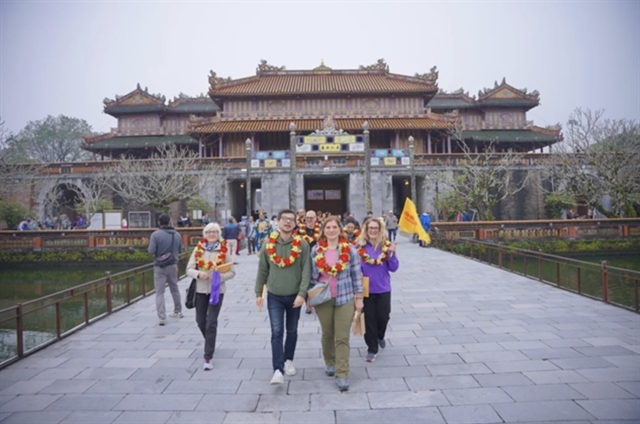 |
| Foreigners visit Huế Imperial Citadel. The ancient capital is reshaping its tourism landscape by mapping out four distinctive zones. — VNA/VNS Photo |
HUẾ — The ancient capital of Huế is reshaping its tourism landscape by mapping out four distinctive zones, aiming to build a diverse ecosystem of experiences rooted in local identity and sustainable development.
The move follows the issuance of Plan No. 188/KH-UBND for 2026–27, recently signed by deputy chairman of the municipal People’s Committee Trần Hữu Thùy Giang.
The plan sets out concrete steps to promote eco-tourism and community-based tourism, aligned with a green, sustainable approach closely linked to local communities.
Under the plan, the city will establish four tourism clusters based on characteristic spaces: riverside and peri-urban areas; lagoon and coastal zones; mountainous and forest ecosystems; and agricultural and rural landscapes.
The zoning is expected to optimise tourism resources while creating distinctive products and enhancing competitiveness.
Specifically, the Heritage – Hương River – craft villages and garden houses zone will highlight traditional cultural values combined with urban landscapes. The Tam Giang lagoon and coastal area will focus on fishing village culture and livelihoods.
Mountainous area will leverage natural streams, waterfalls and indigenous culture, while agricultural zones will centre on rural experiences and OCOP products.
At the same time, the city plans to review and select around 10 to 12 communes and wards with strong potential for implementation during 2026-27.
It aims to develop and put into operation at least eight to 10 pilot models that meet criteria on infrastructure, environmental standards, safety and visitor capacity.
A notable feature of the plan is the emphasis on building “product stories”, increasingly seen as key to enhancing tourism value.
Interpretation content at destinations will be standardised to help visitors better understand local culture, history and community life.
In parallel, the city targets training and upskilling around 50 per cent of households directly involved in tourism activities.
Improving service quality and hospitality skills is expected not only to enhance visitor experience but also to raise public awareness of environmental protection and sustainable tourism practices.
As of the end of the first quarter of 2026, Huế had 887 accommodation establishments with 14,075 rooms and 22,644 beds.
Hotels account for 22.4 per cent of total facilities but hold 60.5 per cent of rooms. Notably, the three- to five-star segment comprises 24 establishments with 3,430 rooms, representing 91.4 per cent of rooms in the star-rated category.
The travel sector has also continued to expand, with 91 companies in operation, including 65 international tour operators, 19 domestic firms and seven travel offices and agencies. This provides a solid foundation for market expansion, product diversification and stronger tour connectivity. — VNS
Life & Style
 Life & Style
 Life & Style
 Life & Style
 Life & Style
 Life & Style
 Life & Style
 Life & Style
 Life & Style
 Life & Style
 Life & Style
 Life & Style
 Life & Style
 Life & Style
 Life & Style