 Life & Style
Sơn La holds second coffee festival, targeting stronger businesses in future
1.
|
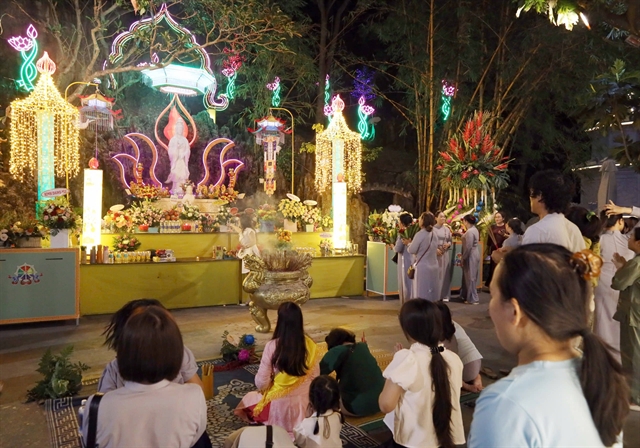
| Buddhists and Buddhism followers join praying at the annual Quán Thế Âm (Avalokitesvara Bodhisattva) Festival at Ngũ Hành Sơn (Marble Mountains) landscape. The annual festival is organised on the 19th lunar February in Đà Nẵng City. — Photo courtesy of Lê Lâm |
ĐÀ NẴNG — Buddhists and followers of Buddhism will begin the Avalokiteshvara Bodhisattva Commemoration Ceremony, one of the most important ritual events of the annual Quán Thế Âm Festival, at Kim Sơn Mountain, the largest peak of the central city’s iconic Ngũ Hành Sơn (Marble Mountains), on April 6. The festival ranks among the 15 largest in Việt Nam.
Earlier, a series of art performances, craft demonstrations, exhibitions and rituals have been organised at the scenic site, 8km from Đà Nẵng’s downtown.
The festival’s organising committee said the main day will feature religious rituals including Avalokiteshvara empowerment, prostration to Avalokiteshvara Bodhisattva, the Great Compassion Mantra altar, as well as Buddhism preaching and meditation events.
It added that the main festival, which falls on the 19th of lunar February, will include a procession of an image of Avalokiteshvara Bodhisattva and a prayer for a year of peace, prosperity and happiness for the nation and its people.
|
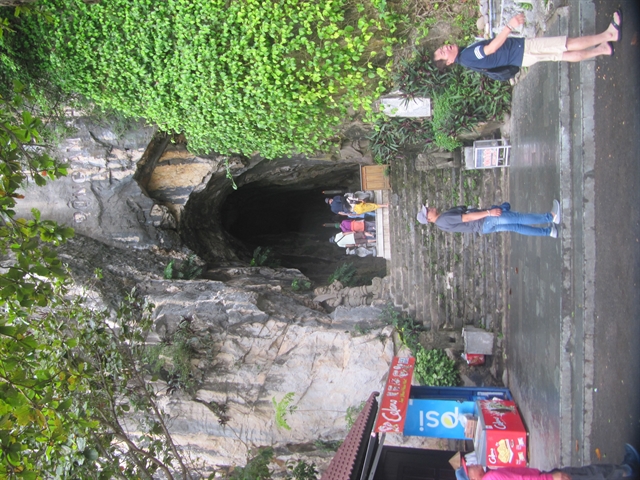
| Tourists visit a pagoda in Ngũ Hành Sơn (Marble Mountains) during the annual Quán Thế Âm (Avalokitesvara Bodhisattva) Festival in Đà Nẵng City. Many pagodas are built in caves of the mountains from previous centuries. — VNS Photo Công Thành |
A march for peace, a candle-lit flower release, drums and traditional dances will be organised from morning to night until April 7, the committee said.
The annual Quán Thế Âm (Avalokitesvara Bodhisattva) Festival has been recognised as National Intangible Heritage, while the Marble Mountains landscape site has been designated a National Special Relic.
The 400-year-old Non Nước stone sculpture village at the foot of the Marble Mountains has also been recognised as a National Intangible Heritage.
The landscape was named Ngũ Hành Sơn, or Non Nước, by King Minh Mạng under the Nguyễn Dynasty in 1837.
Thủy Sơn Mountain rises 160 metres over an area of 15 hectares. Its caves and stalactite formations are the most visited features of the complex.
The site also preserves the Ma Nhai cliff inscriptions in ancient Nôm (traditional Vietnamese script) and Hán Chinese characters on the Marble Mountains. It was promoted to the Memory of the World Committee for Asia and the Pacific regional register, the first UNESCO-recognised title for Đà Nẵng City and the third world heritage site following Hội An ancient town and the Mỹ Sơn Sanctuary after the former Quảng Nam merged with Đà Nẵng City.
The inscriptions are numerous, including 78 Ma Nhai steles (76 in Chinese and two in Nôm), carved on cliffs and in caves at the Marble Mountains from the first half of the 17th century to the 1960s, according to Đà Nẵng Museum.
The oldest stele was recorded in Hoa Nghiêm Cave in 1640, and the most recent dates to 1955, the museum reported.
The country’s first Buddhist Culture Museum was built at the Quán Thế Âm Pagoda, housing an exhibition of over 500 antiques.
Marble Mountains attracts around 10,000 visitors during the three-day festival, and Đà Nẵng City expects to welcome 19.1 million tourists this year. — VNS
Life & Style
 Life & Style
 Life & Style
 Life & Style
 Life & Style
 Life & Style
 Life & Style
 Life & Style
 Life & Style
 Life & Style
 Life & Style
 Life & Style
 Life & Style
 Life & Style
 Life & Style