 Economy

Việt Nam targets high-value investment to move up global value chain
1.
|
|
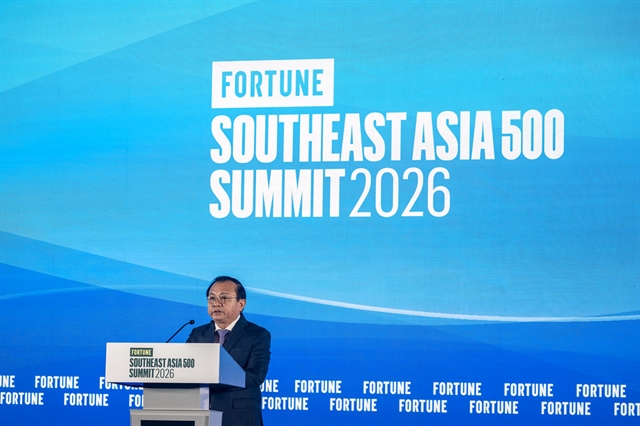
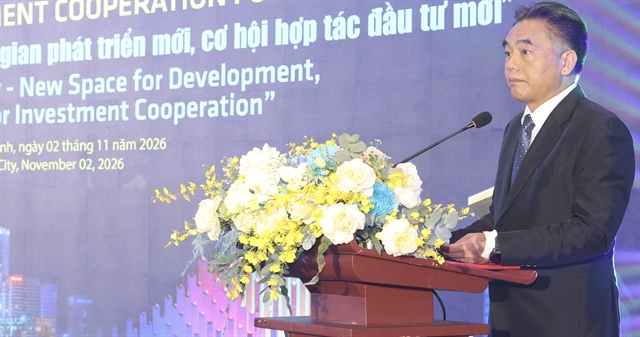
| Deputy Finance Minister Lê Tấn Cận speaks at the Fortune Southeast Asia 500 Summit 2026 in HCM City on November 3. — Photo courtesy of the organiser |
HCM CITY — Việt Nam is seeking to attract high-quality foreign investment in strategic technologies, research and development, and green and digital transformation, while strengthening links between foreign investors and domestic businesses, Deputy Finance Minister Lê Tấn Cận has said.
Addressing more than 250 business leaders, policymakers, and investors at the inaugural Fortune Southeast Asia 500 Summit in HCM City on November 3, he outlined Việt Nam's ambition to become a regional hub for innovation, advanced technology, and international finance as the country pursues double-digit economic growth and high-income status by 2045.
He said despite global economic and geopolitical uncertainties, Việt Nam had demonstrated resilience and maintained strong economic growth, with GDP expanding by 7-8 per cent in recent years on the back of manufacturing, services, and exports.
GDP grew by 9.01 per cent in the first nine months of 2026, providing a foundation for the country to pursue its target of double-digit annual growth during 2026-30, he said.
Việt Nam also continued to attract foreign direct investment, particularly in high-tech industries, semiconductors, and green energy, he said.
He emphasised the government's shift from attracting foreign investment primarily for manufacturing towards building an innovation ecosystem with stronger links between multinational companies and domestic enterprises.
"Việt Nam prioritises investors with foundational and core technologies, modern management capabilities, and commitments to technology transfer, green transformation, and digital transformation."
He outlined five priorities for cooperation with international investors: joint research and development in AI, semiconductors, biotechnology, and clean energy; investment in strategic sectors such as high technology, digital infrastructure, and modern logistics; stronger links between foreign investors and domestic businesses to build resilient value chains; development of skilled human resources and knowledge ecosystems; and cooperation in developing Việt Nam's international financial centres.
He underlined the government's commitment to strengthening the private sector, improving infrastructure and providing a stable and transparent investment environment, encouraging international companies to regard Việt Nam as a long-term partner in innovation and higher-value economic activities.
"We want foreign businesses and investors to see Việt Nam not only as a manufacturing location or consumer market, but also as a partner in research, technology innovation, product development and expansion into regional and global markets."
|
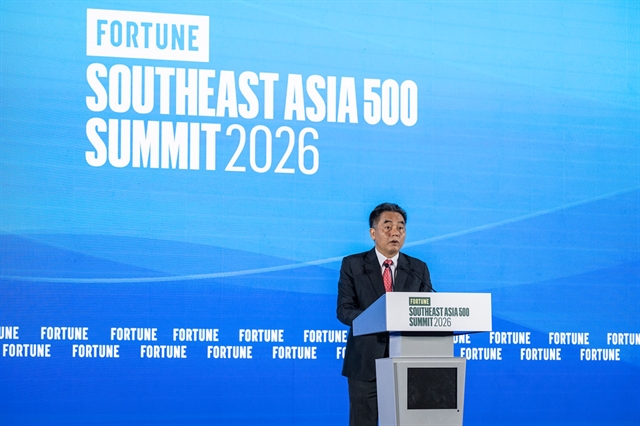
| Nguyễn Lộc Hà, Standing Vice Chairman of the HCM City People's Committee, speaks about the city's economic potential following its merger with Bình Dương and Bà Rịa-Vũng Tàu. — Photo courtesy of the organiser |
Nguyễn Lộc Hà, Standing Vice Chairman of the HCM City People's Committee, highlighted the expanded city's economic significance following its merger with the former Bình Dương and Bà Rịa-Vũng Tàu provinces in July 2025.
With a population of more than 14 million and accounting for approximately 23.5 per cent of national GDP, HCM City is positioning itself as an internationally competitive centre for finance, technology, innovation, and trade, he said.
The city attracted more than US$19 billion worth of FDI in the first nine months of 2026, four times the figure recorded in the same period last year and accounting for more than 30 per cent of the national total.
Major projects included the Cần Giờ international transshipment port, with investment of more than $4.9 billion, and an AI Factory data centre project worth approximately $2.1 billion.
Beyond attracting large-scale projects, the city wanted to strengthen cooperation between international investors and domestic enterprises in manufacturing, research, and services to enable both export to regional markets and selling at home.
Priority areas include automation, AI, energy management, workforce training, an international financial centre, free trade zones, and logistics infrastructure.
Hà said the city hoped summit connections would lead to concrete cooperation plans and long-term investment projects.
Andrew Staples, Fortune's editorial director for Asia and co-chair of the Fortune Southeast Asia 500 Summit, said Việt Nam's rapid economic growth is among the reasons his magazine chose HCM City to host the summit.
|
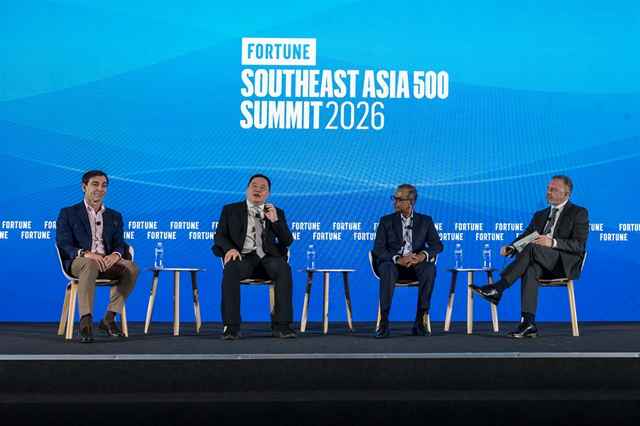
| Panelists at the Fortune Southeast Asia 500 Summit 2026 in HCM City on November 3. — Photo courtesy of the organiser |
The region's 500 largest companies generated combined revenues of $1.9 trillion, up 3.4 per cent year on year. Việt Nam's 72 companies on the list recorded collective revenue growth of 10.5 per cent, three times the regional average, Staples pointed out.
Held with the theme “New Horizons, Enduring Growth,” the summit brings together leaders from banking, energy, manufacturing, technology, infrastructure, and other major industries to examine Southeast Asia's competitiveness and the rise of regional multinationals.
The programme features discussions on artificial intelligence, energy, regional connectivity, international finance, and the development of globally competitive businesses.
The programme also included the Fortune Most Powerful Women Asia Leaders Breakfast, the Fortune Southeast Asia 500 Awards Ceremony, and the unveiling of Fortune's Best Companies to Work For in Southeast Asia list.
According to speakers, looking towards 2027, Southeast Asia is expected to maintain its growth momentum, supported by supply chain diversification, new investment, technology-driven exports and rising domestic consumption.
However, slowing global growth, US-China trade and technology tensions and energy market volatility remain key risks, they said.
Ted Osius, former US ambassador to Việt Nam, said global economic growth is forecast at arouond 2.7 per cent, possibly rising to 2.8 per cent in 2027, while Asia is expected to expand by 4.9 per cent.
He said Việt Nam is well positioned to benefit from supply chain shifts, supported by innovation-friendly policies, infrastructure development, and a young workforce increasingly familiar with AI.
As global supply chains are reconfigured, Southeast Asia, particularly Việt Nam, is attracting investment in electronics, semiconductors, electric vehicles, data centres, and advanced manufacturing.
But speakers stressed that attracting factories is only part of the challenge, and countries also need to use investment to strengthen domestic capabilities, develop competitive local businesses, and promote innovation.
Salil Chari, FedEx's president for Asia-Pacific, said Southeast Asia is becoming increasingly important in global trade networks. Trade between Việt Nam and Singapore and Malaysia had tripled, while Vietnamese businesses are seeking better integration of technology systems, including data centres, he added.
Thammasak Sethaudom, president and CEO of Siam Cement Group (SCG), highlighted growing competition from China's excess production capacity, which is bringing more competitively priced products into regional markets.
He said SCG is restructuring by consolidating smaller factories, expanding larger production facilities, and investing in automation to improve product quality and precision.
The company is also adopting a Southeast Asia-wide business strategy rather than focusing on individual national markets, he said.
Liher Urbizu, president and managing director of SAP Southeast Asia, said ASEAN was increasingly moving from being a technology user to becoming a technology creator, with substantial investments flowing into innovation centres across the bloc.
Speakers agreed that regional integration, automation, AI adoption, and long-term investment in domestic capabilities would be crucial for Southeast Asia to move up global value chains and remain competitive amid geopolitical uncertainty and changing trade patterns.— VNS
Economy
 Economy
 Economy
 Economy
 Economy
 Economy
 Economy
 Economy
 Economy
 Economy
 Economy
 Economy
 Economy
 Economy
 Economy