 Economy


Greening Hà Nội's streets
1.
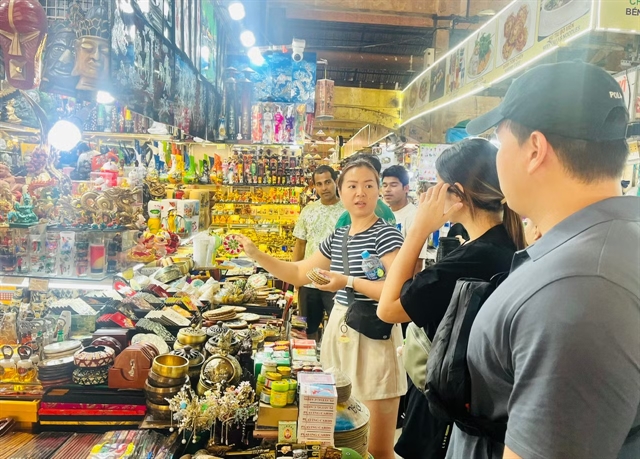 |
| Bến Thành Market in HCM City. Traditional trade is forecast to account for around 60 per cent of Việt Nam’s retail market by 2030. — VNA/VNS Photo |
HCM CITY — Traditional shops and markets are forecast to retain around 60 per cent of Việt Nam’s retail market by 2030, but grocery stores must adopt digital tools and improve management to compete as modern chains and e-commerce expand, experts say.
Speaking at a seminar on “Retail Channel and E-commerce Changes: How Should Businesses Adapt?” organised by the High Quality Vietnamese Business Association and the Business Study and Assistance Centre last Saturday, Phạm Trọng Chinh, a market expert at the centre, said Việt Nam’s retail market is changing as shopping habits evolve and businesses develop new ways to reach customers.
Traditional retail currently accounts for roughly 68 per cent of the market, compared with 16 per cent for modern retail and 13 per cent for e-commerce.
By 2030, its share is projected to fall to 60 per cent, while modern retail’s share rises to 20 per cent and e-commerce’s to 17 per cent. Other sales channels are expected to maintain a stable contribution of 3 per cent.
Businesses therefore need to sell through several channels to sustain growth, he said.
The rapid expansion of convenience stores and mini-supermarkets is intensifying competition.
Between five and 10 new stores open each day, with annual growth in this segment exceeding 20 per cent.
Over the next four to five years, the number of these outlets nationwide could triple to 30,000 as major chains expand into rural and suburban areas.
Having more shops nearby is changing consumer behaviour, with shoppers increasingly buying daily essentials close to home, Chinh said.
Surveyed households have reduced the amount of fresh food they keep in their fridges by 20 per cent, while the decline in bulk buying is putting pressure on large supermarkets.
Đinh Công Trí, senior business strategy director at TT Group, says small grocery shops remain an important part of daily life, particularly for people buying essentials close to home.
Their appeal extends beyond convenience to their relationships with local customers. Trust, regular custom, and personal contact give these shops an advantage that modern chains may struggle to match.
Việt Nam has an estimated 500,000 to 600,000 retail outlets, with small, mom-and-pop stores accounting for 70 to 75 per cent, Trí says.
They remain important outlets for goods, particularly in areas with few modern retail stores.
Between 2026 and 2030, traditional retailers are expected to modernise, distinguish themselves from competitors, adopt digital tools, and specialise.
Grocery shops have opportunities to improve how they operate, particularly larger outlets adopting supermarket-style shelving and layouts.
Shopping habits are also diverging, with some consumers seeking premium products while others focus on price as they manage tight household budgets. Meanwhile, makers of everyday consumer goods are introducing apps that allow grocery shops to order stock and take advantage of promotions.
Trí says traditional retailers’ flexibility will help them retain their place in the market as modern chains expand.
They can adapt their businesses to meet needs that larger retail networks have yet to fully address.
Combining physical shops with online sales offers another opportunity for growth. Chinh says extensive store networks and more cost-effective deliveries are helping businesses develop this approach.
With stores closer to customers and deliveries more efficient, many suppliers have seen sales through combined online and physical retail channels grow twice as fast as traditional in-store sales.
Express delivery services often fulfil orders in under an hour.
E-commerce platforms are meanwhile shifting their focus from revenue growth alone to long-term profitability and more efficient operations, he says.
Businesses must tailor strategies to channels
Phạm Hồng Sơn, general director of MCC and previously general director of One Mount Group and sales director at Unilever, says reaching more outlets is no longer enough.
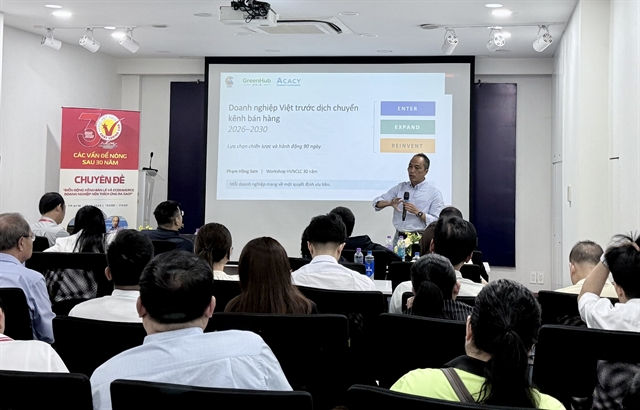 |
| Phạm Hồng Sơn, general director of MCC, says businesses should not assume that the same product range or promotional campaign will work equally well across all sales channels. — VNS Photo |
He points out that where people shop depends on what they need: they may visit a local grocery shop for a few items, a supermarket for the weekly family shop, and online platforms for special offers.
Businesses must therefore stop running identical promotions across all sales channels. They need to analyse data from each to understand which products sell, whether promotions pay off, and whether customers return, he says.
Analytical tools and artificial intelligence are now accessible to small and medium-sized businesses, allowing them to improve how they track and analyse data without large upfront investments in IT systems, he says.
But technology cannot replace a clear strategy or reliable data, he hastens to add.
As shopping habits become more varied, success will depend less on the number of outlets or platforms businesses use than on how well they understand their customers and coordinate marketing, sales, and distribution to meet different needs, he adds. — VNS
Economy
.jpeg) Economy
 Economy
 Economy
 Economy
 Economy
 Economy
 Economy
 Economy
 Economy
 Economy
 Economy
 Economy
 Economy
 Economy