 Economy



Bright Future Fund launches "Joining Hands for Her" 2026 campaign
1.
|
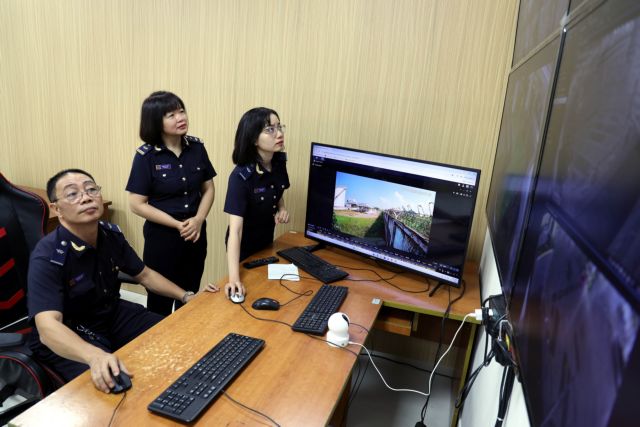
| Operations at Cẩm Phả Port Customs. Departments are preparing for the introduction of centralised clearance procedures. — VNA/VNS Photo Đức Hiếu |
HÀ NỘI — The Customs Sub-Department Region 8 is speeding up the digitisation of customs documents to reduce paperwork, save businesses time and money, and make import-export procedures more efficient.
The initiative is part of efforts to modernise customs administration and implement Politburo Resolution 57-NQ/TW on breakthroughs in science and technology, innovation and national digital transformation, issued on December 22, 2024.
It will also help prepare for the phased introduction of a centralised customs clearance model.
On August 26, the Customs Department issued Decision No. 1434/QĐ-CHQ, setting standards for electronic documents related to imported and exported goods.
The decision provides a common framework for customs units and businesses to create, submit, receive and process electronic documents, helping standardise data and improve information sharing.
Digitisation is expected to reduce the time and costs businesses spend preparing paperwork, travelling and completing customs procedures.
For customs authorities, standardised data could improve inspections, supervision and risk management while enabling greater automation.
Vũ Văn Thắng, deputy director of Lâm Việt Trading Development Co Ltd, said digitalisation had made customs procedures more convenient, saving time and making the exchange of documents and information clearer.
He added that customs officials had provided detailed guidance and helped businesses complete clearance procedures more quickly.
Ngô Tùng Dương, deputy head of the Customs Sub-Department Region 8, said digitising documents marked an important change in customs management. He stressed the need for close cooperation between customs authorities and businesses.
The sub-department would continue supporting businesses to reduce clearance times and costs and facilitate trade, he said.
Customs units are also preparing for the introduction of centralised clearance procedures.
At Cẩm Phả Port Customs, officials have reviewed procedures for different types of imports and exports, including inspections, cargo supervision, tax administration and coordination between departments. They have also identified the documents that need to be digitised.
Nguyễn Thị Minh, deputy head of the Cẩm Phả Port Customs team, said the unit was preparing to inform businesses about changes to customs procedures. The aim is to keep cargo moving smoothly while reducing administrative costs.
At Bắc Phong Sinh Border Gate Customs, officials are reviewing staffing arrangements and assigning more personnel to physical inspections and cargo supervision. They are also improving information sharing with the centralised clearance team and other relevant units.
The unit plans to provide direct support to businesses during the initial implementation period to prevent congestion and delays caused by the new digital procedures.
Statistics showed that trade handled by the regional customs sub-department continues to expand.
In the first nine months of 2026, the unit processed 207,742 customs declarations, up 26.9 per cent from the same period last year.
The number of import-export businesses completing customs procedures through the unit rose 35.5 per cent to 3,376, while total import-export value increased 36.4 per cent to US$37.4 billion.
During the same period, the unit processed 6,467 applications through the HQ36a online public service system.
It also received results for 10,349 import declarations subject to specialised inspections through the National Single Window, along with 1,309 electronic Form D certificates of origin through the ASEAN Single Window. — VNS
Economy
 Economy
 Economy
 Economy
 Economy
 Economy
 Economy
 Economy
 Economy
 Economy
 Economy
.jpg) Economy
 Economy
 Economy