 Economy



Cổ Thạch Hill and its ancient seaside stone path
1.
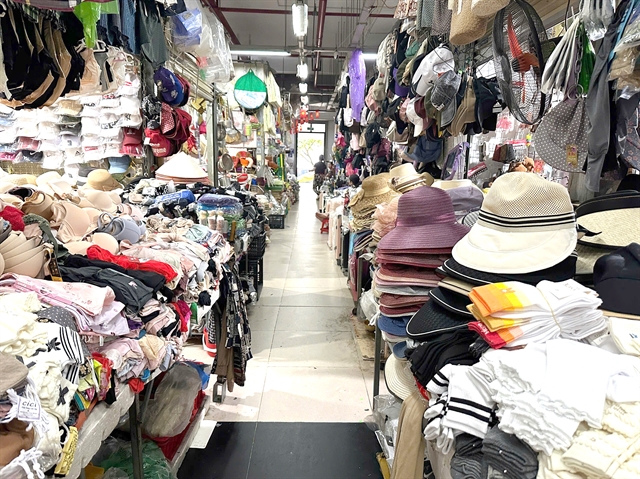 |
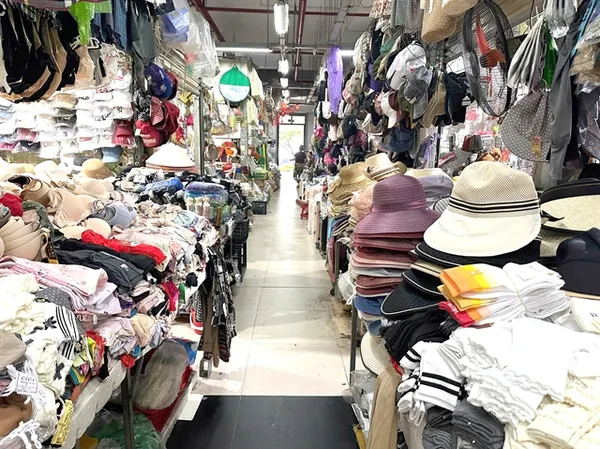
| A traditional market in Vĩnh Yên Ward, Phú Thọ Province. The Ministry of Industry and Trade has proposed regulations to allow private investment in market infrastructure. — VNA/VNS Photo Nguyễn Thảo |
HÀ NỘI — The Ministry of Industry and Trade has proposed allowing foreign investors to contribute capital to invest in, manage and operate market infrastructure through joint ventures with Vietnamese companies as the country seeks to attract investment and modernise more than 8,000 traditional markets.
Under the draft decree, which is expected to replace Decree 60/2024/NĐ-CP, foreign investors would be allowed to hold up to 49 per cent of charter capital in joint ventures with Vietnamese businesses.
The proposal would give foreign investors a formal role in investing in and operating market infrastructure while helping local authorities gain access to additional capital, modern management technologies and standardised operating models to improve the quality of traditional markets, the ministry said.
The ministry said the proposed ownership structure is intended to align market management regulations with existing investment laws as well as the country’s international commitments to opening its services and retail markets.
However, market traders could face higher rents or service fees as markets are upgraded to higher standards, the ministry warned.
The draft decree would also create a legal framework for public-private partnership (PPP) practices to attract private investment in market infrastructure.
The absence of specific rules has discouraged authorities from attracting private investment in market infrastructure, potentially leaving existing infrastructure underused and investment opportunities untapped, the ministry said.
The proposed regulations are expected to help unlock underutilised public assets while creating benefits for the state, consumers and investors.
According to the Vietnam Market Development Association, efforts to attract private investment for market development and operation have been discussed and implemented for years but remains slow.
Only around 12 - 15 per cent of markets have undergone such a transition since 2003, with legal obstacles remaining a major barrier.
The association’s Chairman Dương Văn Chiến said key obstacles included determining the status of public assets and ownership rights over assets held by market traders.
Traditional markets operated directly by the State have often struggled to recover their investment costs, while socially funded and privately operated markets can improve the efficiency of asset use and generate regular land rental revenues for the state, Chiến said.
Vũ Đức Quỳnh, deputy head of the Commercial Management Division at Hanoi's Department of Industry and Trade, said encouraging private investment in traditional markets was the right direction but could create conflicts between investors' profit objectives and the livelihood needs of traders and traditional consumers.
The draft would also revise the classification of markets, replacing the existing categories of permanent and semi-permanent markets with criteria based on the number of business stalls and the design life of market buildings.
Grade 3 markets currently account for about 86 per cent of the national total, while wholesale markets and Grade 1 markets together represent less than 1 per cent, highlighting the uneven structure of Việt Nam’s market network.
The draft also proposes introducing the concept of 'digital markets' and allowing household businesses to participate in leasing the right to exploit market infrastructure assets.
The ministry’s statistics showed that Việt Nam had more than 8,000 markets at the end of 2025, serving around 1.7 million to 2 million household businesses. The market network is also an important distribution channel for fresh food and generates relatively stable revenues for local budgets.
The ministry has submitted the draft decree to the Ministry of Justice for appraisal and plans to submit it to the Government for issuance next month. — VNS
Economy
 Economy
 Economy
 Economy
 Economy
 Economy
 Economy
 Economy
 Economy
 Economy
 Economy
 Economy
 Economy
 Economy
 Economy