 Economy


HCM City expands supply-demand links to support local products
1.

|
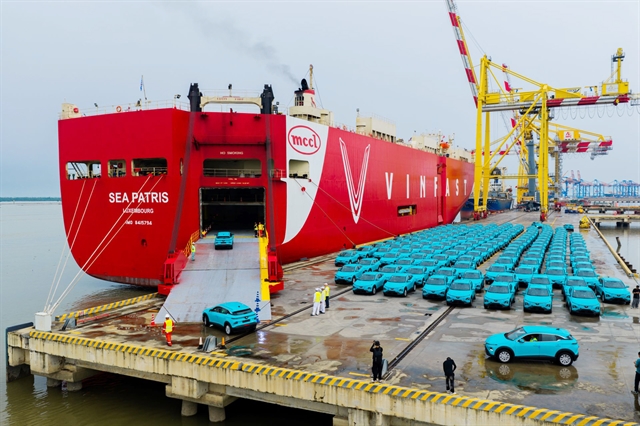
| Goods are loaded for export at Saigon New Port. From 2018 to 2025, the MST reviewed 31,283 TBT measures flagged by WTO members. — VNA/VNS Photo |
HÀ NỘI — New provisions on the use of digital technology and databases will be issued to streamline early warning mechanisms and assist Vietnamese exports in meeting new standards, the Ministry of Science and Technology (MST) has said.
According to the MST, in response to increasingly complex technical barriers in international trade, the ministry has submitted a draft decision on replacing Decision 46/2017/QĐ-TTg to the Ministry of Justice for appraisal.
The decision was issued by the Prime Minister in 2017 to regulate Việt Nam's network of notification and enquiry authorities and the Interdisciplinary Committee on Technical Barriers to Trade (TBT) to meet World Trade Organization (WTO) and free trade agreement obligations.
New regulations on the application of digital technologies and databases are incorporated in the draft decision. Under the draft, the TBT network will be responsible for using the ePing SPS and TBT platform and other official information sources to carry out its tasks. The use of digital technology for information provision, early warning systems and support in executing TBT-related tasks will also be enhanced.
The national TBT network is tasked with receiving and consolidating recommendations from agencies, organisations, enterprises and associations regarding foreign TBT measures. It will also lead the coordination of analysis, feedback and the agreement on handling plans and will review trade concerns discussed at international forums.
According to the MST, after eight years of implementation, Decision 46/2017/QĐ-TTg has fostered transparency and facilitated the handling of comments and trade concerns, helping to safeguard national interests and mitigate the risk of trade disputes.
From 2018 to 2025, the MST reviewed 31,283 TBT measures flagged by WTO members. It issued over 600 alerts via the TBT information portal and 56 in-depth alerts concerning key export sectors, such as electronics, agricultural products, steel, chemicals and food.
However, the decision still has limitations. For instance, it lacks a mechanism for prioritising support for small and medium-sized enterprises (SMEs) and fails to fully integrate its activities with programmes for business support, trade promotion, market development and export assistance.
In particular, commitments under the WTO framework and various free trade agreements impose increasingly stringent requirements regarding transparency, consultation, good regulatory practice, regulatory impact assessment, the application of digital technology and business support.
Further refinement of the organisational structure and operational mechanisms of Việt Nam’s TBT network is essential. This aims to enhance the effectiveness of obligation fulfilment, strengthen early warning systems, support businesses and protect Việt Nam's interests in international trade.
The Vietnam Chamber of Commerce and Industry said there is significant demand for information among enterprises, suggesting that the new decision should include provisions to provide TBT information to enterprises, organisations and individuals.
Meanwhile, the Vietnam Association of Small and Medium Enterprises proposed adding a principle requiring consultation with enterprises before proposing or issuing technical measures likely to significantly impact production and business activities.
Incorporating these proposals, the draft decision stipulates the responsibility to provide information on TBT measures of both Việt Nam and export markets upon request, as well as to receive and consolidate recommendations and address difficulties or obstacles faced by enterprises and associations.
The draft decision emphasises providing early warning information and prioritising support for SMEs, while also integrating TBT activities into local programmes for business support, trade promotion, key product development and international economic integration. — BIZHUB/VNS
Economy
Economy
 Economy
 Economy
 Economy
.jpg) Economy
Economy
 Economy
 Economy
 Economy
 Economy
 Economy
 Economy
 Economy
 Economy
 Economy