 Economy



Việt Nam urged to take cautious approach to carbon capture technology
1.
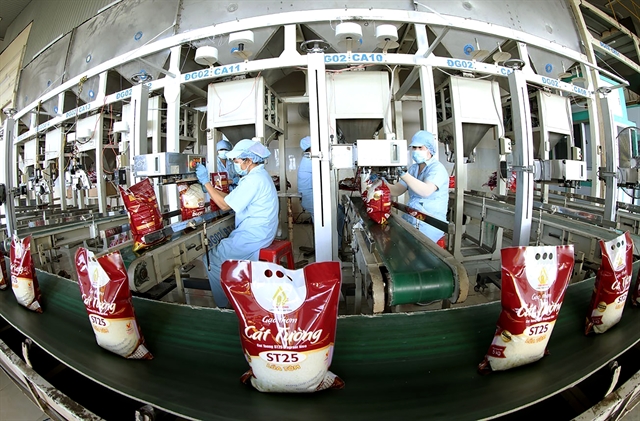 |
| Rice packaged at the Tấn Vương Food Co. Ltd. in An Giang Province. The Philippines' plan to import rice at record level provides opportunities for Vietnamese exporters in the remaining months of this year. — VNA/VNS Photo Vũ Sinh |
HÀ NỘI — The Philippines is expected to import a record 5 million tonnes of rice this year, offering Vietnamese exporters significant opportunity to boost shipments in the final months of 2026.
The Philippines, the largest rice export market of Việt Nam, is seeking to offset a domestic production shortfall of about 900,000 tonnes because of El Nino and build stocks for early 2027, according to the Vietnam Food Association (VFA).
By August 13, the Philippines had already imported 3.46 million tonnes of rice, exceeding its total imports for the full year last year 2025. Of the figure, Việt Nam accounted for about 74 per cent of supplies, the VFA’s data showed.
The VFA said that the Philippine’s rice imports are expected to return to more normal levels of around 3.8 million to 4 million tonnes in 2027, highlighting the importance for Vietnamese exporters to take advantage of the current surge in demand while also strengthening longer-term market access.
Việt Nam is seeking to turn the Philippines’ current demand into stronger and more stable market access.
A Vietnamese delegation led by the Ministry of Industry and Trade held talks with Philippine authorities in late August to address trade issues and promote rice exports.
The talks took place as the Philippines has initiated a safeguard investigation into imported rice.
The two sides agreed to continue implementing their memorandum of understanding on rice trade, maintain stable supply chains and exchange information to minimise disruptions to bilateral trade. The Philippines also agreed to study a Vietnamese proposal to upgrade the existing cooperation framework.
Need for diversification, quality
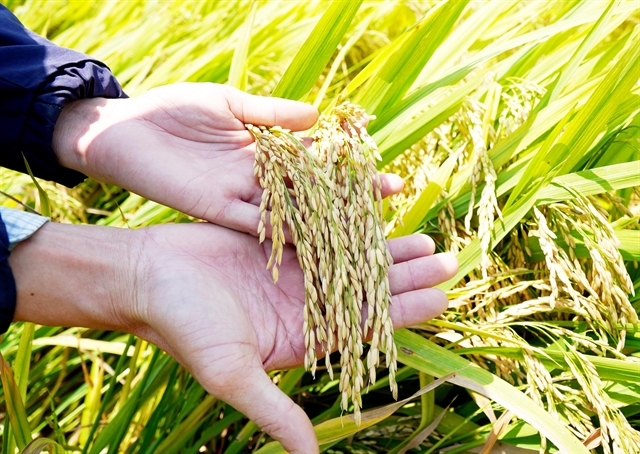 |
| The rice export industry needs a restructuring plan to increase value added, strengthen branding and competitiveness. — VNA/VNS Photo Lê Phước Ngọc |
While the Philippines offers strong near-term demand, the Vietnamese rice industry faces pressure to improve quality and diversity markets to sustain sustainable exports.
Việt Nam exported more than 6 million tonnes of rice worth nearly US$2.91 billion in the first eight months of 2026, down about 5 per cent in volume and 10.7 per cent in value from the same period last year, according to the Ministry of Agriculture and Environment.
The sharper decline in export value reflects weaker prices earlier in the year. But prices have begun to recover. Việt Nam's average rice export price reached $511 a tonne in July, up 5.8 per cent from a year earlier and the first year-on-year increase recorded this year.
Rice prices are under pressure to edge up in late 2026 and early 2027 as weather risks in major producing countries could tighten supply.
The Food and Agriculture Organization forecasts global rice production in the 2026-27 season at 553.1 million tonnes, down 1.9 per cent, mainly because of weaker producer margins and adverse weather associated with El Niño.
The Ministry of Agriculture and Environment has urged exporters to monitor global supply, import policies and weather conditions closely while improving product quality and diversifying destinations.
The VFA said that China is having rising demand for broken rice used in animal feed, while some African markets are also expected to provide room for exporters.
Nigeria is forecast to face a rice shortfall of about 3.5 million tonnes in the 2026-27 crop year, while Kenya has waived import duties on white rice under a quota through November. Indonesia, however, has no plans to import rice this year because of high domestic production and stocks.
The association called for continued negotiations on rice trade protocols, government-to-government contracts with major importing markets and development of a national rice brand.
The association also proposed a pilot programme to develop a Mekong Delta rice brand based on the ST24 and ST25 varieties, while establishing export-standard production areas for the European Union and Japan through links between farmers' cooperatives and businesses.
It is also necessary to develop a restructuring plan for the rice export to increase value added, strengthen branding and competitiveness, and provide a foundation for the rice sector to contribute to the country's double-digit export growth targets, the association said.
Việt Nam’s rice export is expected to reach $3.94 billion for the full 2026, an year-on-year drop of 4 per cent. — VNS
Economy
 Economy
 Economy
 Economy
 Economy
 Economy
 Economy
 Economy
 Economy
 Economy
 Economy
 Economy
 Economy
 Economy