.jpg) Economy
Economy



Top leader meets with Danish Parliament Speaker Henrik Frandsen in Copenhagen
1.
|
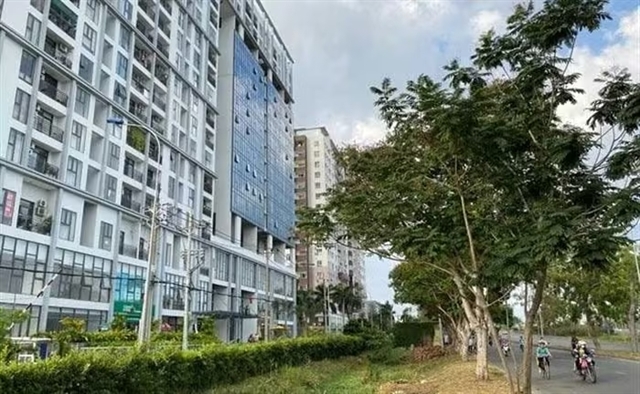
| In reality, the market has suffered from a supply-demand imbalance for years due to the absence of the affordable housing segment. VNA/VNS Photo |
HÀ NỘI — As affordable apartments have almost disappeared in the market, the Ho Chi Minh City Real Estate Association (HoREA) on Wednesday proposed incorporating a policy for developing reasonably priced commercial housing into law to meet the housing needs of a large portion of the urban population.
Under a written document submitted to the Prime Minister and relevant ministries and agencies, HoREA urged the retention and streamlining of the policy in the amended draft Law on Housing. This policy had appeared in the draft law dated July 22, 2026, but was removed in the latest draft law dated on August 5, 2026.
In reality, the market has suffered from a supply-demand imbalance for years due to the absence of the affordable housing segment.
HoREA statistics showed a continuous and sharp decline in the supply of commercial housing projects between 2018 and 2024. Specifically, while the market saw 92 projects with 42,991 apartments in 2017, the figure dropped to 77 projects with 28,316 apartments in 2018. The downward trend persisted in subsequent years: 42 projects with 23,046 apartments in 2019; 31 projects with 16,895 apartments in 2020; 20 projects with 14,443 apartments in 2021; 25 projects with 12,147 apartments in 2022; 19 projects with 17,753 apartments in 2023; and a steep drop to just six projects with a mere 3,845 apartments in 2024.
The share of reasonably priced commercial housing has plummeted to rock bottom. In 2020, the market saw only 163 apartments in this segment, accounting for a mere 1 per cent of total supply. From 2021 to 2024, absolutely no new affordable commercial apartments were launched.
In contrast, during the 2019–2023 period, high-end housing accounted for approximately 70 per cent of the market share. Notably, in the area of the former HCM City, the high-end segment constituted 100 per cent of the supply.
To remove the imbalance, HoREA believes that codifying this housing segment into law would establish a legal framework encouraging business participation while significantly easing the burden on the State's social housing programme.
These products target middle-income earners and low-income individuals who do not qualify for social housing, and those with real homeownership needs.
Regarding specific mechanisms, HoREA proposes expanding eligible beneficiaries to include middle- and low-income individuals as well as interested organisations. Local authorities would proactively allocate land from commercial housing reserves, social housing sites, or other land areas consistent with zoning plans.
HoREA recommends applying ‘green-lane’ special investment procedures - a fast-track regulatory mechanism designed to compress approval timelines for qualifying projects in designated zones - to shorten implementation times, while also allowing provincial People's committees to set flexible planning parameters to boost the supply of small- and medium-sized apartments.
Regarding price selling management, instead of capping corporate profit margins, the State should set a price cap for each locality so that real estate developers are allowed to calculate and balance their own operating costs. Homebuyers would also be facilitated in accessing preferential loan packages from banks.
HoREA also proposes removing the ban on resale within five years of handover, allowing buyers who have received their home ownership certificates to freely transfer the property and fulfill their tax obligations in accordance with regulations. — BIZHUB/VNS
Economy
 Economy
 Economy
 Economy
 Economy
 Economy
 Economy
 Economy
 Economy
 Economy
 Economy
 Economy
 Economy
 Economy
 Economy