 Economy



HCM City honours fallen soldiers with solemn musical tribute
1.
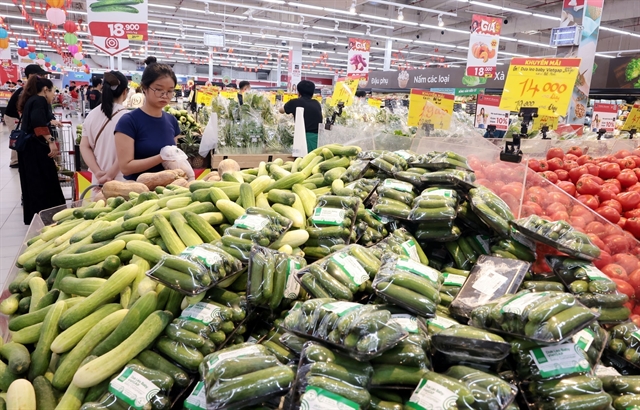 |
| Consumers shop at a Go! supermarket in Hà Nội. For the first eight months of 2026, CPI rose 4.45 per cent from a year earlier. — VNA/VNS Photo Trần Việt |
HÀ NỘI — Việt Nam’s consumer price index (CPI) rose 0.47 per cent in August from July, reversing declines recorded in the two previous months, mainly as domestic fuel prices were adjusted higher in line with global energy prices, according to data released by the National Statistics Office (NSO) on September 3.
The CPI increased 3.57 per cent in August compared to December 2025 and 4.89 per cent compared to the same month last year.
Ten of the 11 groups of consumer goods and services in the CPI basket recorded price increases in August, while food and catering services was the only group to see a decline, edging down 0.03 per cent from the previous month.
Transport prices saw the largest increase, up by 4.09 per cent month-on-month in August due to higher fuel prices and contributing 0.41 percentage points to the overall CPI increase.
For the first eight months of 2026, CPI rose 4.45 per cent from a year earlier.
Housing, electricity, water, fuel and construction materials recorded the highest price increase over this period at 6.71 per cent, contributing 1.52 percentage points to overall CPI growth.
Food and catering service prices increased by 4.76 per cent, contributing 1.7 percentage points, while transport prices rose by 5.38 per cent, contributing 0.54 percentage points.
Core inflation, which excludes volatile food, fuel and gas prices, rose 0.11 per cent in August from the previous month and 4.55 per cent year-on-year.
Average core inflation in the first eight months was 4.24 per cent, below the headline CPI, as fluctuations in fuel, gas and food prices pushed up the overall CPI while these items are excluded from the core inflation calculation.
According to the NSO, CPI movements during the first eight months were influenced by seasonal factors, consumer demand during holidays and the Lunar New Year, global fuel prices and input costs.
The NSO attributed the CPI increase mainly to higher fuel and gas prices following global market movements, as well as rising housing, electricity, water, fuel and construction material costs. Higher input costs and stronger consumer demand also contributed to increases in food and catering service prices.
The Government aims to keep CPI at around 4.5 per cent for the full year. — VNS
Economy
 Economy
 Economy
 Economy
 Economy
 Economy
 Economy
 Economy
 Economy
 Economy
 Economy
 Economy
 Economy
 Economy
 Economy