 Economy



84 individuals investigated for transnational online frauds
1.
 |
| The inauguration of Tokuyama Vietnam's polysilicon plant in HCM City. — Photo HCM City Portal |
HÀ NỘI — Japanese silicon manufacturer Tokuyama is adding production facilities in Việt Nam and Malaysia for a key chip material as part of efforts to diversify its supply chain.
The move is expected to reduce the company's reliance on concentrated production in Japan and mitigate the risk of supply disruptions.
The plant in Việt Nam, inaugurated last week, will grind, clean and analyse polysilicon, an essential raw material for semiconductor wafers. Tokuyama is investing US$60 million in the facility, which is ultimately expected to reach an annual capacity of 4,000 tonnes. Following a trial operation period, commercial production is scheduled to begin in 2027.
Speaking at the plant's inauguration ceremony in HCM City, Tokuyama Chairman Hiroshi Yokota said the facility marked a major step in supporting Tokuyama's growth strategy.
The plant will provide a solid overseas base as the company restructures its polysilicon production network, which has so far been concentrated at Tokuyama's plant in Japan.
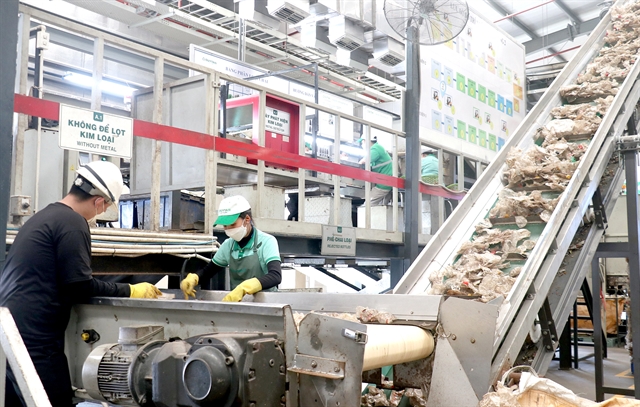
Workers will crush polysilicon rods into small pieces that can be easily fed into customers' furnaces. The process relies on manual labour to minimise the risk of contamination by metal particles that machinery could generate, while allowing fine adjustments during processing. It therefore requires a skilled and reliable workforce.
Next spring, Tokuyama is expected to complete a polysilicon synthesis and deposition plant in Malaysia. The facility will be operated by a joint venture with the Republic of Korea's OCI, with total investment estimated at around $300 million.
Once both Southeast Asian plants become operational, Tokuyama's total production capacity, including its Japanese plant, will increase 50 per cent to 12,500 tonnes per year.
Tokuyama, which can refine polysilicon to a purity level with impurities reduced to just one part per billion, ranks third globally in semiconductor-grade polysilicon production, with a market share of around 20 per cent. However, this concentration has also made its sole production facility a potential vulnerability, as any shutdown could disrupt supplies across the industry.
Tokuyama President Tomohiro Inoue said customers have increasingly demanded diversified sources of supply since the COVID-19 pandemic.
The Japanese Government has provided Tokuyama with a 4 billion JPY ($25.2 million) subsidy to support its entry into the Vietnamese market. The company has decided to distribute production facilities across friendly Southeast Asian countries to secure stable supplies as chipmakers such as Rapidus and TSMC establish manufacturing facilities in Japan.
According to a report by the Semiconductor Industry Association (SEMI), silicon wafer shipments are expected to reach 15.5 billion square inches by 2028, up around 20 per cent from 2025. Demand for ultra-high-purity polysilicon is rising as investment in artificial intelligence (AI) drives growth in components such as high-bandwidth memory.
Inoue said customer forecasts indicated that demand would exceed the capacity of Tokuyama's Japanese plant around 2027. Based on current projections, the additional output from Việt Nam and Malaysia is expected to be fully absorbed within three to four years.
Tokuyama's Việt Nam plant has the potential to nearly double its capacity. The company will consider expanding capacity at all three facilities, as its Japanese plant is already nearing its production limit. — VNA/VNS
Economy
 Economy
 Economy
 Economy
 Economy
 Economy
 Economy
 Economy
 Economy
 Economy
 Economy
 Economy
 Economy
 Economy
 Economy