 Economy



HIIVE by fusion brings business and golf closer in Bình Dương
1.

|
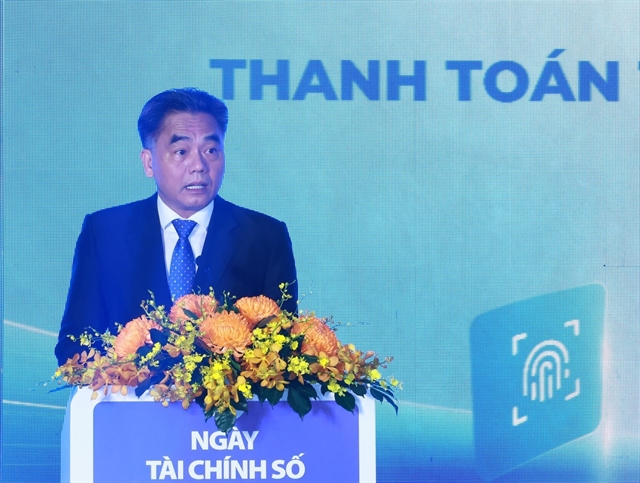
| Deputy Prime Minister Nguyễn Văn Thắng speaks at the “Smart Payments in the Digital Era” seminar in HCM City on June 6, highlighting the Government’s goal of raising the value of cashless transactions to 30 times GDP by 2030. — VNA/VNS |
HCM CITY — Việt Nam is accelerating efforts to expand cashless payments, with the Government targeting transaction values equivalent to 30 times GDP by 2030 as part of its broader digital finance strategy.
Speaking at the seminar “Smart Payments in the Digital Era” on June 6 as part of Digital Finance Day 2026, Deputy Prime Minister Nguyễn Văn Thắng said cashless payments had evolved from a convenient option into a critical pillar of the country's digital economy and financial ecosystem.
Within that ecosystem, cashless payments have become the lifeblood of the digital economy, connecting banking services with sectors such as commerce, healthcare, education, transportation, tourism, public services, and other digital platforms, according to Thắng.
Digital data, digital identity, digital connectivity, and digital payments are gradually creating a more modern, transparent, and convenient financial system for citizens and businesses.
Digital payments are essential for accelerating money circulation, expanding access to financial services, improving governance efficiency, and creating momentum for digital economic growth.
The Deputy Prime Minister highlighted the National Financial Inclusion Strategy for 2026–2030, approved under Prime Ministerial Decision No. 928/QĐ-TTg on May 25, 2026. The strategy aims to ensure that 95 per cent of people aged 15 and above have bank accounts by 2030, while the value of cashless transactions is targeted to reach approximately 30 times GDP.
Despite significant progress, Thắng acknowledged that challenges remained. Gaps in access to digital payment services persisted between urban and rural areas, while some groups, particularly older adults and low-income individuals, remained hesitant or unable to adopt modern payment methods.
He also stressed the need to strengthen payment infrastructure and cybersecurity as increasingly sophisticated cybercrime and online fraud pose growing risks to users.
To achieve the Government's targets, ministries, local authorities, and financial institutions had been urged to accelerate the development of policies, technical standards, and digital infrastructure that support innovation in banking and financial services.
He also called for the expansion of digital banking services in rural and remote areas, encouraged salary payments and commercial transactions through bank accounts, and urged wider adoption of cashless payments across all sectors of society.
|
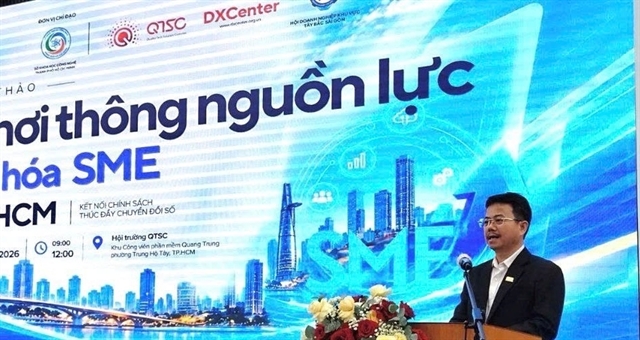
| Nguyễn Lộc Hà, Permanent Vice Chairman of the HCM City People's Committee, said digital payments could help businesses improve governance, expand access to credit, and participate more deeply in the digital economy. — VNA/VNS Photo |
At the seminar, Nguyễn Lộc Hà, Permanent Vice Chairman of the HCM City People's Committee, said smart payment solutions were creating new growth drivers for the economy, particularly in major urban centres.
According to Hà, the ability to make fast, secure, and convenient payments anytime and anywhere helps reduce transaction costs, improve consumer experiences, and stimulate spending on shopping, tourism, entertainment, and services.
“For an economic hub like HCM City, this is an important factor in expanding the domestic market, increasing purchasing power, and supporting economic growth,” he said.
By the end of 2025, HCM City had approximately 345,000 active enterprises and 361,000 business households. However, many small businesses still faced challenges in revenue management, access to capital, and technology adoption.
“Digital payments can help address these issues by creating transparent transaction records, improving management capabilities, facilitating access to credit, and enabling businesses to participate more deeply in the digital economy,” Hà said.
Smart payments are also seen as a key enabler of e-commerce development, according to Hà. HCM City currently accounts for around one-third of Việt Nam’s total e-commerce revenue and leads the country in the number of businesses registered for online sales.
In addition, digital transaction data can improve tax administration, support anti-fraud efforts, and enhance business transparency as the city seeks to achieve a record budget revenue target of VNĐ1 quadrillion in 2026.
State Bank Deputy Governor Phạm Thanh Hà said the banking sector would remain committed to building a modern financial ecosystem centred on citizens and businesses through digital transformation and payment innovation.
Going forward, the sector would continue refining regulations, upgrading payment infrastructure, fostering innovation, strengthening system security, and expanding financial literacy programmes to support digital economic growth and improve access to financial services nationwide.
Insurance in the digital era

|
| Phùng Bá Khang, Chief Customer, Marketing & Product Officer at Prudential Vietnam, speaks at the seminar. — Photo courtesy of the company |
The seminar also highlighted the role of insurance in strengthening financial resilience.
Phùng Bá Khang, Chief Customer, Marketing & Product Officer at Prudential Vietnam, cited the company's Financial Well-being Index survey of more than 7,000 respondents across eight Asian markets.
According to the survey, while Việt Nam ranked highest in the region for current financial security, only 40 per cent of young respondents – the group with the highest level of financial confidence – said they could cope with a large unexpected expense, while 37 per cent expected to continue generating income after retirement.
The findings underscore a significant gap between current financial confidence and long-term financial preparedness. "While saving remains essential, it is often insufficient to protect long-term financial goals against unforeseen events," he said.
As consumers become increasingly focused on personal financial planning, life insurance should be viewed as an integral component of a modern financial ecosystem, he added. Beyond providing protection against financial risks, life insurance could help families stay on track toward long-term goals such as education, retirement, and investment without compromising the savings they have worked hard to build. — VNS
Economy
 Economy
 Economy
 Economy
 Economy
 Economy
.jpg) Economy
Economy
 Economy
 Economy
 Economy
 Economy
 Economy
 Economy
 Economy
 Economy