 Economy


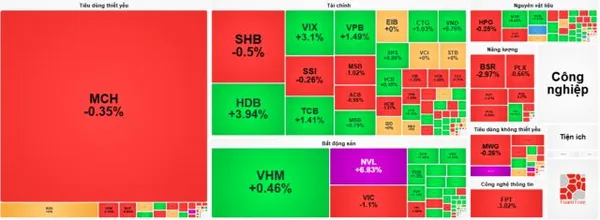
VN-Index ends lower despite liquidity hit over $1 billion
1.
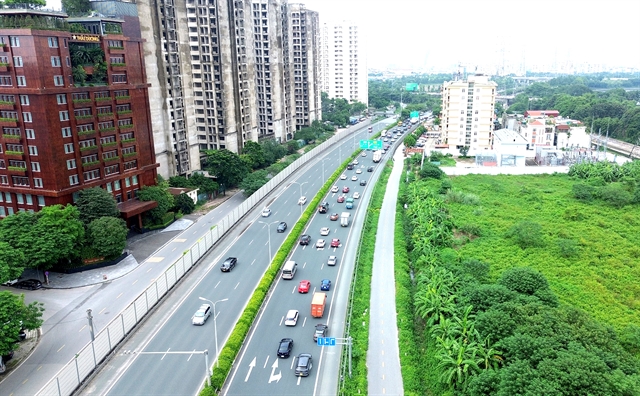 |
| Unused high-rise buildings along the Pháp Vân - Cầu Giẽ Expressway. Hà Nội authorities have proposed allowing conversion between social, commercial and resettlement housing projects. — VNA/VNS Photo |
HÀ NỘI — Hà Nội authorities have proposed a new regulatory framework allowing conversion between social, commercial and resettlement housing projects in an effort to use more underutilised housing stock and respond more flexibly to market demand.
Under a draft decision recently released for public comment by the municipal People’s Committee, the conversion would be applied in three categories: commercial housing, social housing and housing designated for resettlement purposes.
Specifically, commercial housing projects could be converted into social housing projects if the land has not yet been allocated or leased and the developer has not fulfilled financial obligations related to the project.
Developers seeking such conversions would also be required to commit to a maximum profit margin of 10 per cent of the total investment cost of the converted portion of the project.
Social housing projects could be partially converted into commercial housing only after construction has been completed and units are eligible for sale, but have remained unsold for at least a year due to weak market demand.
The draft caps such conversions at no more than 20 per cent of the total number of apartments or total social housing floor area within a project.
For resettlement housing, Hà Nội proposed allowing conversion into commercial or social housing if the housing stock remains unused for at least nine months after handover to the authorities.
Commercial or social housing projects could also be converted into resettlement housing when urgent demand arises from site clearance, urban renovation or redevelopment programmes.
The draft states that all conversions must receive written approval or a separate decision from the Hà Nội People’s Committee on a case-by-case basis.
Project developers would also be required to fulfil additional financial obligations related to land use fees or land rental payments based on market prices at the time conversion approval is granted.
The proposal comes as Hà Nội faces growing pressure to improve housing supply amid rapid urbanisation and uneven demand across different housing segments.
The city is currently carrying out land clearance for more than 1,400 projects, which would increase demand for resettlement housing and temporary accommodation for affected residents.
According to the municipal People’s Committee, the flexible conversion mechanism is intended to improve housing stock utilisation, avoid waste of social resources and better meet actual housing demand.
This draft decision is expected to provide the city with an additional tool to regulate the housing market, support social housing development and strengthen the availability of resettlement housing for urban redevelopment and renovation projects. — VNS
Economy
 Economy
 Economy
 Economy
 Economy
 Economy
.jfif) Economy
Economy
 Economy
 Economy
 Economy
 Economy
 Economy
 Economy
 Economy
 Economy