 Economy



HCM City tops national Chinese chess championship in Bắc Ninh
1.
|
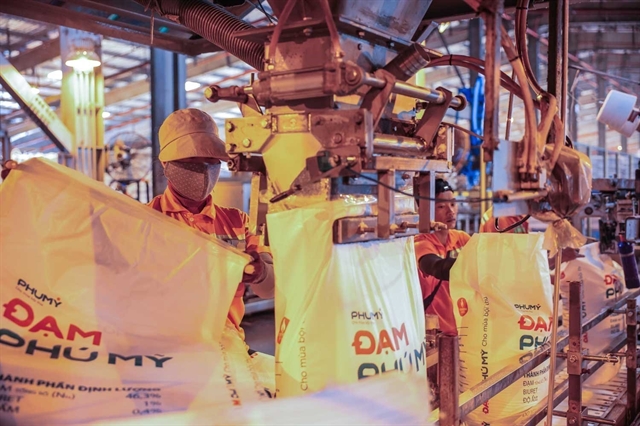
| A product packaging line at Phú Mỹ Fertiliser Factory. — VNA/VNS Photo |
HÀ NỘI — Việt Nam should promptly review and adjust its tax policies to promote fertiliser exports and improve overall industry efficiency, according to experts.
At present, many fertiliser-exporting countries have reduced export taxes to zero to support businesses since early 2025, while Việt Nam continues to impose a 5 per cent export tax on urea and superphosphate, placing domestic firms under considerable competitive pressure.
Even major fertiliser producers such as those in the Middle East, along with China, Indonesia and Malaysia, have adopted similar measures to enhance the competitiveness of their domestic industries.
Việt Nam maintaining a 5 per cent export tax on urea and superphosphate, raises production costs for domestic companies, and significantly weakens their position in global markets.
Nguyễn Văn Phụng, a senior tax expert and executive committee member of the Việt Nam's Business Legal Association, said that fertiliser import-export tax policy lacks flexibility.
He added that the domestic fertiliser market is highly seasonal.
During peak periods, demand rises sharply and can even exceed supply, requiring increased imports. Conversely, during off-peak periods, domestic supply often exceeds demand, forcing companies to seek export markets.
However, export tax management has not always kept pace with market fluctuations. At times of abundant supply, delays in policy adjustments – maintaining the 5 per cent export tax rate – have caused businesses to miss export opportunities.
Phụng stressed the need for a more responsive and flexible policy mechanism to support businesses while maintaining a balance between domestic supply and demand.
“Taxation is not only a source of State revenue but also an important tool for market regulation," he said.
"When domestic supply is tight, export taxes can be used to curb exports and prioritise local consumption. Conversely, when supply is abundant or excessive, reducing taxes can help boost exports, clear inventories and stabilise the market.”
|
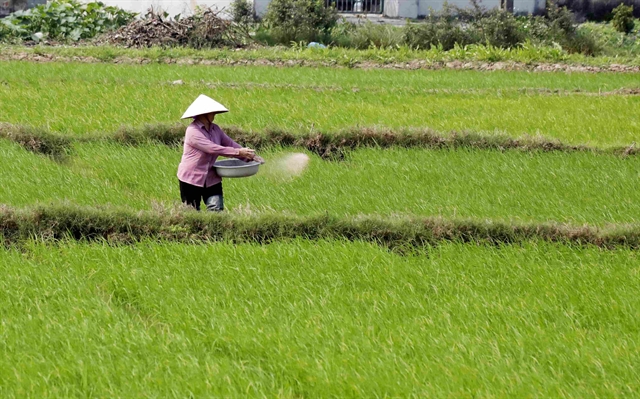
| A farmer in Xuân Hồng Commune, Ninh Bình Province fertilises the winter-spring rice crop. — VNA/VNS Photo |
Nguyễn Trí Ngọc, vice chairman and secretary general of the Việt Nam Fertiliser Association, said that fertiliser production – particularly for products like urea – requires advanced technology and continuous operation. Higher output generally leads to greater economic efficiency, but it also creates pressure to secure stable outlets for products.
In this context, the Government’s regulatory role through tax policy becomes especially important. When domestic supply exceeds demand, flexible mechanisms are needed to promote exports, ease inventory pressures and improve production efficiency. When domestic shortages occur, tax policy should be adjusted in a timely manner to prioritise supply for the local agricultural sector.
In practice, however, policy management has yet to achieve the required level of flexibility.
“This underscores the urgent need to rethink policy management towards a more flexible and responsive framework, thereby optimising economic efficiency and balancing the interests of producers, exporters and domestic consumers,” Trí Ngọc said.
Bùi Thị Thanh Giang, deputy head of the Planning and Business Division at Vietnam National Chemical Group, noted that the domestic fertiliser market is currently in its peak season, with relatively low inventory levels. However, based on annual cycles, demand typically declines sharply from June to November, leading to rising stockpiles.
During this period, production capital is not efficiently circulated, borrowing costs increase, and prolonged storage may reduce product quality.
As a result, companies are often forced to cut capacity or operate at minimal levels, driving up maintenance costs. These additional expenses are ultimately reflected in annual product pricing, reducing overall business efficiency.
If firms can secure export markets during the off-peak season, inventories can be reduced, enabling continuous production and lowering average costs.
Notably, regional markets in Asia – particularly India – have substantial fertiliser demand, estimated at 18-20 million tonnes annually, with crop seasons that differ from Việt Nam’s. Specifically, India’s summer crop runs from June to July, while the winter crop begins from October to November.
Giang said: “This creates an opportunity for domestic firms to boost exports when local demand declines, thereby maintaining production capacity and optimising costs.”
Hà Huy Ngọc, director of the Centre for Strategy and Policy at the Institute of Việt Nam and World Economy, pointed out that beyond tax policy adjustments, Việt Nam’s fertiliser industry faces three major challenges that must be addressed simultaneously to strengthen export competitiveness.
The first is logistics. High transportation costs and limited export infrastructure undermine price competitiveness. Investment in specialised logistics infrastructure linked to major production hubs is needed to reduce costs and enable higher-value exports.
The second challenge is trade barriers. Fertiliser exports are affected by varying quarantine regulations and technical standards across markets. Additionally, the risk of trade defence investigations – particularly anti-dumping cases – is increasing. Relevant authorities should strengthen early warning systems and support businesses in mitigating risks in international markets.
The third is the requirement for green transition. As part of the chemical sector, the fertiliser industry faces mounting pressure to reduce emissions and comply with increasingly stringent environmental standards.
Policies supporting credit access, technology adoption and production innovation are therefore essential to facilitate a green transition and more sustainable practices.
According to Huy Ngọc, only by addressing these three challenges in tandem – alongside more flexible tax policies – can Việt Nam’s fertiliser industry enhance its competitiveness and effectively capitalise on opportunities in global markets. — VNS
Economy
 Economy
 Economy
 Economy
 Economy
 Economy
 Economy
 Economy
 Economy
 Economy
 Economy
 Economy
 Economy
 Economy
 Economy