 Economy


Ping An Digital Bank Completes HKMA’s Second GenA.I. Sandbox Cohort
1.
|
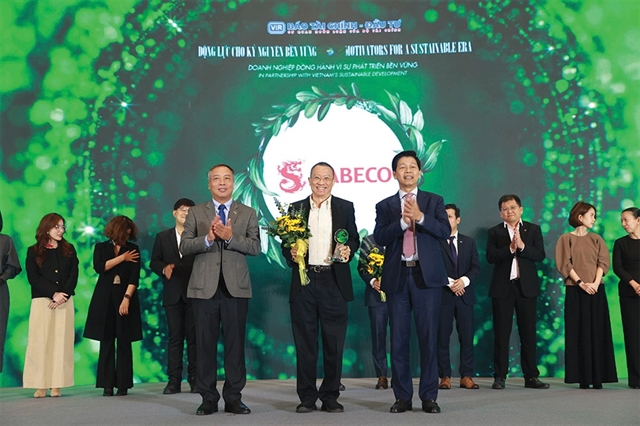
| Larry Lee, SABECO's deputy general director (centre) received the award for sustainable development. — Photo courtesy of the organiser |
HÀ NỘI — The Saigon Beer-Alcohol-Beverage Corporation (SABECO) is stepping up efforts to integrate sustainability into its business model, positioning green manufacturing as a driver of competitiveness in Việt Nam’s fast-moving consumer goods (FMCG) sector.
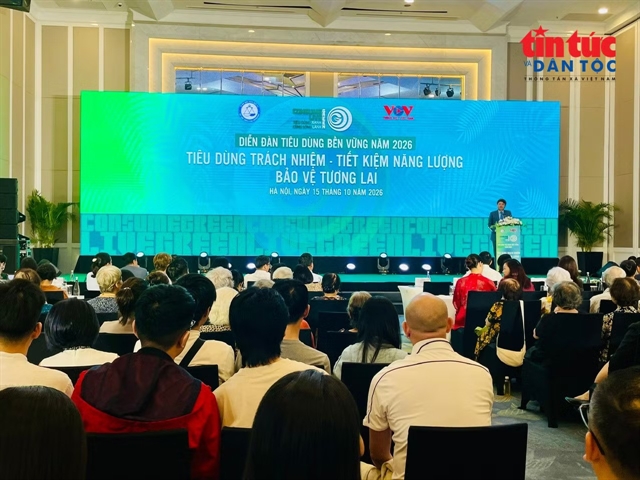
Speaking at a recent sustainable development forum in Hà Nội, Larry Lee, SABECO's deputy general director in charge of strategic assets and sustainability, said environmental performance has become closely tied to long-term business results, requiring companies to embed green practices across operations rather than treat them as compliance obligations.
As one of the country’s largest brewers, SABECO operates at a scale where resource use and emissions carry significant weight, particularly as the FMCG and food and beverage industries account for a large share of industrial energy consumption nationwide.
Việt Nam has committed to achieving net-zero emissions by 2050, alongside implementing its national green growth strategy and Power Development Plan VIII. These policy directions, combined with rising global demand for sustainable products, are reshaping how businesses compete and access markets.
According to industry data, sustainable finance and green investment are expanding rapidly worldwide, while consumers are increasingly willing to pay more for products that meet environmental and social standards.
SABECO said its transition has delivered tangible outcomes across operations. By the end of 2024, renewable energy accounted for more than 40 per cent of electricity used at its production facilities, while direct greenhouse gas emissions were reduced by over nine per cent.
Water consumption intensity declined by more than seven per cent, and over 60 per cent of waste was diverted from landfills. The company added that all primary packaging materials are now designed to be recyclable or reusable.
The brewer has invested in rooftop solar systems and biomass energy, alongside efforts to optimise electricity use. It also continues to promote circular packaging, maintaining high return rates for glass bottles and reducing aluminium usage through lightweighting initiatives.
Water stewardship remains another priority, with upgrades to wastewater treatment systems and expanded rainwater harvesting at production sites. Risk assessments are also being applied to identify facilities vulnerable to water stress.
Sustainability oversight has been elevated to the board level, supported by disclosures aligned with international standards and performance monitoring across environmental, social and governance indicators.
Extending impact beyond production
Beyond factory operations, SABECO is extending sustainability initiatives to its supply chain and communities. Programmes include infrastructure support, renewable energy applications and youth engagement activities.
The company reported installing solar-powered lighting systems across multiple localities, contributing to improved safety and energy access. It has also expanded sports and community programmes aimed at promoting healthier lifestyles.
In terms of corporate recognition, SABECO has continued to receive awards for employer branding and business reputation, reflecting its efforts to align growth with sustainability and workplace development.
Industry observers note that the company’s approach reflects a broader shift in Việt Nam’s manufacturing sector, where sustainability is increasingly viewed as integral to resilience and long-term value creation.
SABECO said it aims to move beyond its traditional identity as a leading brewer to become a benchmark for sustainable development within the FMCG industry. — VNS
Economy
 Economy
 Economy
 Economy
 Economy
 Economy
 Economy
 Economy
 Ảnh JP Morgan.png) Economy
Economy
.jpeg) Economy
Economy
 Economy
 Economy
 Economy
 Economy
 Economy

.jpeg)