 Economy


Việt Nam has five Halal certification bodies recognised by Malaysia
1.
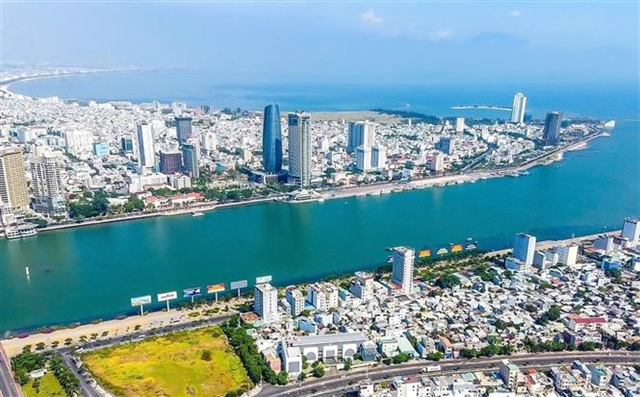 |
| Đà Nẵng City. Việt Nam’s external position remains solid, with the current account surplus reaching a record 6.7 per cent of GDP in 2025. — VNA/VNS Photo |
HÀ NỘI — Việt Nam’s economy continues to show strong resilience despite global uncertainties, supported by export-led manufacturing, sustained foreign investment, and firm domestic demand, according to the ASEAN+3 Macroeconomic Research Office (AMRO).
The assessment follows AMRO’s annual consultation visit to Việt Nam from March 23 to April 3. The delegation held discussions with State Bank of Vietnam Governor Nguyễn Thị Hồng and Deputy Minister of Finance Trần Quốc Phương.
AMRO said Việt Nam’s growth is expected to moderate to around 7.2 per cent in 2026–27 after a strong expansion last year as external demand gradually weakens.
“Domestic demand is expected to remain resilient, underpinned by continued policy support, including the extended VAT rate reductions and planned public infrastructure spending,” said AMRO Principal Economist Anthony Tan.
Inflation has so far remained below the Government’s target ceiling of 4.5 per cent. However, rising global energy prices, driven by escalating tensions in the Middle East since late February, have pushed up domestic fuel costs and may add to inflationary pressures. Strong credit growth and higher public spending are also expected to contribute to rising prices.
Việt Nam’s external position remains solid, with the current account surplus reaching a record 6.7 per cent of GDP in 2025, supported by strong exports and remittances, although capital outflows were also significant.
Fiscal performance improved last year, with revenue exceeding targets, largely driven by increased land-related transactions following new land and housing laws. Public spending rose moderately and the fiscal balance is estimated to have recorded a surplus of 0.9 per cent of GDP.
Despite the positive outlook, AMRO warned that risks are intensifying. Higher energy prices pose the most immediate external threat, potentially weighing on growth by fuelling inflation and weakening domestic demand.
The economy is also increasingly exposed to global trade tensions, particularly as supply chains face closer scrutiny from the United States and other major markets. Rapid credit expansion has added to financial vulnerabilities, increasing sensitivity to liquidity and funding conditions.
AMRO noted that stronger linkages between capital flows, liquidity and domestic financial cycles have heightened exposure to external shocks, complicating efforts to balance growth and macro-financial stability.
To address these challenges, AMRO recommended a prudent and well-calibrated policy mix. Fiscal policy should focus on targeted support for vulnerable sectors affected by rising energy costs rather than broad stimulus while ensuring efficient public spending.
Monetary policy may need to gradually normalise as financial imbalances emerge, with close monitoring of liquidity and foreign exchange conditions. Regulators were also urged to strengthen macroprudential oversight, particularly in real estate and household lending.
Over the longer term, AMRO highlighted the need to deepen linkages between foreign-invested and domestic firms to raise value-added production, modernise policy frameworks in line with increasing economic complexity, and advance capital market reforms to improve investment efficiency and reduce speculative capital flows. — BIZHUB
Economy
 Economy
 Economy
 Economy
 Economy
 Economy
 Economy
 Economy
 Economy
.jpg) Economy
Economy
 Economy
 Economy
 Economy
 Economy
 Economy