 Economy


Việt Nam, China seek stronger substantive parliamentary cooperation
1.
.jpg)
|
| Chairman of the municipal People’s Committee Vũ Đại Thắng chaired the meeting. — Photos courtesy of Hanoi Support Centre for Enterprise and Investment Promotion. |
HÀ NỘI — Authorities in Hà Nội have reaffirmed their commitment to accompany businesses and decisively address their concerns as small and medium-sized enterprises (SMEs) continue to face multiple bottlenecks affecting growth and competitiveness, at a time when firms are seeking clearer policy support and faster reforms.
The pledge was made by Chairman of the municipal People’s Committee Vũ Đại Thắng at a dialogue conference with SMEs held on April 16. The event served not only as a policy briefing but, more importantly, as a platform for businesses to directly voice difficulties and propose solutions.
|
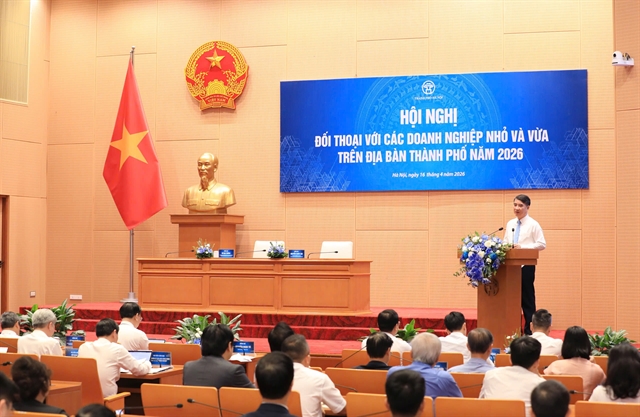
| Vice Chairman of the Hà Nội People’s Committee Nguyễn Xuân Lưu delivered an opening speech. |
Speaking at the opening of the conference, Vice Chairman of the Hà Nội People’s Committee Nguyễn Xuân Lưu said the event was held at a historically significant time following the success of the 14th National Party Congress, marking the beginning of a new era, an era of the nation's rise as well as the successful elections of deputies to the 16th National Assembly and People’s Councils at all levels for the 2026–31 term. These events, he noted, reaffirm public trust, consensus and support.
He emphasised that the conference was not only intended to provide updates on the situation, policies and orientations but more importantly to serve as a platform for the city to directly listen to feedback from the business community, thereby identifying difficulties and bottlenecks that need to be addressed in a substantive and effective manner.
The conference also represents a concrete step in implementing major central policies on enterprise development and the broader economy, including Resolution No. 68-NQ/TW on private sector development and Resolution No. 79-NQ/TW on improving the efficiency of the state sector.
Regarding the outlook for 2026, Lưu noted that global and regional developments remain fast-moving, complex and unpredictable, with prolonged geopolitical tensions affecting energy prices, global supply chains and the investment and business environment, placing significant pressure on enterprises.
Against this backdrop, Hà Nội has implemented socio-economic development tasks in a concerted and decisive manner, achieving positive results in the first quarter of 2026. GRDP growth was estimated at 7.87 per cent, among the highest in recent years. State budget revenue exceeded VNĐ260.7 trillion, equivalent to 40.1 per cent of the annual estimate, while local budget expenditure surpassed VNĐ52.2 trillion.
Foreign direct investment inflows totalled nearly US$480 million, while more than 9,000 new enterprises were registered, with a sharp increase in registered capital compared with the same period last year. The trade and services sector continued to expand, with total retail sales of goods and consumer service revenue rising by more than 11 per cent.
“These results reflect the significant contribution of the business community, particularly small- and medium-sized enterprises, a dynamic and flexible force that plays a core role in the capital’s economy,” Lưu said, expressing appreciation for the entrepreneurial spirit of proactiveness, creativity and resilience.
However, he also acknowledged that the results are only initial and fall short of the requirements for a breakthrough. Some growth drivers have yet to fully realise their potential, while businesses continue to face difficulties in accessing credit, land and production premises alongside rising input costs. In addition, administrative procedures in certain areas remain slow and implementation has yet to be sufficiently decisive, affecting production and business activities.
At the conference, SME representatives pointed to a range of longstanding challenges, including limited access to credit, land constraints, administrative complexity, and difficulties in digital transformation.
Nguyễn Minh Thu, Deputy Secretary-General of the Hà Nội SME Association, acknowledged the city’s efforts in administrative reform, digital transformation and maintaining dialogue channels with businesses. However, she noted that these improvements have yet to fully resolve underlying obstacles.
“SMEs still face significant barriers, from accessing resources to rising operational costs,” she said, adding that the association had put forward a number of key recommendations to improve the business environment.
Access to finance remains one of the most pressing issues. SMEs often lack sufficient collateral while lending procedures are time-consuming and requirements remain stringent. Businesses proposed expanding lending models based on purchase orders and improving the efficiency of credit guarantee funds.
Land access and production space were also identified as major bottlenecks. Enterprises called for greater transparency in land availability, more appropriate allocation within industrial clusters and policies to support initial investment costs. In addition, they urged authorities to streamline procedures related to investment, construction, environmental compliance and fire prevention, suggesting stronger inter-agency coordination to shorten processing times.
Beyond traditional constraints, SMEs also highlighted challenges in adapting to an increasingly digital economy. Many firms lack the financial resources, strategic direction and skilled workforce needed to implement digital transformation effectively.
Representing the Hà Nội Young Business Association, Trần Văn Minh said its more than 3,300 members had benefited from the city's support policies, particularly programmes for the 2026–30 period and expanded online public services. However, practical difficulties persist.
He noted that rental costs account for around 25 per cent of total investment yet land leased on an annual basis cannot be used as collateral for loans. This limits businesses’ ability to access capital for reinvestment, especially in technology upgrades.
Interest rates and credit policies also fluctuate, making it harder for firms to plan long-term strategies. To address these issues, the association proposed allowing land lease rights to be used as collateral or introducing medium- and long-term credit guarantee mechanisms.
Businesses also recommended developing shared, low-cost digital solutions tailored to SMEs, enabling wider adoption of technology without imposing excessive financial burdens.
At the dialogue, enterprises raised concerns across six main areas. In industry and trade, proposals focused on preferential credit for supporting industries, development of specialised industrial zones and stronger linkages between domestic firms and foreign-invested enterprises. The idea of establishing a national-scale logistics centre was also put forward to reduce costs and improve competitiveness.
In tourism, businesses called for expanded visa exemptions and stronger inter-agency coordination to boost the sector’s recovery and growth.
Administrative procedures more broadly were still described as cumbersome and inconsistent, particularly in areas such as work permits for foreign employees. Tax-related issues also drew significant attention, including difficulties in accessing electronic tax filing systems, delays in processing and cases where firms were flagged for tax arrears despite having fulfilled obligations.
Tax officials at the conference said reforms had reduced administrative procedures by 35 per cent and that support systems, including AI-assisted services and 24/7 helpdesks, had been deployed to assist businesses. However, they acknowledged that system overload during peak periods could still cause disruptions.
|
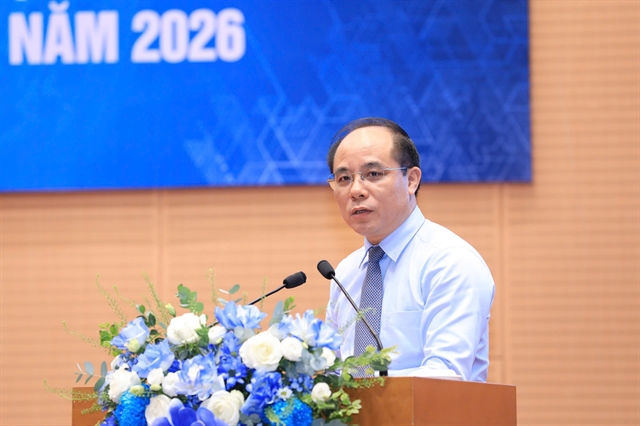
| Bùi Anh Tuấn, Director General of the Department of Private Enterprise and Collective Economy Development under the Ministry of Finance. |
Speaking at the event, Bùi Anh Tuấn, Director General of the Department of Private Enterprise and Collective Economy Development under the Ministry of Finance, said Hà Nội’s business community plays a critical role not only for the city but also for the national economy.
He noted that while many localities organise business dialogues, Hà Nội is the first to hold a dedicated, in-depth conference focusing specifically on SMEs, with direct participation from city leaders and department heads. This, he said, reflects the city’s strong commitment to supporting the sector.
Tuấn added that many of the issues raised are not unique to Hà Nội but reflect broader challenges that require policy adjustments at the national level.
The Ministry of Finance is currently revising the Law on Support for SMEs after eight years of implementation. The revised law is expected to introduce more practical and transparent support mechanisms, with businesses placed at the centre of policy design and evaluation.
He expressed hope that these changes will enable SMEs to access support more effectively and develop sustainably in the coming years.

|
| Chairman of the municipal People’s Committee Vũ Đại Thắng delivered a speech at the event. |
In his closing remarks, Chairman Vũ Đại Thắng emphasised that engagement with businesses would not end with the conference but would continue on a regular basis.
He acknowledged existing shortcomings, including inconsistent administrative reforms, complex procedures and weak coordination among agencies. He also pointed to the need to address instances where some officials have not been fully supportive of businesses.
The city, he said, is determined to shift from a management approach to a service-oriented administration, with businesses at the centre and satisfaction levels serving as a key measure of performance.
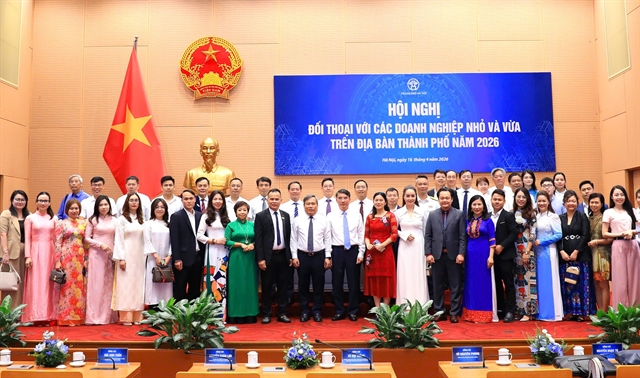
|
| Chairman of the Hà Nội People’s Committee Vũ Đại Thắng and delegates pose for a commemorative photo at the conference. |
Authorities will accelerate administrative reforms, cut at least 50 per cent of unnecessary procedures and improve the quality of online public services. City departments have been instructed to respond to business petitions within a maximum of 30 days.
At the same time, Thắng stressed that businesses themselves must take a proactive role by strengthening governance, ensuring financial transparency, promoting innovation and enhancing linkages to build value chains.
“Hà Nội is facing a major opportunity for breakthrough growth,” he said. “Achieving double-digit growth in the coming period will require the joint efforts of the political system, the business community and the people.”
The city, he affirmed, will continue to listen, accompany and act in support of enterprises, recognising them as a central driver of economic development and long-term prosperity. — VNS
Economy
 Economy
 Economy
 Economy
 Economy
 Economy
 Economy
 Economy
 Economy
 Economy
 Economy
 Economy
 Economy
 Economy
 Economy