 Economy


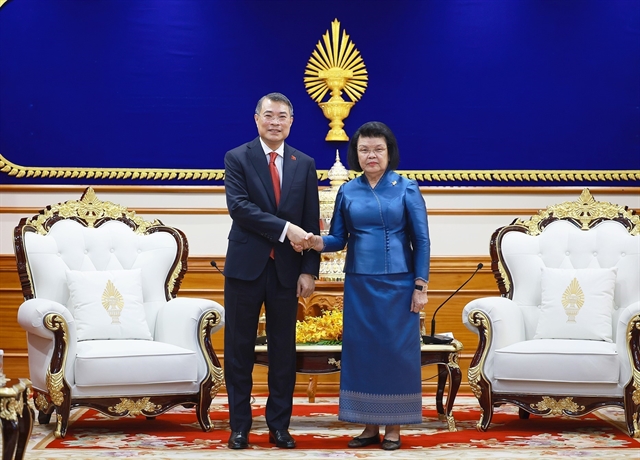
Vietnamese Prime Minister meets Cambodian National Assembly President
1.
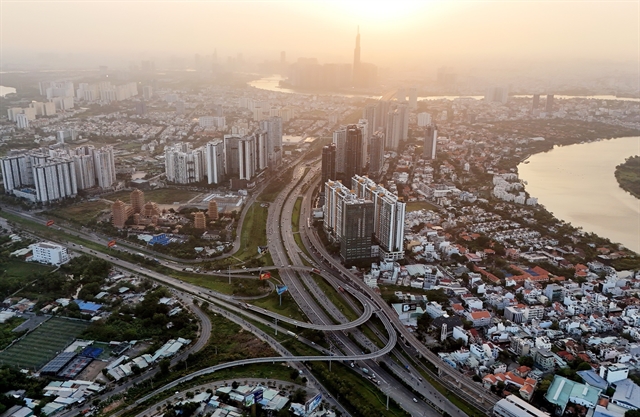 |
| An aerial view of Thủ Đức City. — VNA/VNS Photo |
HÀ NỘI — The rise of next-generation megacities in Việt Nam is emerging as both an inevitable outcome of urbanisation and a potential driver of economic growth, industry experts said.
For years, major urban centres have developed in a unipolar pattern, concentrating capital, population and infrastructure in core districts, said Phạm Thị Miền, deputy director at the Vietnam Association of Realtors’ Institute for Real Estate Market Evaluation (VARS IRE).
Measures such as tightening credit or adjusting policies only address the symptoms. The root of the issue lies in how urban space is organised, Miền told VTC News.
Trần Minh Thu from MT Hojgaard Vietnam in HCM City, said early signs of a megacity model are already visible in areas such as the HCM City metropolitan region, the Hà Nội metropolitan area and Thủ Đức City. These hubs are evolving beyond population centres into clusters for industry, services and innovation.
Such developments reflect a broader shift. The formation of megacities not only follows the urbanisation trend but also creates new growth drivers for the national economy, Thu told VTC News.
Experts note that next-generation megacities are defined not only by scale but also by development quality.
According to Lã Kim Ngân, former director of the Hanoi Urban Planning Institute, key criteria include multi-polar urban structures, smart infrastructure, sustainability and resilience.
Urban models such as the '15-minute city', where residents can access essential services within a short distance, are increasingly shaping new developments, alongside integrated ecosystems combining healthcare, education, parks and employment.
This shift is also changing dynamics in the real estate market. While location has traditionally been the primary determinant of value, analysts said factors such as infrastructure, planning quality, integrated amenities and legal transparency are becoming more important.
Dr Trương Văn Quảng, Deputy Secretary General of the Vietnam Urban Planning and Development Association said Việt Nam needs a comprehensive framework to guide megacity development, with fundamental changes in planning approaches and urban structure.
He said the country should shift from a population-based model to a core functional megacity approach, focusing on enhancing urban capacity rather than expanding population size.
Quảng also called for the development of a national network of interconnected cities with complementary roles, instead of concentrating resources in a single dominant metropolis.
To ease pressure on urban cores, he recommended building multi-centred cities through satellite towns and sub-centres, alongside urban-economic corridors linking key zones such as finance, technology and education.
Accelerating digital transformation is another priority, with investment needed in infrastructure such as 5G networks, data centres and integrated urban data platforms, as well as smart systems for traffic, energy and environmental management.
He added that future megacities should be driven by innovation and knowledge-based industries, rather than labour-intensive production.
Strengthening regional and international connectivity is also critical, including expanding urban rail systems, mass transit, expressways, ports, airports and logistics networks.
Quảng further stressed the need to reform governance models, including greater decentralisation and autonomy for urban authorities, to improve efficiency and adaptability. — VNS
Economy
 Economy
 Economy
 Economy
 Economy
 Economy
 Economy
 Economy
 Economy
 Economy
 Economy
 Economy
 Economy
 Economy
 Economy