 Economy



Kellogg-HKUST EMBA Ranked No. 1 in the World in the Financial Times Executive MBA Ranking 2026
1.
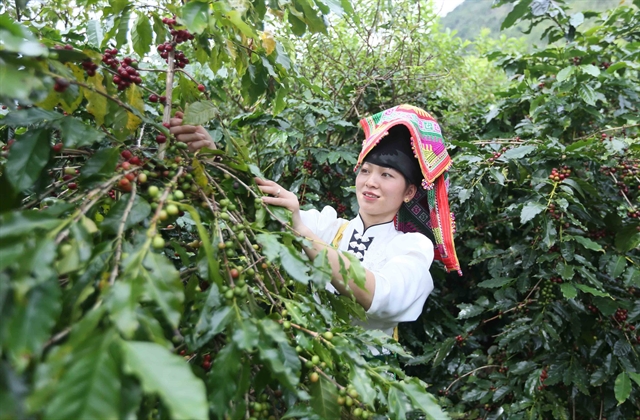 |
| Coffee beans being harvested in Gia Lai Province. — VNA/VNS Photo |
HÀ NỘI — Establishing a commodity exchange within the country’s International Financial Centre (IFC) is expected to help farmers and exporters gain greater control over pricing, industry experts and business leaders have said.
Despite being a leading global producer of commodities like robusta coffee and pepper, Việt Nam remains largely dependent on international markets to set prices, limiting returns for farmers and companies.
Phan Minh Thông, chairman of agricultural exporter Phuc Sinh Group, said establishing a fully functioning exchange would help shift pricing power back to domestic stakeholders.
A commodity exchange would not only support price-setting, but also foster a broader ecosystem including finance, warehousing and logistics, Thông told sggp.org.vn.
Director General of the ministry's Market Surveillance Agency Trần Hữu Linh said Việt Nam is steering plans to develop a dedicated commodity exchange within the IFC framework, with derivatives markets expected to play a central role.
He said locating the exchange within the financial centre would allow it to draw on support from financial institutions, including clearing centres, which require participation from banks and other institutions to ensure sufficient operational capacity.
Việt Nam has made several attempts to launch agricultural commodity exchanges over the past two decades, including a coffee trading centre in the Central Highlands, but most failed due to weak infrastructure and limited participation, according to head of the Institute of Information and Business Research Đinh Thế Hiển.
The country’s existing Vietnam Commodity Exchange, launched in 2010, has expanded trading activity, but lacks key components like spot trading and physical delivery systems.
Hiển said that a comprehensive exchange requires integrated infrastructure, including storage facilities, quality inspection centres and clearing mechanisms.
The Ministry of Industry and Trade is also working on a law governing commodity derivatives trading, expected to be submitted to the National Assembly later this year. — VNS
Economy
 Economy
 Economy
 Economy
 Economy
.jpeg) Economy
Economy
 Economy
 Economy
 Economy
.jpg) Economy
Economy
 Economy
 Economy
 Economy
 Economy
.jpg) Economy
Economy