 Economy


Vietnamese PM pays courtesy visits to Cambodian King, Queen Mother
1.
|
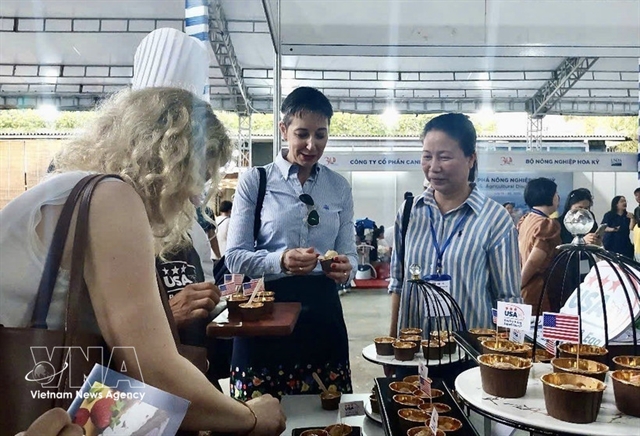
| Visitors savor freshly prepared dishes on-site at the “Discover US Agriculture” programme, held on July 19, 2025 in HCM City. — VNA/VNS Photo |
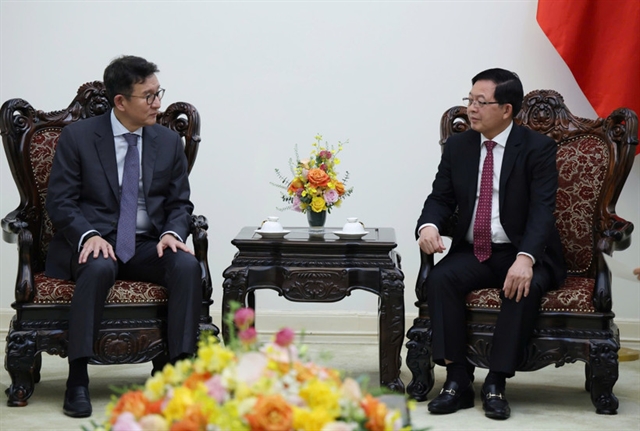
HÀ NỘI — Nguyễn Sinh Nhật Tân, Deputy Minister of Industry and Trade, met with Luke Lindberg, Under Secretary for Trade and Foreign Agricultural Affairs at the US Department of Agriculture (USDA), to discuss ways to strengthen agricultural cooperation between Việt Nam and the US.
Việt Nam has strengths in tropical agricultural products, seafood and wood products, while the US is a major supplier of key inputs such as soybeans, corn, wheat and dairy products. This structure creates a balanced supply chain with limited direct competition, bringing benefits to businesses and consumers in both countries.
Lindberg said Việt Nam is a strategic market attracting growing interest from the US business community. The USDA plans to organise two large-scale agricultural trade missions this year, reflecting the strong growth potential of the Vietnamese market.
US agricultural exports to the country rose sharply by 45 per cent in 2025, setting a record high. Several key commodities posted strong increases, including corn exports rising by about 60 per cent, soybeans by more than 40 per cent, and cotton by nearly 30 per cent, underscoring the country's emergence as one of the most dynamic markets for US agricultural products.
Regarding future cooperation, Tân said Việt Nam is accelerating the nationwide rollout of E10 RON95 biofuel and plans to gradually introduce higher blends such as E15 and E20. The transition is expected to increase demand for ethanol as well as raw materials such as corn and cassava.
The US side expressed strong interest in supporting Việt Nam in ensuring energy security, particularly in ethanol production and supply, while promoting agricultural cooperation linked to the green energy transition.
Both sides agreed to maintain close technical-level exchanges, address bottlenecks and prepare for upcoming cooperation activities, affirming agriculture as an important driver for deepening bilateral economic ties in the coming period. —VNS
Economy
 Economy
 Economy
 Economy
 Economy
 Economy
 Economy
 Economy
 Economy
 Economy
 Economy
 Economy
 Economy
 Economy
 Economy