 Economy



AIMCONNECT 2026 Held in Singapore, Bringing Global Automotive Leaders Together to Explore the Future of AI, Trust and Connected Mobility
1.
.jpg)
|
| Increased input costs will spread to many groups of goods and services, causing increasing inflationary pressure. — Photo baochinhphu.vn |
Compiled by Thu Hà
HÀ NỘI — If oil prices continue to rise due to prolonged Middle East tensions could increase the consumer price index (CPI) by approximately 1-2 percentage points.
In this case, analysts say, controlling inflation below the 4.5 per cent target set by the National Assembly for this year will become more challenging.
According to analysts from Saigon Securities Incorporation's (SSI) research division, escalating tensions in the Middle East have pushed oil prices to a four-year high, causing a sharp increase in domestic gasoline prices and putting pressure on the overall price level. In a less optimistic scenario, inflation in 2026 is projected to exceed 5 per cent.
In the baseline scenario, if oil prices remain around US$90 per barrel for about two months in March and April, Việt Nam's average inflation in 2026 is still likely to remain within the target of 4-4.5 per cent. However, in a less optimistic scenario, if oil prices remain around $105 per barrel until June, inflation could exceed 5 per cent, putting significant pressure on macroeconomic management.
In the March macroeconomic outlook report, analysts from the MB Securities Company (MBS) also noted that domestic RON 95 gasoline prices in the first half of March increased by approximately 31 per cent against January 2026 and 21 per cent against the same period last year, consequently driving up transportation and logistics costs and commodity prices.
Inflationary pressure is not solely driven by fuel prices. Electricity prices have also remained high in the first half of this year after the Vietnam Electricity Corporation (EVN) adjusted up prices.
Meanwhile, construction material prices are projected to increase slightly, with steel prices potentially rising by around 7 per cent year-on-year due to the promotion of infrastructure development and the recovery of the real estate market.
In addition, other factors such as adjustments to tax policies for household businesses, exchange rate fluctuations, and strong credit growth in 2025 will gradually be reflected in the price level in 2026.
Nguyễn Thu Oanh, head of the National Statistics Office (NSO)’s Service and Price Statistics Department, said that a 10 per cent increase in domestic gasoline and diesel prices could lead to a 0.45 percentage point increase in the CPI.
Simultaneously, increased input costs will spread to many groups of goods and services, which will cause increasing inflationary pressure.
“If oil prices continue to escalate due to prolonged Middle East tensions, this factor could increase the CPI by another 1-2 percentage points," Oanh said.
"In this case, controlling inflation to achieve the target set by the National Assembly for this year will become even more challenging.”
Solutions
Amid continued volatility in global energy prices, Oanh said inflationary pressures must be closely monitored.
It is essential to track both global and domestic fuel price movements in order to implement timely and appropriate management measures. At the same time, ensuring a stable fuel supply for the domestic market remains critical.
She also stressed the need to strengthen market management to prevent businesses from exploiting fuel price increases to unjustifiably raise the prices of other goods and services.
The General Statistics Office (NSO) recommended that the Government consider measures to support businesses through flexible management of fuel prices, transport fees and other logistics-related charges.
At the same time, authorities could consider reducing or deferring certain fees and charges related to export activities, particularly for sectors heavily affected such as agricultural products, seafood and textiles.
In addition, the State Bank of Vietnam should direct credit institutions to expand access to capital, consider debt rescheduling, restructure repayment terms and reduce lending interest rates for export businesses affected by rising input costs and extended shipping times.
Relevant ministries and sectors should step up trade promotion activities, support businesses in identifying alternative markets or expanding into those less affected by geopolitical tensions, and help them stay updated on transportation routes, logistics costs and supply chain risks to proactively adjust export strategies.
Oanh added that businesses should be encouraged to optimise supply chains, increase the localisation rate of raw materials, apply technology in logistics management and accelerate green transformation to reduce dependence on global energy price fluctuations and enhance resilience.
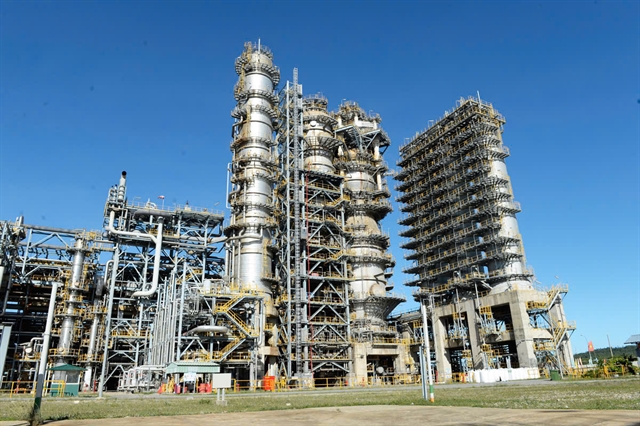
According to economist Dr Nguyễn Minh Phong, in response to sharp market fluctuations, the Government has introduced a series of urgent measures to ensure energy security. Oil and gas companies have been required to prioritise supplying domestic crude oil to local refineries.
At the same time, the Vietnam National Industry – Energy Group has been granted greater autonomy in importing and trading crude oil and other input materials.
Regulators have also strengthened market supervision and reviewed tax policies related to fuel imports, including reducing preferential import tariffs to 0 per cent to help stabilise domestic supply.
However, Phong noted that fully stabilising petrol prices remains difficult given Việt Nam’s heavy reliance on imports and global price volatility. A more realistic approach, he said, is to mitigate price increases by reducing cost components in the base price, particularly taxes and fees.
He also stressed the need to strengthen national petroleum reserves, while requiring key importers to maintain reserve levels in line with regulations to ensure stable supply and avoid market disruptions. — BIZHUB/VNS
Economy
 Economy
 Economy
 Economy
 Economy
 Economy
 Economy
 Economy
 Economy
 Economy
 Economy
 Economy
 Economy
 Economy
 Economy