 Economy



AIMCONNECT 2026 Held in Singapore, Bringing Global Automotive Leaders Together to Explore the Future of AI, Trust and Connected Mobility
1.
|
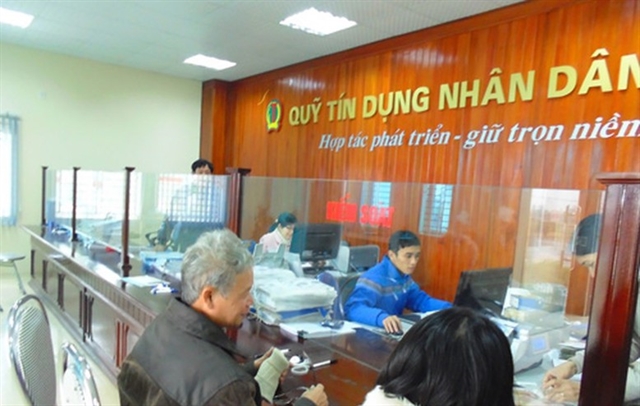
| People at a local People's credit fund office in Hà Nội. — VNA/VNS Photo |
HÀ NỘI — Rapid digitalisation is reshaping consumer behaviour, especially among young people. Việt Nam's people's credit funds (PCFs) must adapt to stay relevant, said policymakers and economists.
Bùi Anh Tuấn, director general of the Department of Private Enterprise and Collective Economy under the Ministry of Finance, said PCFs operate as cooperative credit institutions based on principles of mutual support, autonomy and community responsibility. Unlike commercial banks, PCFs place members at the centre of their activities and are closely linked to local communities, providing credit to support production, business activities and daily life.
Việt Nam currently has more than 1,175 PCFs in operation, with total capital exceeding VNĐ191 trillion (or US$7.8 billion) and outstanding loans of more than VNĐ138 trillion. The funds play an important role in supporting socio-economic development at the local level, particularly in rural areas and within the collective economy.
To implement the 2023 Cooperative Law and the national strategy for the collective economy, the Ministry of Finance is preparing a proposal for a comprehensive programme to develop the collective economy in the 2026–30 period. The programme will include measures to strengthen the PCF system and enhance its role in supporting cooperatives through credit provision.
Hoàng Việt Dũng, deputy director general of the State Bank of Việt Nam’s Department for Safety of Credit Institutions, said that as of December 31, 2025, the PCF network consisted of 1,175 funds operating in 31 provinces and cities with nearly two million members.
Despite these positive results, supervisory and inspection activities have revealed several shortcomings and potential risks. Some PCFs have shown signs of drifting away from the cooperative model, focusing more on profit than on serving members’ interests. In several funds, governance, management and internal control systems remain weak. Ethical risks among staff were also identified as a potential threat to operational safety.
At the same time, the rapid development of digital finance is transforming customer expectations. Younger users increasingly favour financial services that are quick, personalised and easily accessible through mobile devices.
The rapid expansion of fintech services and mobile banking platforms could reduce the traditional geographical advantages of PCFs, narrowing their market share and affecting operational efficiency.
Experts said strengthening the PCF system requires comprehensive and coordinated measures, while maintaining transparency and ensuring that operations remain consistent with cooperative principles.
Proposed solutions include improving the legal framework to ensure funds operate in line with their original mission while supporting members in promoting socio-economic development.
Authorities also stressed the need to strengthen supervision, inspection and restructuring of weak funds in order to detect risks early and prevent potential instability. Early intervention mechanisms should be applied where necessary to avoid prolonged weaknesses that could lead to broader financial risks.
In addition, PCFs should continue improving governance capacity, management quality and financial strength while reinforcing compliance with regulations and cooperative principles.
Closer coordination between the State Bank of Việt Nam, relevant ministries, local authorities and organisations such as the Vietnam Association of People’s Credit Funds and the Deposit Insurance of Vietnam was also recommended to help strengthen the system and support weak funds. — VNS
Economy
 Economy
 Economy
 Economy
 Economy
 Economy
 Economy
 Economy
 Economy
 Economy
 Economy
 Economy
 Economy
 Economy
 Economy