 Economy


Singaporeans Feeling the Pressure: Cost Concerns Rise as Household Optimism and Government Ratings Weaken - Blackbox Research Study
1.
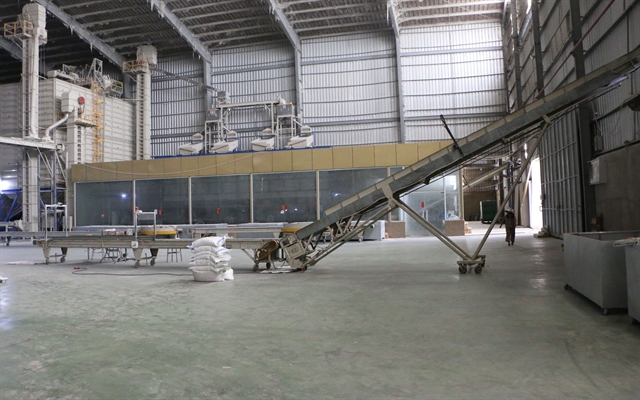 |
| A rice processing plant in Cần Thơ City. — VNA/VNS Photo |
HÀ NỘI — Major import markets for Vietnamese rice, such as the Philippines and Indonesia, are moving toward food self-sufficiency, posing significant challenges for rice exports next year.
Việt Nam exported more than 7.5 million tonnes of rice in the first 11 months of this year, worth nearly US$3.9 billion, according to preliminary statistics from the Department of Customs under the Ministry of Finance.
This represents a decline of 10.9 per cent in volume and 27.4 per cent in value compared with the same period last year, which saw a record-high rice export turnover.
Despite sharp declines in imports from major markets including Indonesia (down nearly 96.4 per cent) and Malaysia (down 32.5 per cent), Việt Nam’s rice exports expanded significantly in Ghana (up 52.6 per cent), China (up 165.1 per cent), Bangladesh (up 238.5 times) and Senegal (up about 73 times).
By category, Việt Nam’s exports were dominated by high-quality white rice and fragrant rice as of October this year, which together accounted for 69 per cent of total export volume.
Based on current conditions, Deputy Minister of Agriculture and Environment Trần Thanh Nam said rice exports this year were expected to reach around $4 billion.
The Người lao động (Labourer) online newspaper quoted Nguyễn Anh Sơn, director general of the Agency for Foreign Trade under the Ministry of Industry and Trade (MoIT), as saying that Việt Nam’s rice exports faced numerous difficulties this year.
Challenges included escalating instability in certain countries and regions; slow recovery in global trade and investment; many major economies maintaining tight monetary policies; and the reemergence of protectionist policies in various forms in many countries, Sơn said.
According to the MoIT, rice exports will continue to be affected by many factors in the next few years, including some that could benefit the industry.
The Philippines is expected to resume rice imports next month, although with changes in tariffs and potentially in import regulations. In addition, the return of many traditional markets such as China, Bangladesh and several African countries is also a positive signal.
However, the Việt Nam Trade Office in the Philippines reported that the Philippine government might reimpose a rice import ban from February next year to stabilise domestic supply during the dry season harvest.
This move aims to protect Filipino farmers from further losses, as domestic paddy prices remain under pressure due to excess supply and declining grain quality caused by prolonged rainfall.
Amid these unpredictable developments, the Việt Nam Trade Office in the Philippines advised rice exporters to be cautious in transactions and contract negotiations with Philippine companies as the country was still temporarily suspending imports.
Meanwhile, the Indonesian government announced that for the first time, it has achieved complete self-sufficiency in two essential food commodities: rice and corn. Indonesia is expected to maintain zero imports of these two commodities at least until next year.
Market diversification
As the Philippines and Indonesia move toward food self-sufficiency, Lê Thanh Tùng, vice chairman and secretary general of the Vietnam Rice Sector Association (Vietrisa), emphasised the need to diversify export markets.
In addition to major markets that account for large shares of exports, Việt Nam has been expanding shipments to Central Asia, South America and other regions, he said.
Việt Nam and Singapore signed a Memorandum of Understanding on rice trade cooperation this year. Singapore serves as a transshipment hub to bring Vietnamese rice to many countries worldwide.
“Vietnamese rice can compete very well thanks to its suitability to the tastes of many markets. This is a strength compared with many types of rice from Thailand, India and Pakistan. Another advantage is that we harvest new rice for export almost every month of the year,” said Tùng.
Tùng proposed that the Vietnam Food Association (VFA) and its member enterprises cooperate with Vietrisa to pilot the development of standardised raw material zones in line with the criteria of the project of sustainable cultivation of one million hectares of high-quality, low-emissions rice linked with green growth in the Mekong Delta by 2030.
He urged enterprises to support and actively participate in building raw material areas under this project.
“The project aims to reduce production costs and enhance the competitiveness of Vietnamese rice in the global market,” he said.
VFA Chairman Đỗ Hà Nam said that Indonesia’s declaration of food self-sufficiency was neither unusual nor particularly concerning.
Indonesia had only recently opened its rice import market and was not a core market for Việt Nam, he said.
The main impact came from the Philippines, Việt Nam’s largest rice market, which might reduce imports in the long term, he noted.
To adapt to the new situation, the VFA leader said he believes the most important task is to open more markets, especially through government-to-government (G2G) contracts.
A G2G contract with Bangladesh this year proved effective, helping to stabilise Vietnamese rice prices, said Nam.
Japan is also experiencing high demand for rice, but strict import conditions require government-level negotiations, he added.
The VFA Chairman also recommended that the State establish mechanisms to support enterprises in purchasing and stockpiling rice from farmers to regulate the domestic market, preventing sharp price drops during peak harvest periods. — VNS
Economy
 Economy
 Economy
 Economy
 Economy
 Economy
 Economy
 Economy
 Economy
 Economy
 Economy
 Economy
 Economy
 Economy
 Economy