 Economy

Việt Nam-EFTA agreement opens new opportunities for Norwegian salmon
1.
|
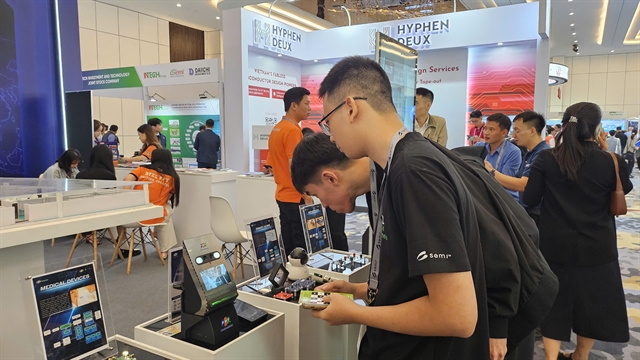
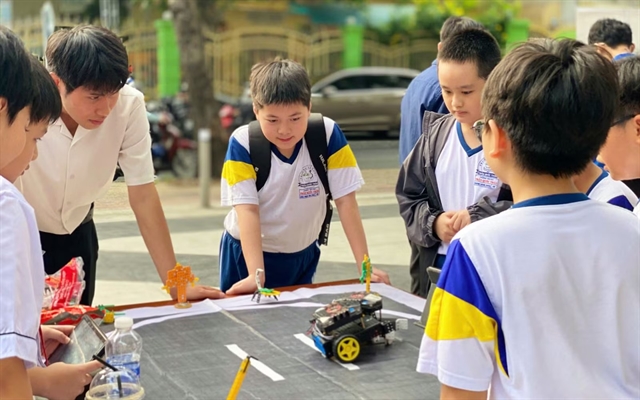
| Students visit an FPT booth at the SEMIexpo 2025 Việt Nam in Đông Anh Commune, Hà Nội. — VNS Photo Ly Ly Cao |
HÀ NỘI — With a clear determination to lead in Việt Nam's era of scientific and technological advancement, Hà Nội is stepping up efforts to make science, technology and innovation the core driver of urban and economic growth.
In recent discussions at the second meeting of the 18th Hà Nội Party Committee, policymakers emphasised that these domains must become the decisive engine of the capital's sustainable development.
At that meeting, Việt Nam National University - Hà Nội rector Hoàng Minh Sơn said that science, technology and innovation would be Hà Nội's strengths and called for annual specialised conferences to assess progress and embed a long-term strategic vision.
He specifically referenced the Hòa Lạc area of over 1,000ha as a proposed hub for major research institutes, innovation clusters and corporate investment, signalling the city's intent to expand beyond its inner urban footprint.
Nguyễn Thanh Sơn, secretary of the Party Committee of the Hà Nội Universities and Colleges, underscored the goal of making the city a leading innovation centre in the region.
He urged the capital city to allocate seed funding to universities to build innovation ecosystems that extend into surrounding areas and actively harness participation from private enterprises and the broader community.
From the municipal administration side, director of the Hà Nội Department of Science and Technology Trần Anh Tuấn proposed including in the city's Action Programme a dedicated push to develop intellectual property and intangible assets of enterprises, particularly small and medium-sized enterprises (SMEs), noting that the value of such assets in SMEs has increased by more than 50 per cent.
SMEs can receive assistance from the Hà Nội Support Centre for Enterprises and Investment Promotion.
In recent years, the city has invested heavily in digital infrastructure, achieving broadband internet coverage for over 95 per cent of its nearly 10 million residents.
This extensive digital reach has turned Hà Nội into an ideal testing ground for emerging technologies in smart transportation, e-government services, digital payments and e-health solutions.
Strong local demand has encouraged domestic and international technology companies to deploy products and services in the capital, resulting in nearly 1,200 information technology firms and thousands of other enterprises in innovation-driven sectors contributing significantly to urban economic value.
Its innovation ecosystem continues to expand. The Hòa Lạc High-Tech Park has attracted major technology corporations, including Viettel Group, FPT Corporation and VNPT. Several innovation centres have been established, among them the National Innovation Centre located in Hà Nội, further solidifying the city's position as a strategic innovation hub.
Demand for infrastructure that supports research and development, incubation, technology parks and mixed-use innovation districts is likely to increase.
Land-use policy may increasingly favour clustering of knowledge-intensive industries, and capital market participants should monitor how technology-driven growth translates into real asset value.
|
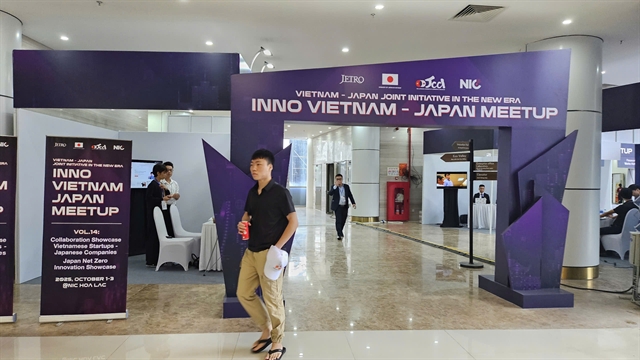
| 'Technology diplomacy' is another pillar of the city’s approach. — VNS Photo Ly Ly Cao |
The city has also maximised bilateral and multilateral agreements signed by Việt Nam. Notably, the EU-Việt Nam Free Trade Agreement and the Comprehensive and Progressive Agreement for Trans-Pacific Partnership provide local technology enterprises with opportunities to expand globally.
In addition, Hà Nội has emerged as a centre of 'technology diplomacy', hosting international events on artificial intelligence, digital transformation, green technology and cybersecurity.
In October, the United Nations selected Hà Nội to host the signing of the Convention against Cybercrime, demonstrating growing international confidence in the city’s technological capacity and reputation.
It also hosted meetings between Vietnamese leaders and CEOs from global technology firms, including NVIDIA, Qualcomm and Marvell. Such engagements not only attract investment, but also provide opportunities for workforce training and technology transfer, laying the foundation for the city's leap forward in innovation.
Yet, the challenge lies in moving from ambition to execution.
Developing a full innovation ecosystem requires synchronised progress across policy, talent development, infrastructure, financing and regulatory frameworks.
The city's leadership is aware of this, and the clear directive to integrate science, technology and innovation as central rather than marginal marks a strategic turning point for Hà Nội. — BIZHUB/VNS
Economy
 Economy
 Economy
 Economy
 Economy
.jpg) Economy
Economy
 Economy
 Economy
 Economy
 Economy
 Economy
 Economy
 Economy
 Economy
 Economy