 Economy


AITO Looks Ahead to Europe, Building a Thriving Automotive Ecosystem
1.
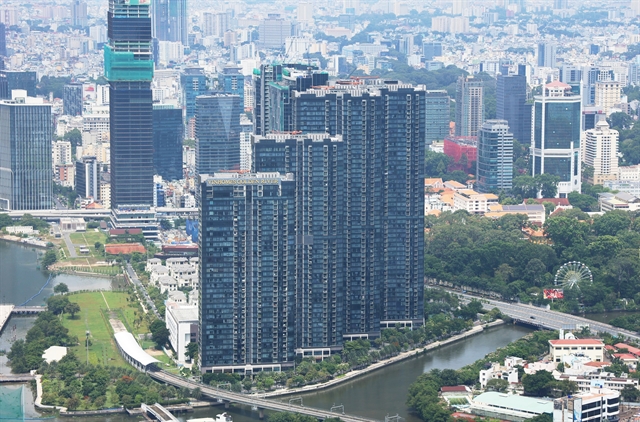 |
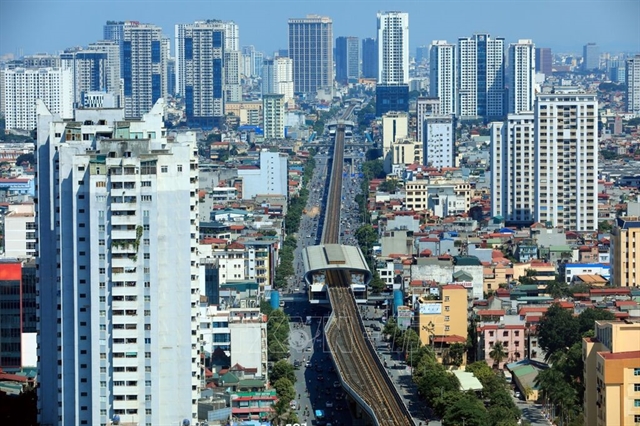
| Apartment buildings in HCM City. — VNA/VNS Photo |
HCM CITY — Infrastructure will be the most critical growth driver for the next decade, according to Savills Việt Nam.
Infrastructure investment totalling US$49 billion is being deployed nationwide, including the North-South Expressway, Long Thành International Airport, Ring Road systems, and LNG projects.
Once completed, these networks will redefine Việt Nam’s urban landscape, connecting emerging growth hubs and expanding development corridors across secondary cities such as Bình Dương, Đồng Nai, Hải Phòng, and Quảng Ninh.
By 2035, Savills forecasts Việt Nam’s GDP to triple its current size, with an average growth rate of 7-8 per cent a year.
The urbanisation rate is projected at 50 per cent, equivalent to 51 million urban residents, while the middle class could expand to 75 per cent of the population, driving strong demand across residential, commercial, hospitality, and healthcare sectors.
Together with rapid urbanisation, satellite cities will become the next centres of real estate development, according to Troy Griffiths, Deputy Managing Director of Savills Việt Nam.
Amid global economic fluctuations, Việt Nam continues to stand out as one of the most dynamic and resilient economies in the region, driven by robust growth, progressive reforms, and a steady inflow of high-quality foreign investment.
The 2025-2035 period will mark a new phase of transformation for the Vietnamese economy, he said.
Investment and production are shifting towards high-tech industries, generating greater value and solidifying the country’s position in the regional value chain.
“Việt Nam possesses a rare combination of strong growth momentum, a young population, active policy reforms, and large-scale infrastructure investment. These fundamentals will underpin a decade of sustainable expansion, with real estate remaining a cornerstone of economic development,” he said.
The Government is accelerating legal reforms and capital mobilisation mechanisms, including infrastructure bonds and digital transformation in market governance, to build a more transparent and modern investment environment that attracts long-term capital.
Meanwhile, climate change presents challenges and new opportunities for green investment. As one of the countries most affected by a higher sea-level and saline intrusion, Việt Nam has also emerged as a regional leader in Net Zero commitments and green infrastructure investment.
“Sustainable, energy-efficient, and climate-adaptive real estate projects will become the new market standard,” he said.
According to Savills' third quarter report, the property market showed continued positive growth momentum.
In HCM City, key sectors showed signs of recovery. Office and retail supply maintained an average occupancy rate of around 90 per cent, reflecting stable demand from technology, finance, and commercial service enterprises.
In the third quarter of the year, the apartment market recorded the launch of 5,200 primary units with an absorption rate of 51 per cent, while the low-rise housing segment showed improved liquidity due to reasonable pricing and crucial infrastructure developments like Ring Road 3 and Bến Lức-Long Thành Expressway.
Hà Nội’s market continued to register stable momentum in office and retail, with increasing rents and occupancy.
Apartment supply reached 6,300 new units, with an absorption rate exceeding 80 per cent, reflecting increasingly strong demand from owner-occupiers.
In 2025, alongside the implementation of new legal regulations, state management bodies will tighten monitoring and regulation to ensure the market develops on the right trajectory. The economy is forecast to stabilise, which, together with infrastructure investments, will significantly boost real estate demand.
Currently, new trends including smart cities, the application of artificial intelligence in property technology, and sustainable development are defining the landscape.
Affordable housing is another key focus, supported by mechanisms to promote public-private partnerships and comprehensive development. — VNS
Economy
 Economy
 Economy
 Economy
 Economy
 Economy
 Economy
 Economy
 Economy
 Economy
 Economy
 Economy
 Economy
 Economy
 Economy