 Economy


AIMCONNECT 2026 Held in Singapore, Bringing Global Automotive Leaders Together to Explore the Future of AI, Trust and Connected Mobility
1.
|
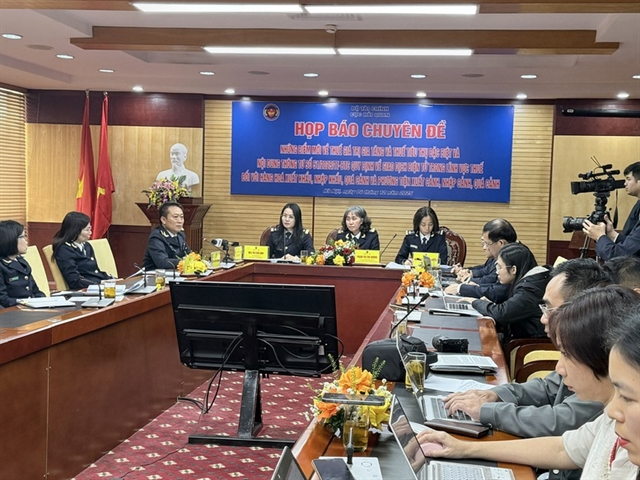
| Customs officials at the press briefing held on December 4. — VNA/VNS Photo |
HÀ NỘI — The Vietnam Customs has announced key updates in the Law on Value-Added Tax, the Law on Special Consumption Tax and Circular No. 51/2025/TT-BTC on electronic transactions. Many of the new regulations will directly affect production, import and export activities.
According to the Customs Tax Operations Division, the new documents mark a major step toward standardising and improving transparency in tax procedures. The revised VAT Law and its guiding decree now integrate many provisions that were previously issued only in official letters.
A key change is the expansion of VAT-exempt categories, which helps businesses reduce compliance costs. Imported goods for financial leasing can now be transported directly into non-tariff zones without VAT.
Exported products on the Government’s list of natural resources and minerals, whether raw or processed, are explicitly VAT-exempt, supporting the policy of limiting raw resource exports.
Existing exemptions, such as duty-free personal belongings, border residents’ goods within the regulated list and relics or antiques imported by authorised agencies, are reaffirmed.
Some preferential groups are adjusted. Fertilisers, fishing vessels and specialised agricultural machinery, previously not subject to VAT, will now be taxed at 5 per cent. Several items, including sugar, specialised teaching and research equipment and processed rosin, will move from the 5 per cent rate to 10 per cent.
The revised law clarifies how tax rates must be applied. Businesses dealing in multiple goods or services must declare each item under the correct rate; if they cannot distinguish them, the highest rate must be used. VAT principles for unprocessed agricultural, forestry and fishery products, scrap and by-products are also specified.
According to the Vietnam Customs, codifying these rules from July 1 2025 will help businesses plan production and import–export operations more effectively while supporting digital data exchange and reducing administrative procedures.
Regarding VAT collection on low-value express shipments, customs noted that such items were not taxed before February 18. Following global trends, Việt Nam began collecting VAT on these goods on that date. Customs has developed software for direct electronic declarations. As of September 15, VAT collection on low-value items had reached over VNĐ1 trillion. The measure helps prevent shipment-splitting and ensures fairness for domestic producers.
The revised Special Consumption Tax (SCT) Law, which takes effect alongside the VAT Law, introduces changes aimed at supporting business activity while strengthening oversight of products affecting public health.
One measure welcomed by enterprises is the removal of SCT on air conditioners of 24,000 BTU or below. The law also expands SCT exemptions for goods produced for export, returned exported goods that have already paid SCT, certain vehicles used in heritage sites or public service facilities and rescue aircraft used for pilot training.
On the oversight side, beverages with sugar content above 5g per 100ml are added to the taxable group. Tobacco, alcohol and beer continue along a roadmap of higher taxes to reduce harmful consumption. Temporary import–re-export regulations are tightened, with SCT to be paid if goods are not re-exported on time.
Customs officials said anti-smuggling and enforcement plans are in place, with intensified efforts before and after the Lunar New Year. Alcohol, beer and cigarettes remain high-risk products. Local customs offices deploy coordinated inspections and enforcement teams across customs areas.
To ensure smooth electronic transactions, customs authorities are applying technology tools, including artificial intelligence, to detect system bottlenecks early.
Phạm Thị Thu Hương, Chief of the Office of the Customs Department, said regulatory documents will be revised to support the goal of building a digital customs sector. She said the department will continue holding thematic briefings to help the media explain new policies to the business community. — VNS
Economy
 Economy
 Economy
 Economy
 Economy
 Economy
 Economy
 Economy
 Economy
 Economy
 Economy
 Economy
 Economy
 Economy
 Economy