 Sci-Tech

Việt Nam, Cambodia seek to bolster all-round ties: PMs
1.
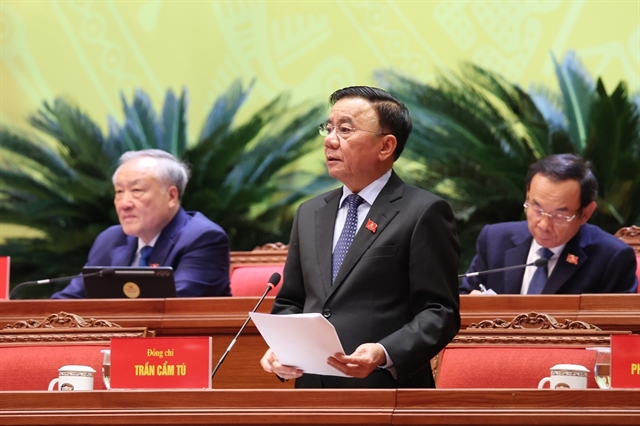 |
| Politburo member and Permanent Secretariat member Trần Cẩm Tú. — VNA/VNS Photo Cương Quyết |
HÀ NỘI — Plans are in place to beef up cyber, information and data security by aligning citizens, social media users, telecommunications subscribers and internet resources.
They are among requirements in Directive No. 57 on strengthening cybersecurity, information security and data security within the political system, which has been issued by Member of the Political Bureau and Permanent Member of the Secretariat of the Communist Party of Việt Nam Trần Cẩm Tú.
The Secretariat's directive also requests to address and eliminate ‘junk' text messages, fake accounts and anonymous usage; apply mandatory identity verification measures for social media users and age control mechanisms to protect children in cyberspace.
The directive emphasises that the Politburo’s Resolution No. 57 has outlined orientations, objectives and requirements for ensuring network safety and security, and safeguarding national sovereignty in cyberspace.
Amid the demands and tasks of the new phase, ensuring cybersecurity, information security and data security is an urgent requirement to build a safe, reliable cyberspace that strongly promotes scientific and technological development, innovation and national digital transformation.
According to the directive, the Secretariat requires strengthening Party leadership, raising awareness and responsibility across the entire political system and the whole population regarding cyber, information and data security.
Authorities must deeply grasp the viewpoint that this level of security is a key, ongoing and urgent task. It is the responsibility of the entire political system and the whole population, under the direct and comprehensive leadership of the Party and the centralised, unified management of the State.
The People's Public Security Forces and People's Army play the key role.
The directive asks for comprehensive strength of the entire population to build a people's security posture linked with the all-people national defence posture in cyberspace.
"Shift strategic thinking from 'passive defence' to 'proactive defence' and 'active defence', building a 'proactive, comprehensive cybersecurity posture'. Cybersecurity risks, information security challenges and data security threats must be identified and addressed early and from afar, with readiness for proportionate defensive measures to deter and neutralise risks, protecting national and ethnic interests," the directive states clearly.
According to the directive, ‘self-reliance, self-strengthening and self-improvement’ must be strongly adhered to.
Focus should be placed on developing, exploiting and using Việt Nam's cybersecurity product and service ecosystem, prioritising mastery of core technologies, advanced security solutions and strong application of artificial intelligence and emerging technologies in cybersecurity, viewing these as strategic tasks to firmly protect national sovereignty in cyberspace.
In addition, it is necessary to apply breakthrough mechanisms, special policies, and the highest incentives in science, technology and innovation to develop the cybersecurity and data security product and service ecosystem.
Eliminate fake accounts
The Secretariat's directive states clearly that ensuring cybersecurity and data security is a foundational element and mandatory requirement from the planning, design, construction and operation stages of information systems.
Systems not ensuring safety and security must resolutely not be put into use.
Functional forces must regularly review, inspect and evaluate cybersecurity for information technology systems.
The collection, management and exploitation of digital data must be protected at the highest level; absolutely prevent leaks or breaches of State secrets and sensitive data, even during testing.
Notably, in the content on perfecting institutions, policies and enhancing State management effectiveness, the Secretariat requires completing a strict legal framework to manage the operations of enterprises providing cyberspace services, including cross-border services.
Responsibilities of telecommunications, internet, finance and banking enterprises in ensuring system security and coordinating with functional agencies such as the Ministry of Public Security and Ministry of National Defence, must be clearly stipulated.
Establishing technical connection mechanisms to provide data and electronic evidence quickly is key, ensuring it is ‘accurate, complete, clean and live’ to serve criminal investigation and national sovereignty protection; simplify administrative procedures in cybersecurity emergencies.
The Central Public Security Party Committee is assigned to lead and direct the Ministry of Public Security to take the lead, coordinate to promote connection and use of data from the national population database for comprehensive cyberspace identification.
The ministry will focus on directing the definitive handling of 'junk' or ‘spam’ messages and fake accounts, establishing order and discipline in managing social media users; ensure requirements for national cybersecurity protection, personal data protection and child protection in cyberspace. — VNS
Sci-Tech
 Sci-Tech
 Sci-Tech
 Sci-Tech
 Sci-Tech
 Sci-Tech
 Sci-Tech
 Sci-Tech
 Sci-Tech
 Sci-Tech
 Sci-Tech
 Sci-Tech
 Sci-Tech
 Sci-Tech
 Sci-Tech