 World
World
SBV to curb property price inflation, enforce lending rate rules
1.
|
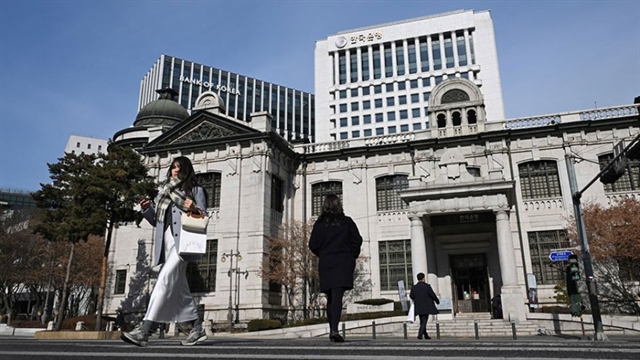
| Early resignations have risen particularly sharply among special-service officials and younger workers. — The Korea Herald/ANN Photo |
Choi Jeong-yoon
SEOUL — Government data has showed that 59 per cent of civil servants who left their posts in 2024 did so before their retirement age, indicating the long-held perception of a government job as one of the country’s most stable professions has changed.
The ratio of early departures against the whole, which includes retirees, has been on a steady rise, from 48.5 per cent in 2017 to 54 per cent in 2018, 55.1 per cent in 2022 and 57.5 per cent in 2023, according to the data released by the Ministry of Personnel Management on Friday.
The trend drew renewed attention after Kim Seon-tae, better known as “Chungju Man” who led the rapid growth of the city’s official YouTube channel, recently announced his intent to resign from his post as head of Chungju’s media team. His departure prompted fresh concerns that even high-performing, fast-tracked officials are turning away from government work.
Early resignations have risen particularly sharply among special-service officials and younger workers. Voluntary resignations among general-service civil servants increased by 67.2 per cent from 3,255 in 2017 to 5,443 in 2024. Over the same period, resignations among special-service officials, a category that includes teachers, police officers and diplomats, more than doubled from 5,750 to 11,639.
Teachers account for the largest share of this increase. Midcareer departures in the education sector rose from 4,875 in 2017 to 8,929 in 2024.
The outflow of civil servants has accelerated even more among younger government officials. According to the Public Officials Pension Service, resignations among workers aged 21 to 30 jumped from 2,441 in 2015 to 5,105 in 2024, more than doubling. During the same period, the increases of those aged 31-40 and 41-50 stood at 86.7 per cent and 73.3 per cent, respectively.
Data from 2024 shows that 12,013 civil servants with fewer than five years of service resigned voluntarily, representing 59.3 per cent of all general voluntary resignations. While slightly lower than the previous year’s 65.1 per cent, the proportion has remained at or near 60 per cent since 2019.
Declining satisfaction within the early- to midcareer segment of the civil service appears to be a contributing factor.
The Korea Institute of Public Administration’s 2024 survey on public-service working conditions found that employees with six to 10 years of experience reported the lowest levels of job satisfaction, organizational commitment and sense of public-service values.
Civil servants cite a combination of reasons for leaving their posts, including heavy workloads, relatively low pay and increasing stress from public-facing roles.
An employee who has worked as a central government employee for 16 years said salary growth has failed to keep pace with responsibilities, noting that even with overtime, monthly earnings remain in the high 3 million won ($2,090) range after more than a decade of service.
“The image of civil servants keeping exact working hours from 9 to 6 is overrated. We sometimes work like employees in big conglomerates but earn so little,” the worker told The Korea Herald.
Others pointed to escalating pressure from civil complaints, with some saying encounters with hostile people leave lasting psychological stress. — The Korea Herald/ANN
World
 World
World
 World
World
 World
World
 World
World
 World
World
 World
World
 World
World
 World
World
 World
World
 World
World
 World
World
 World
World
 World
World
 World
World