 Society
PM attends memorial service for 731 fallen soldiers in Hồ Chí Minh City
1.
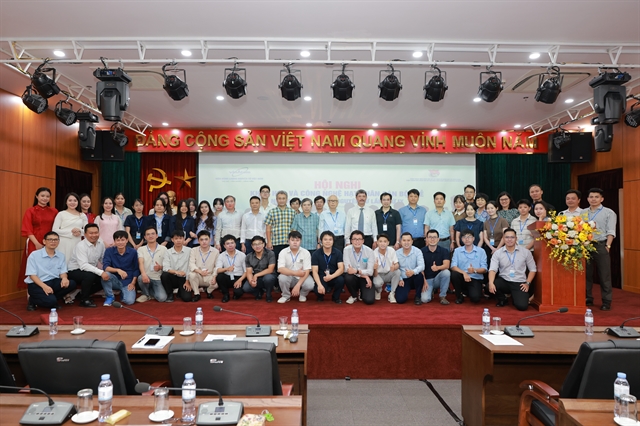 |
| The ninth conference provided a forum for young researchers and professionals to present their findings, share experiences, and foster cooperation. — Photo courtesy of VINATOM |
HÀ NỘI - Việt Nam is developing nuclear power while expanding the use of atomic energy to address challenges in food security, land and water resource management, industry and healthcare, said Trần Chí Thành, Director of the Vietnam Atomic Energy Institute (VINATOM).
One of the key tasks assigned by the Party and State is to develop small modular reactor (SMR) technology.
Meeting these demands requires a highly qualified workforce, a need highlighted at the recent ninth Conference on Nuclear Science and Technology for Young Personnel in the Atomic Energy Sector.
Human resources for major tasks
Thành said the sector had several major tasks ahead, including implementing the Ninh Thuận 1 and Ninh Thuận 2 nuclear power projects.
VINATOM is also preparing a proposal to submit to the competent authorities on the atomic energy industry's development orientation. The proposal covers large-capacity reactors and SMRs, the production of radiation measurement and detection equipment, the localisation of accelerators, and related equipment and technologies.
“These are major and challenging tasks amid a shortage of human resources,” Thành said.
Meanwhile, nuclear science and technology is a demanding field that requires an interdisciplinary foundation and years of research before professionals can contribute to projects. For example, key engineers responsible for operating a nuclear power plant need more than 10 years of training and practical experience.
“We urgently need skilled personnel to develop the nuclear sector in the coming years,” he said.
However, challenges go hand in hand with opportunities. Trần Đức Thiệp, Chairman of the Nuclear Physics Association, said the atomic energy sector was seeing significant opportunities arising from new policies and guidelines. For young people, it was essential to keep striving, seize opportunities and proactively seek solutions to difficult problems.
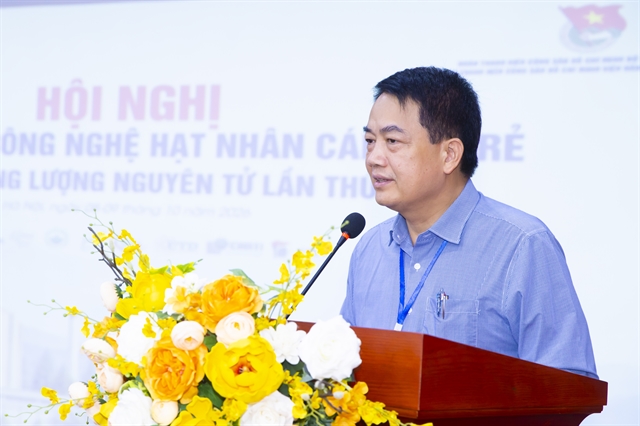 |
| Trần Chí Thành, Director of the Vietnam Atomic Energy Institute. — Photo courtesy of VINATOM |
Developing young talent
The ninth conference provided a forum for young researchers and professionals to present their findings, share experiences and foster cooperation, contributing to the development of the next generation of specialists.
The event brought together 84 presenters, including young personnel, postgraduate students and doctoral candidates from VINATOM's affiliated units, as well as universities, research institutes and hospitals.
Experts in the sector selected 44 presentations for in-person delivery. The research covered a wide range of topics, from nuclear physics and reactor engineering to non-destructive testing and radiation applications.
Some studies combined artificial intelligence and data science with simulation methods to address practical problems.
The conference also promoted scientific research, human resource development, and the peaceful application of nuclear science and technology, in line with Việt Nam’s orientations for developing science, technology and innovation.
VINATOM had demonstrated how nuclear science could improve everyday life through applications ranging from environmental protection and food security to healthcare and industrial quality assurance, said Najat Mokhtar, Deputy Director General and Head of the Department of Nuclear Sciences and Applications at the International Atomic Energy Agency (IAEA).
She highlighted cooperation in marine pollution monitoring, climate change research, food irradiation, industrial non-destructive testing, radiation metrology and medical applications, saying these efforts had strengthened food security, environmental protection, healthcare and scientific capacity in Việt Nam.
She noted that Việt Nam currently has 19 active technical cooperation projects with the IAEA and said the agency looks forward to continuing its partnership as the country expands both the peaceful applications of nuclear technology and its nuclear power programme. — VNS
Society
 Society
 Society
 Society
 Society
 Society
 Society
 Society
 Society
 Society
 Society
 Society
 Society
 Society
 Society