 Society

Wuzhen Summit Puts Spotlight on Tongxiang’s Expanding AI Industry
1.
|
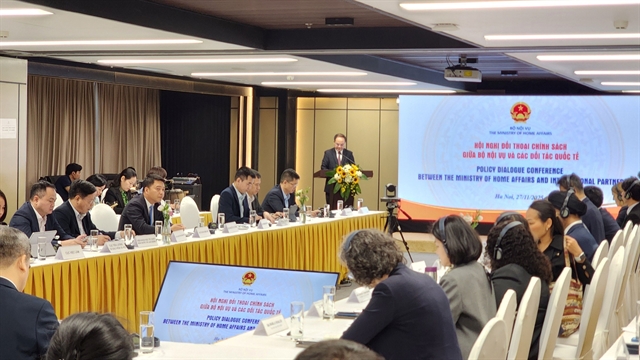
| Deputy Minister of Home Affairs Vũ Chiến Thắng addresses the Policy Dialogue Conference with international partners of Việt Nam on Thursday.— VNA/VNS Photos Chu Thanh Vân |
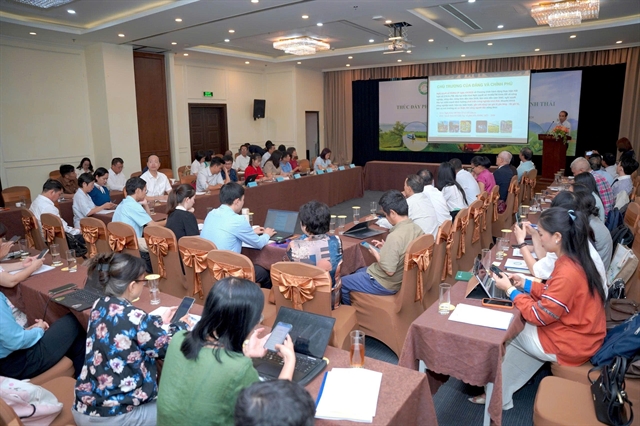
HÀ NỘI — The Ministry of Home Affairs (MoHA) on Thursday convened a Policy Dialogue Conference with international partners to strengthen coordination across areas of shared interest, expand partnerships, and promote more effective use of resources in line with Việt Nam’s socio-economic development priorities.
In his opening remarks, Deputy Minister of Home Affairs Vũ Chiến Thắng noted that as of November 2025, Việt Nam had established diplomatic relations with 195 countries and territories and announced partnership frameworks at various levels, including 14 Comprehensive Strategic Partnerships, 11 Strategic Partnerships and 15 Comprehensive Partnerships.
The country’s political and social environment remains stable, the economy continues to grow, and living standards have improved considerably. Average GDP growth for 2013–2024 reached nearly 6 per cent, with projections of 8 per cent in 2025.
He said Việt Nam truly appreciates the contributions of international organisations, bilateral development partners, and foreign non-governmental organisations.
Their support has been invaluable in helping Việt Nam build infrastructure, push forward institutional reforms, roll out social programmes, promote climate adaptation and a just energy transition, boost global economic integration, and strengthen national competitiveness.
The deputy minister added that Việt Nam is undertaking a sweeping restructuring of its political and administrative apparatus toward a leaner, more efficient and effective system, shifting from administrative management to governance that serves the people and addressing institutional bottlenecks to pave the way for national development in a new era.
As part of this restructuring, the Ministry of Labour, Invalids and Social Affairs was merged with the MoHA on March 1, 2025, resulting in new requirements for strengthening international integration and partnerships within the sector.
Given the need to adjust governance models and enhance the capacity of civil servants across all levels, MoHA has been tasked with reorganising administrative units nationwide and establishing a two-tier local government model, which officially came into operation on July 1.
He emphasised that this process calls for close collaboration, experience sharing, and technical support from international partners to ensure smooth implementation and tackle any new challenges that arise.
At the conference, MoHA representatives presented the ministry’s new organisational structure, functions and mandates, as well as orientations and plans for international cooperation and integration for 2026–2027. Representatives from the International Labour Organisation (ILO), UNDP, IMF Việt Nam and UN Women shared insights into new global trends in areas under the ministry’s purview.
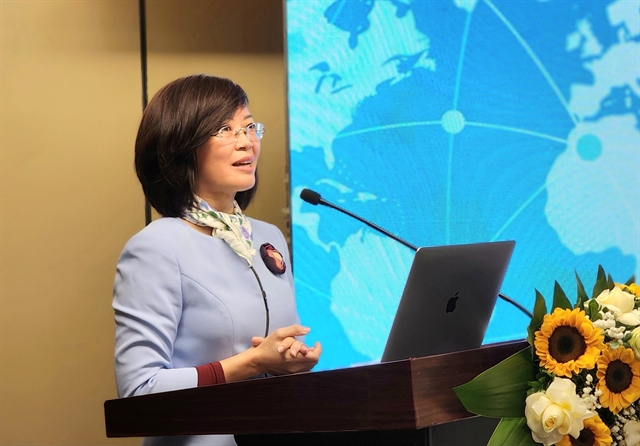
Hà Thị Minh Đức, Vice Director of the MoHA's Department of International Cooperation, highlighted the upcoming challenges for the ministry in public governance, data connectivity, digital capacity, administrative culture, and compliance with international commitments and labour standards amid socio-economic development, population ageing, social security pressures, and employment and livelihood issues.
|
| Hà Thị Minh Đức, Vice Director of the Department of International Cooperation at the Ministry of Home Affairs. |
Regarding multilateral cooperation, Đức called for strengthened support from UN agencies, particularly in public administration management and labour market development. In bilateral cooperation, she proposed expanding technical cooperation projects with countries possessing advanced administrative systems and promoting agreements and memoranda of understanding, alongside enhanced professional exchanges.
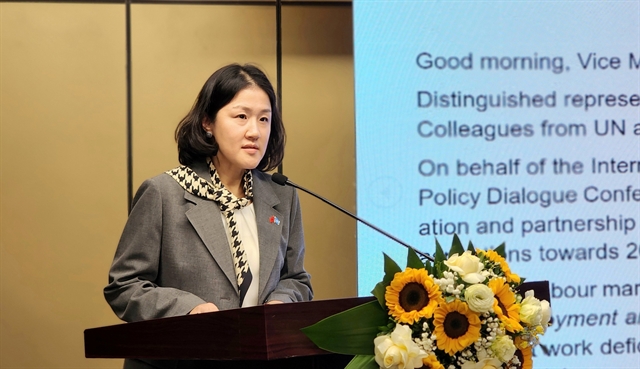
Sinwon Park, Director of the ILO Country Office for Việt Nam, said the ILO is advancing a global agenda centred on decent work and social justice.
|
| Sinwon Park, Director of the International Labour Organisation's country office for Việt Nam. |
She proposed three strategic areas of cooperation: strengthening labour governance and institutional capacity, promoting comprehensive, adaptive social protection, and advancing productive employment, skills development and transition.
Delegates discussed key areas of cooperation under the ministry’s scope. Deputy minister Thắng shared that the Vietnamese Government is quickly pushing forward the creation of a national labour exchange platform to make labour market matching more efficient, transparent, and continuous.
He appreciated the proposals and recommendations from the event, assuring they will be thoroughly reviewed and sent to the relevant agencies and the Government. — VNA/VNS
Society
 Society
 Society
 Society
 Society
 Society
 Society
 Society
 Society
 Society
 Society
 Society
 Society
 Society
 Society
.jpg)