 Politics & Law
Second Vietnamese National Solidarity Festival in Japan set for Nov 14–15
1.
|
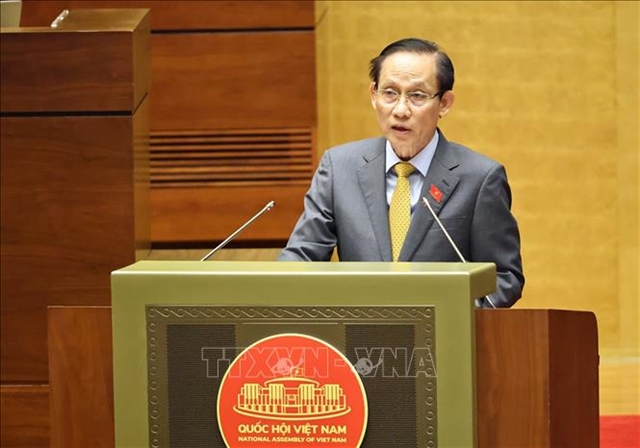
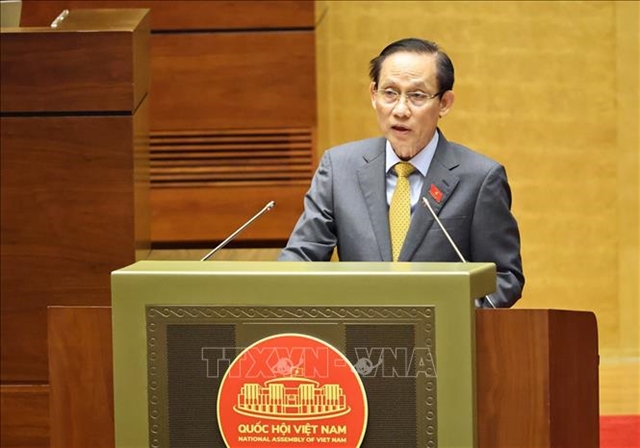
| Foreign Minister Lê Hoài Trung presents a report on the draft amended Law on International Agreements. — VNA/VNS Photo Minh Đức |
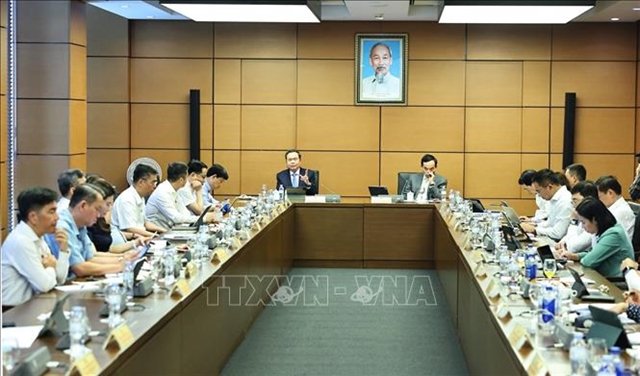
HÀ NỘI — The National Assembly (NA) on Sunday morning continued its second session discussing the draft amended Law on International Agreements.
Presenting the Government’s proposal on behalf of the Prime Minister Lê Minh Hưng, Minister of Foreign Affairs Lê Hoài Trung said that the law was intended to realise the Party’s guidelines and policies and the State’s laws on foreign affairs and international integration in the new situation.
Its enactment also aims to create a favourable legal framework for international agreements, thereby strengthening multifaceted cooperation between Việt Nam and international partners.
It aims to promote extensive international integration from the central to local levels; enhance the effectiveness of foreign affairs work; maximise external resources to generate momentum for rapid and sustainable development; improve people’s living standards; safeguard national defence, security and foreign affairs.
The amended law aims to renew work on international agreements through greater application of science and technology; effectively and substantively carry out international agreements, thereby contributing to the country’s development in the new era.
Regarding entities covered, the law adds economic zone management boards, industrial park management boards, and public non-business units under ministries, ministerial-level agencies and provincial people’s committees; and expands the foreign parties permitted to conclude international agreements with commune-level people’s committees.
It also assigns the Government, ministries, ministerial-level agencies and provincial people’s committees to provide detailed regulations on the conclusion and implementation of this group of international agreements, in line with the legislative approach.
The law only sets out framework and principled matters falling within the NA’s authority, while practical matters subject to frequent change are left to the Government, ministries, sectors and localities to regulate, ensuring flexibility and suitability to reality.
It also provides for principles, authority, procedures and formalities for concluding, amending, supplementing, extending, terminating, withdrawing from and suspending the implementation of international agreements, as well as for their implementation and the responsibilities of agencies in concluding and implementing such agreements.
The amended law applies to Vietnamese agencies, organisations and individuals participating in the conclusion and implementation of international agreements.
It comprises six chapters and 47 articles.
Presenting the scrutiny report, Chairman of the NA’s Committee for National Defence, Security and Foreign Affairs Lê Tấn Tới agreed with the need to enact the amended Law on International Agreements.
The work targets to continue institutionalising the 14th National Party Congress’s Resolution on foreign affairs and international integration and the Politburo’s regulations on the unified management of external activities; meet the requirements of organisational restructuring and the two-tier local government model.
As for definition of an international agreement, the committee proposed studying and adding criteria for identifying international agreements based on their nature, purpose and content, rather than solely on their title or the procedures for their conclusion.
It also proposed clarifying whether cooperation documents with mixed content, or drafts of international agreements containing treaty-like provisions arising during negotiations, fall within the law’s scope of regulation.
Regarding Vietnamese contracting parties and the signing authority of new entities, contributors proposed adding provisions, or assigning the Government to provide detailed regulations, on criteria and conditions concerning functions, cooperation needs and the ability to secure resources, so that competent persons may decide to conclude international agreements on behalf of public non-business units, specialised agencies, management boards under local people’s committees.
Contributors also proposed clarifying that certain enterprises under the Ministry of National Defence and the Ministry of Public Security are entities entitled to conclude international agreements, and clearly defining the principles for determining which cooperation documents of such enterprises are regarded as international agreements.
Concerning the responsibilities of central state agencies, provincial-level local authorities, central bodies of organisations and provincial-level bodies of organisations (Article 38), contributors proposed studying and revising the article so that the competent agency determines, or proposes the determination of, 'the Vietnamese side’s interpretation' to ensure unified realisation.
Where differences in interpretation concern the rights, obligations or responsibilities of the foreign contracting party, or the implementation of an international agreement between the parties, the competent agency should lead exchanges and seek consensus with the foreign contracting party under the mechanism set out in the international agreements. — VNS
Politics & Law
 Politics & Law
 Politics & Law
 Politics & Law
 Politics & Law
 Politics & Law
 Politics & Law
 Politics & Law
 Politics & Law
 Politics & Law
.jpg) Politics & Law
 Politics & Law
 Politics & Law
 Politics & Law
 Politics & Law