 Politics & Law

French rep highlights importance of data security in AI use in public administration
1.
|
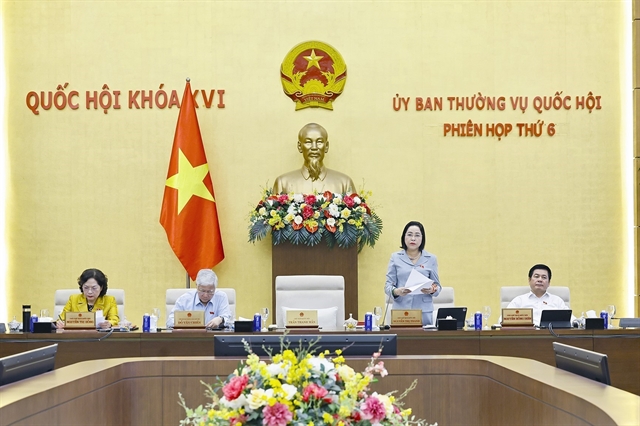
| NA Vice Chairwoman Nguyễn Thị Thanh speaks at the legislative session on the e-cigarette ban and time-of-use electricity pricing on Monday. — VNA/VNS Photo |
HÀ NỘI — The National Assembly (NA) Standing Committee on Monday endorsed plans to write a ban on e-cigarettes into law and to introduce time-of-use electricity pricing for households.
E-cigarettes and heated tobacco
The tobacco bill would turn into statute a prohibition that the National Assembly imposed in Resolution 173 in 2025, which banned e-cigarettes and heated tobacco to protect public health, particularly among the youth.
It would outlaw the production, trade, storage, transport, import, export, transit and use of such products, as well as the devices, components and liquids used to make them. It would also ban the display of tobacco products.
|
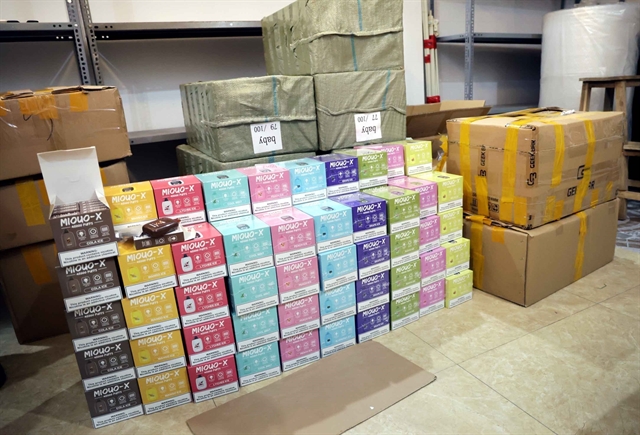
| Smuggled e-cigarettes seized by police in the central province of Hà Tĩnh in February 2026. — VNA/VNS Photo |
Deputy Health Minister Vũ Mạnh Hà, who presented the bill, said it adds legal definitions of e-cigarettes, heated tobacco, tobacco display and direct tobacco marketing to consumers. He said clear definitions would give authorities a consistent standard and avoid disputes over how to identify and prove violations.
The bill would also cut red tape. It would scrap the licences required to sell tobacco and remove business conditions for setting up smoking cessation and counselling services.
At the Ministry of Industry and Trade's request, it would drop a requirement for special approval when a company produces tobacco for export beyond its authorised output.
The bill would shift some approval powers from the Prime Minister to the Minister of Industry and Trade, including authority over contracts that transfer or license industrial property rights used for products such as cigarettes, cigars and tobacco.
Nguyễn Đắc Vinh, chairman of the NA Committee for Culture and Social Affairs, said the draft was largely consistent with the constitution and international treaties.
His committee urged drafters to prepare detailed implementing regulations alongside the bill to explain how they plan to address weaknesses in existing tobacco controls that were reviewed but left unamended.
NA Vice Chairwoman Nguyễn Thị Thanh said the bill must not trade oversight for deregulation, warning that cuts to licensing and business conditions could erode the State's ability to control tobacco output, supply and sales.
She also said the bill's definitions and list of prohibited acts should be written broadly enough to cover products not yet on the market.
The legislator also called for workable rules to keep tobacco from people under 18, including how to verify buyers' ages and police online sales. Authorities must be able to inspect, monitor and punish violations in practice, she said.
Thanh also asked drafters to justify scrapping the rules on cessation counselling and to ensure the change does not leave a regulatory gap or erode service quality.
"The bill must be checked against the laws on investment, commerce and customs, with clear lines of authority and responsibility," she said.
Electricity pricing
The committee also reviewed amendments to the Electricity Law.
Consisting of three articles that mainly revise 23 provisions of the existing law, the draft covers power planning and investment, renewable energy, licensing, the electricity market and grid operation, pricing and the safety of power facilities.
The most notable changes concern pricing. The bill would introduce peak, off-peak and normal-hour retail rates for households where technical conditions allow, and authorise the Minister of Industry and Trade to approve a wholesale price framework.
It would also require a roadmap for ending cross-subsidies between customer groups, in line with Politburo Resolution 70, and add a transitional clause on retail tariffs for tourist accommodation businesses.
The bill would clarify purchase prices for certain types of generation and set out price support or investment incentives for renewable energy, new energy sources, energy storage and other projects, depending on the country's development needs.
|
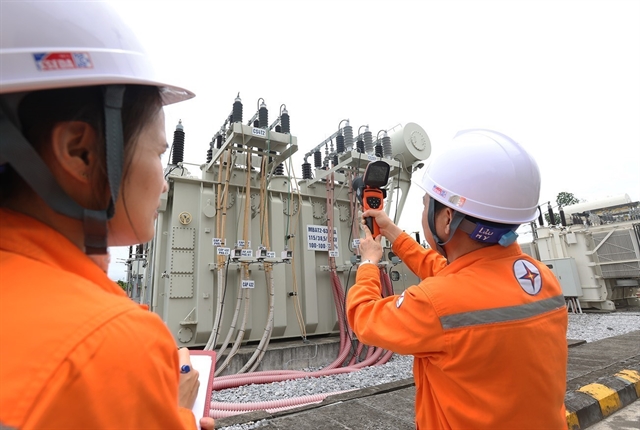
| Two electricians perform maintenance work at a 100kV substation in the northern province of Hưng Yên in July. — VNA/VNS Photo |
The NA Committee for Science, Technology and Environment backed the principle that electricity prices should reflect reasonable, valid costs, phase out cross-subsidies and foster a competitive power market.
However, the legislative body said that the law should make clear that prices are based on costs, investment efficiency, risk levels and market conditions, and that not all investment and business risk should be shifted onto the State or consumers.
The committee said setting prices and contract terms according to winning bids could limit renegotiation after tenders, shorten project preparation and improve transparency.
To make that work, the law should specify that core terms — above all price and contract length — cannot be renegotiated in ways that alter the outcome of a tender, except under adjustment rules laid out in advance in the tender documents, it said.
The committee also said any phase-out of cross-subsidies should come with a clear timetable and a defined list of affected customers. Direct aid to poor households and disadvantaged areas should be handled separately and funded openly.
NA Vice Chairman Nguyễn Hồng Diên urged drafters to review the scope of the amendments carefully and limit them to what is truly necessary, with adequate political, legal and practical grounds.
He also asked that the bill fully and accurately codify the Party policy on national energy security, along with the Party Central Committee and Politburo resolutions. — VNS
Politics & Law
 Politics & Law
 Politics & Law
 Politics & Law
 Politics & Law
 Politics & Law
 Politics & Law
 Politics & Law
 Politics & Law
 Politics & Law
 Politics & Law
 Politics & Law
 Politics & Law
 Politics & Law
 Politics & Law