 Politics & Law

Exotic Food Showcases Its Position as a Leading Global Sriracha Producer and Exporter at SIAL Paris 2026
1.
|
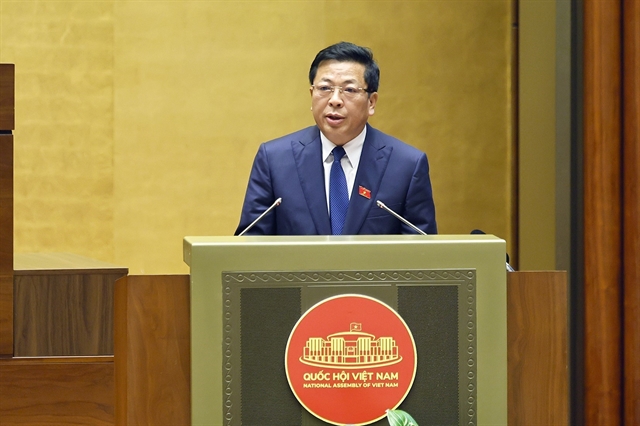
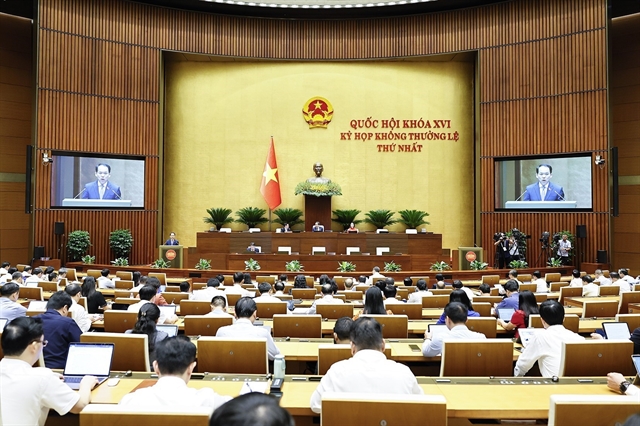
| Minister of Construction Trần Hồng Minh presents a draft law amending and supplementing several provisions of the Law on Architecture during the National Assembly session on Wednesday. — VNA/VNS Photo Doãn Tấn |
HÀ NỘI — Proposed amendments to the Law on Architecture would strengthen the protection of cultural heritage through architectural planning while reducing regulatory burdens on businesses and architects, lawmakers heard on Wednesday.
The draft amendments, presented to the National Assembly, seek to clarify the concept of national cultural identity in architecture and encourage designs that reflect local history, culture and natural conditions, Minister of Construction Trần Hồng Minh said.
The bill would also establish criteria for identifying and protecting architecturally significant buildings as a distinct form of cultural heritage, in line with the Party's policy on promoting Vietnamese culture.
The proposed legislation revises or replaces 14 provisions of the current law, repeals four others and leaves 23 unchanged.
It also updates architectural management rules to align with the new two-tier local government system and simplifies procedures for issuing architectural management regulations.
The draft introduces new provisions on architectural idea competitions while exempting emergency projects, projects approved under special investment procedures and privately funded projects from mandatory design competitions. Authorities could still require competitions where necessary, depending on project timelines and other considerations.
The legislation also incorporates requirements for green, sustainable and climate-resilient architecture.
Reviewing the draft, the National Assembly's Committee on Science, Technology and Environment endorsed the proposed changes but urged refinements to ensure consistent implementation.
The committee warned that allowing local authorities, including commune-level administrations, to independently define national cultural identity in architecture could create inconsistencies because the field requires specialised expertise and a broader regional perspective.
Instead, it proposed that provincial governments issue common guidelines, with lower-level authorities implementing rather than redefining them.
The committee also recommended limiting mandatory architectural management regulations to priority areas such as new urban developments, city centers and other special zones, rather than requiring them across entire administrative jurisdictions.
It called for tighter urban design oversight of large private real estate developments and projects along rivers, lakes and coastlines to protect public landscapes.
On heritage protection, lawmakers urged the government to establish clear legal criteria for identifying valuable architectural works and to require consultations with professional organisations, independent experts and local communities before such buildings are officially designated.
The committee also backed reducing the number of architectural positions requiring professional practice certificates as part of broader administrative reforms. It recommended replacing the current 10-year validity period for licences with a system based on continuing professional development, while introducing stricter post-audit oversight for professionals exempt from certification.
On the use of Building Information Modeling (BIM), the committee said implementation should be phased in rather than applied universally. It recommended making BIM mandatory only for major projects and publicly funded investments to avoid imposing unnecessary compliance costs on businesses. — VNS
Politics & Law
 Politics & Law
 Politics & Law
 Politics & Law
 Politics & Law
 Politics & Law
 Politics & Law
 Politics & Law
 Politics & Law
 Politics & Law
 Politics & Law
 Politics & Law
 Politics & Law
 Politics & Law
 Politics & Law